
Beyond The Plan : Social Change in a Hungarian Village
Book Details
Format
Hardback
ISBN-10
0367014068
ISBN-13
9780367014063
Publisher
Taylor & Francis Ltd
Imprint
Routledge
Country of Manufacture
GB
Country of Publication
GB
Publication Date
Apr 28th, 2020
Print length
326 Pages
Weight
760 grams
Product Classification:
Politics & governmentPolitics and government
KSh 30,950.00
Currently unavailable
0 in stock
Delivery Location
Delivery fee: Select location
Secure
Quality
Fast
The aims of postwar Eastern Europe governments included, first and foremost, the restructuring and controlling of economic and social domains. Since 1945, planning in rural Hungary has been focused on the collectivization of agriculture. However, activities at the village level not only deflected the intended outcomes of government policies, but also generated new, innovative results. Families managed to redirect their efforts into a variety of job sectors and to forge essential ties with the industrial, non-agricultural job sectors. Labor withheld from the collectives was invested in plot farming, a development that proved of paramount importance to both the national and household economies. Today, most rural families continue to participate in more than one sector of production, making it difficult for the central government to design selective policies aimed at the "peasant." The broadening of Hungary''s interpretation and application of socialist principles was largely a result of the ways in which government plans were reinterpreted and reapplied at the local level. By examining agricultural changes in one Hungarian village, Dr. Vasary explores some of the possibilities and limitations inherent in collectivization.
Get Beyond The Plan by Ildiko Vasary at the best price and quality guaranteed only at Werezi Africa's largest book ecommerce store. The book was published by Taylor & Francis Ltd and it has 326 pages.
Customers Who Bought This Also Bought

Regime Change
KSh 5,050.00

Art of War / The Book of Lord Shang
KSh 1,100.00

Wretched of the Earth
KSh 2,000.00

White Saviorism In International Development
KSh 3,800.00
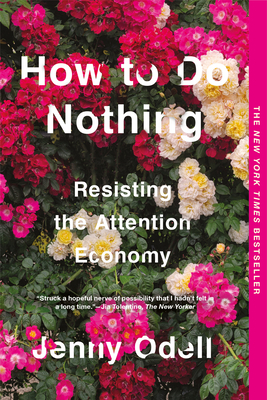
How To Do Nothing
KSh 2,700.00

How Civil Wars Start
KSh 2,000.00

Tomorrow Is Yesterday
KSh 4,700.00

The Thinking Machine
KSh 2,350.00

Second Treatise of Government – Norton Library
KSh 1,600.00

Becoming
KSh 2,350.00

A River in Darkness
KSh 1,250.00

Warning to the West
KSh 1,600.00