
Cart 0
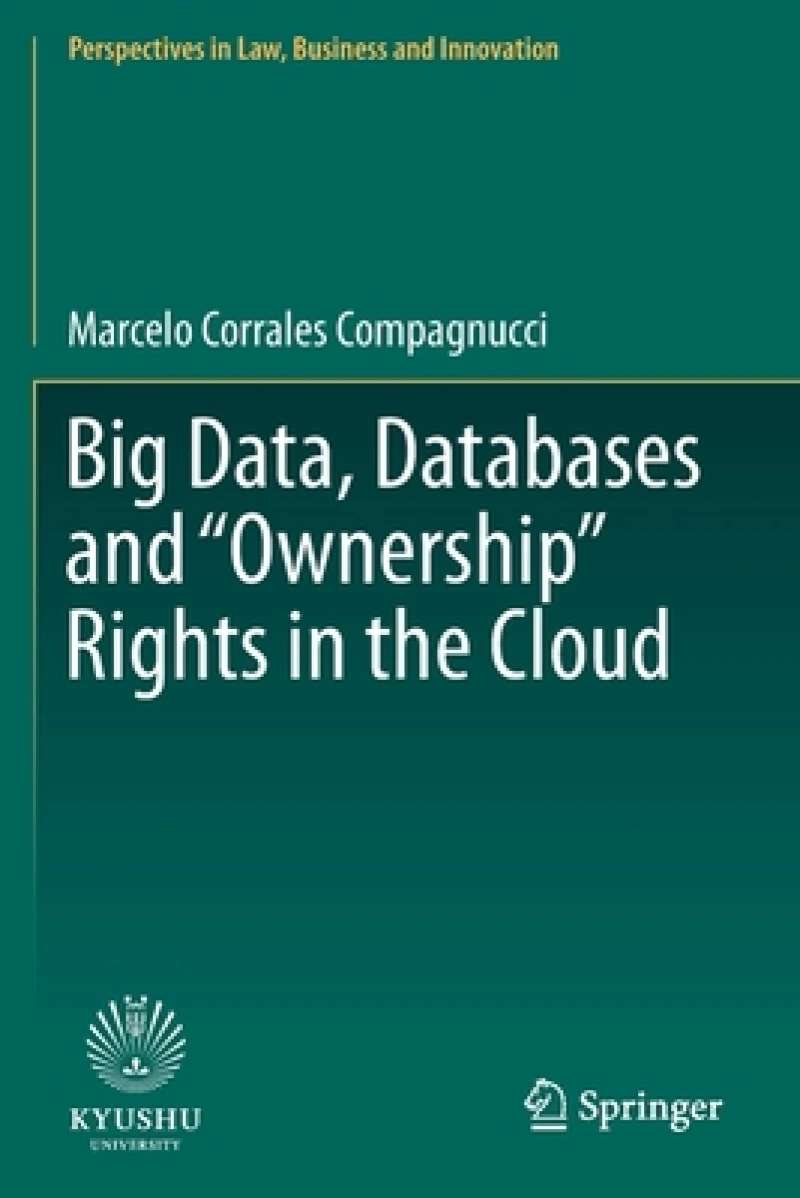
Big Data, Databases and "Ownership" Rights in the Cloud
Click to zoom

Share this book

Big Data, Databases and "Ownership" Rights in the Cloud

2020 ed.

Book Details

Format Paperback / Softback
ISBN-10 9811503516
ISBN-13 9789811503511
Edition 2020 ed.
Publisher Springer Verlag, Singapore
Imprint Springer Verlag, Singapore
Country of Manufacture GB
Country of Publication GB
Publication Date Nov 12th, 2020
Print length 308 Pages
Ksh 25,200.00
Werezi Extended Catalogue Delivery in 28 days

Delivery Location

Delivery fee: Select location

Delivery in 28 days

Secure
Quality
Fast
Two of the most important developments of this new century are the emergence of cloud computing and big data. However, the uncertainties surrounding the failure of cloud service providers to clearly assert ownership rights over data and databases during cloud computing transactions and big data services have been perceived as imposing legal risks and transaction costs. This lack of clear ownership rights is also seen as slowing down the capacity of the Internet market to thrive. Click-through agreements drafted on a take-it-or-leave-it basis govern the current state of the art, and they do not allow much room for negotiation. The novel contribution of this book proffers a new contractual model advocating the extension of the negotiation capabilities of cloud customers, thus enabling an automated and machine-readable framework, orchestrated by a cloud broker. Cloud computing and big data are constantly evolving and transforming into new paradigms where cloud brokers are predicted to play a vital role as innovation intermediaries adding extra value to the entire life cycle. This evolution will alleviate the legal uncertainties in society by means of embedding legal requirements in the user interface and related computer systems or its code. This book situates the theories of law and economics and behavioral law and economics in the context of cloud computing and takes database rights and ownership rights of data as prime examples to represent the problem of collecting, outsourcing, and sharing data and databases on a global scale. It does this by highlighting the legal constraints concerning ownership rights of data and databases and proposes finding a solution outside the boundaries and limitations of the law. By allowing cloud brokers to establish themselves in the market as entities coordinating and actively engaging in the negotiation of service-level agreements (SLAs), individual customers as well as small and medium-sized enterprises could efficiently and effortlessly choose a cloud provider that best suits their needs. This approach, which the author calls “plan-like architectures,” endeavors to create a more trustworthy cloud computing environment and to yield radical new results for the development of the cloud computing and big data markets. 

Two of the most important developments of this new century are the emergence of cloud computing and big data. However, the uncertainties surrounding the failure of cloud service providers to clearly assert ownership rights over data and databases during cloud computing transactions and big data services have been perceived as imposing legal risks and transaction costs. This lack of clear ownership rights is also seen as slowing down the capacity of the Internet market to thrive. Click-through agreements drafted on a take-it-or-leave-it basis govern the current state of the art, and they do not allow much room for negotiation. The novel contribution of this book proffers a new contractual model advocating the extension of the negotiation capabilities of cloud customers, thus enabling an automated and machine-readable framework, orchestrated by a cloud broker.

Cloud computing and big data are constantly evolving and transforming into new paradigms where cloud brokers are predicted to play a vital role as innovation intermediaries adding extra value to the entire life cycle. This evolution will alleviate the legal uncertainties in society by means of embedding legal requirements in the user interface and related computer systems or its code. This book situates the theories of law and economics and behavioral law and economics in the context of cloud computing and takes database rights and ownership rights of data as prime examples to represent the problem of collecting, outsourcing, and sharing data and databases on a global scale. It does this by highlighting the legal constraints concerning ownership rights of data and databases and proposes finding a solution outside the boundaries and limitations of the law.

By allowing cloud brokers to establish themselves in the market as entities coordinating and actively engaging in the negotiation of service-level agreements (SLAs), individual customers as well as small and medium-sized enterprises could efficiently and effortlessly choose a cloud provider that best suits their needs. This approach, which the author calls "plan-like architectures," endeavors to create a more trustworthy cloud computing environment and to yield radical new results for the development of the cloud computing and big data markets. 


Get Big Data, Databases and "Ownership" Rights in the Cloud by at the best price and quality guaranteed only at Werezi Africa's largest book ecommerce store. The book was published by Springer Verlag, Singapore and it has pages.


Mind, Body, & Spirit

Price

Ksh 25,200.00

Shopping Cart

Africa largest book store

Sub Total:
Ebooks

Digital Library
Coming Soon

Our digital collection is currently being curated to ensure the best possible reading experience on Werezi. We'll be launching our Ebooks platform shortly.