
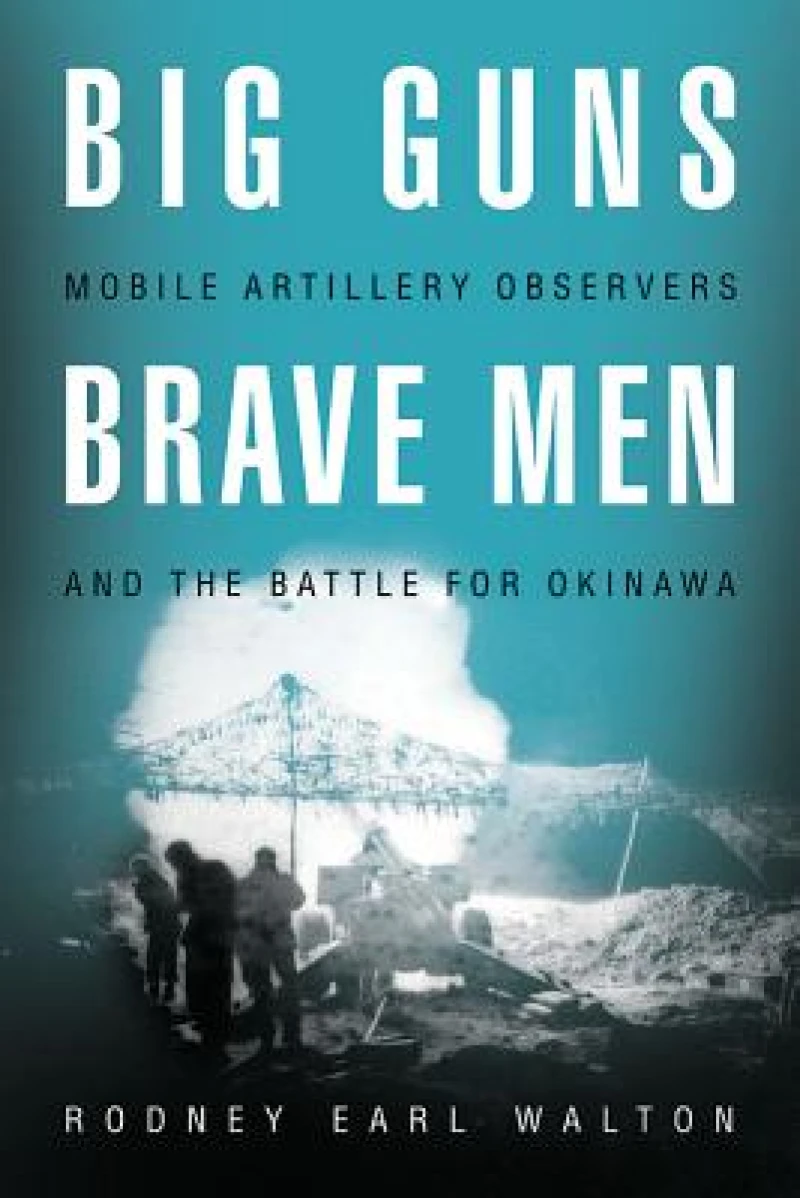
Big Guns, Brave Men : Mobile Artillery Observers and the Battle for Okinawa
Book Details
Format
Hardback or Cased Book
ISBN-10
1612511309
ISBN-13
9781612511306
Publisher
Naval Institute Press
Imprint
Naval Institute Press
Country of Manufacture
US
Country of Publication
GB
Publication Date
Jun 27th, 2013
Print length
320 Pages
Weight
568 grams
Dimensions
22.60 x 16.90 x 2.40 cms
Product Classification:
Military historySecond World War
Ksh 5,400.00
Re-Printing
0 in stock
Delivery Location
Delivery fee: Select location
Secure
Quality
Fast
Although it was the largest and final battle of the Pacific War, the Battle for Okinawa has long been overshadowed by other dramatic events in 1945. The books that have been written about it emphasise the role of infantrymen, armour, and U.S. Marines. This work takes a fresh perspective and focuses on the vital role played by the U.S. Army’s forward artillery observers—the eyes and ears of American artillery who were among the least recognised heroes of the war. According to Rodney Earl Walton, U.S. artillerymen matched Japanese gunners in intensity and surpassed them in effectiveness because their forward observers were able to provide a much shorter response time to requests for artillery support. Divided into teams consisting of four or five men led by an artillery lieutenant, these observers would spend three days on the front lines directing artillery against enemy positions, return to their artillery battery for three days, and then rotate up to the line of battle again. While trying to maximise the damage inflicted on the enemy, the men had to deal with the ever-present possibility of firing on their own forces. The ability to shift artillery fire throughout the battlefield was a new development in World War II, and its evolution is fully examined in the book. Walton, the son of one of the forward observers on Okinawa, spent more than twenty years investigating what happened to his father and other artillerymen during the conflict. Interviews with the artillerymen and the infantrymen they supported are central to his story, which is filled with gripping and sometimes humorous accounts of what happened. The work stands as a stirring tribute from the “baby boom generation” to the “greatest generation.”
Although it was the largest and final battle of the Pacific War, the Battle for Okinawa has long been overshadowed by other dramatic events in 1945. The books that have been written about it emphasize the role of infantrymen, armor, and U.S. Marines. This work takes a fresh perspective and focuses on the vital role played by the U.S. Army''s forward artillery observers-the eyes and ears of American artillery who were among the least recognized heroes of the war. According to Rodney Earl Walton, U.S. artillerymen matched Japanese gunners in intensity and surpassed them in effectiveness because their forward observers were able to provide a much shorter response time to requests for artillery support. Divided into teams consisting of four or five men led by an artillery lieutenant, these observers would spend three days on the front lines directing artillery against enemy positions, return to their artillery battery for three days, and then rotate up to the line of battle again. While trying to maximize the damage inflicted on the enemy, the men had to deal with the ever-present possibility of firing on their own forces. The ability to shift artillery fire throughout the battlefield was a new development in World War II, and its evolution is fully examined in the book. Walton, the son of one of the forward observers on Okinawa, spent more than twenty years investigating what happened to his father and other artillerymen during the conflict. Interviews with the artillerymen and the infantrymen they supported are central to his story, which is filled with gripping and sometimes humorous accounts of what happened. The work stands as a stirring tribute from the “baby boom generation” to the “greatest generation.
Get Big Guns, Brave Men by at the best price and quality guaranteed only at Werezi Africa's largest book ecommerce store. The book was published by Naval Institute Press and it has pages.

