
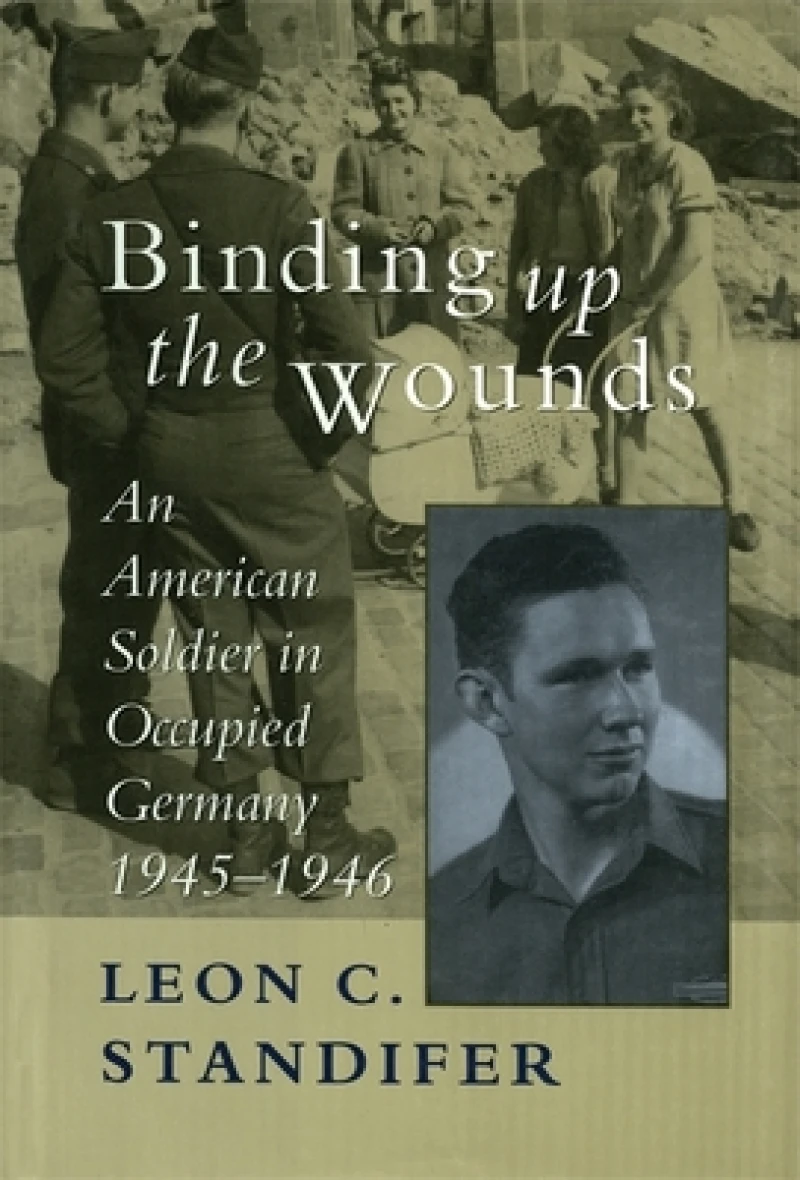
Binding Up the Wounds : An American Soldier in Occupied Germany, 1945-1946
Book Details
Format
Hardback or Cased Book
ISBN-10
0807120944
ISBN-13
9780807120941
Publisher
Louisiana State University Press
Imprint
Louisiana State University Press
Country of Manufacture
US
Country of Publication
GB
Publication Date
Feb 1st, 1997
Print length
272 Pages
Weight
572 grams
Dimensions
23.50 x 15.70 x 2.20 cms
Ksh 6,800.00
Temporarily out of stock, due soon
0 in stock
Delivery Location
Delivery fee: Select location
Secure
Quality
Fast
In his acclaimed Not in Vain, Leon Standifer recounted his experiences fighting as a combat infantryman in World War II France and Germany. Binding Up the Wounds carries the story beyond V-E Day to describe what the author saw, heard, felt, and learned as a member of the American occupation army in Germany.
In his highly acclaimed Not in Vain, Leon C. Standifer recounted his experiences as a small-town Mississippi boy who at age nineteen found himself fighting as a combat infantryman in World War II France and Germany. Binding Up the Wounds carries the story beyond V-E Day to describe what the author saw, heard, felt, and learned as a member of the American occupation army in the homeland of its defeated enemy.
Standifer, who served in the 94th Infantry Division in western Germany, the Sudetenland, and Bavaria in the first year of occupation, chronicles that unique and chaotic time from the viewpoint of a typical GI. Germany was an epic landscape of human need, and cities lay in ruins. But the war was over, light and laughter were once again possible, and, as Standifer recalls, ""we had a ball during that first year."" Among the things he experienced or witnessed were black-market operations large and small (American cigarettes served as a universal currency, and a few ounces of mess-hall grease or used coffee grounds were valuable commodities); the spectacle of gung-ho officers attempting to turn combat troops into spit-and-polish paraders; the exploitative games played between American soldiers and German women; a gut-wrenching visit to a displaced persons camp; and the difficulties involved in guarding captured soldiers who were no longer the enemy.
Perhaps most revealing, and often surprising, are the attitudes Standifer discovered among ordinary Germans toward the war, the Nazis, the ""Hitler times"" in general, not only during the occupation, but also decades later when he revisited Germany and spoke with elderly survivors of those times. For there are really two voices telling the tale of Binding Up the Wounds. One is that of the combat-hardened but otherwise naive twenty-year-old who lived the experiences. The other is that of the author as retired college professor looking back over half a century and puzzling out what those experiences meant for himself, for America, and for human-kind.
Standifer, who served in the 94th Infantry Division in western Germany, the Sudetenland, and Bavaria in the first year of occupation, chronicles that unique and chaotic time from the viewpoint of a typical GI. Germany was an epic landscape of human need, and cities lay in ruins. But the war was over, light and laughter were once again possible, and, as Standifer recalls, ""we had a ball during that first year."" Among the things he experienced or witnessed were black-market operations large and small (American cigarettes served as a universal currency, and a few ounces of mess-hall grease or used coffee grounds were valuable commodities); the spectacle of gung-ho officers attempting to turn combat troops into spit-and-polish paraders; the exploitative games played between American soldiers and German women; a gut-wrenching visit to a displaced persons camp; and the difficulties involved in guarding captured soldiers who were no longer the enemy.
Perhaps most revealing, and often surprising, are the attitudes Standifer discovered among ordinary Germans toward the war, the Nazis, the ""Hitler times"" in general, not only during the occupation, but also decades later when he revisited Germany and spoke with elderly survivors of those times. For there are really two voices telling the tale of Binding Up the Wounds. One is that of the combat-hardened but otherwise naive twenty-year-old who lived the experiences. The other is that of the author as retired college professor looking back over half a century and puzzling out what those experiences meant for himself, for America, and for human-kind.
Get Binding Up the Wounds by at the best price and quality guaranteed only at Werezi Africa's largest book ecommerce store. The book was published by Louisiana State University Press and it has pages.

