
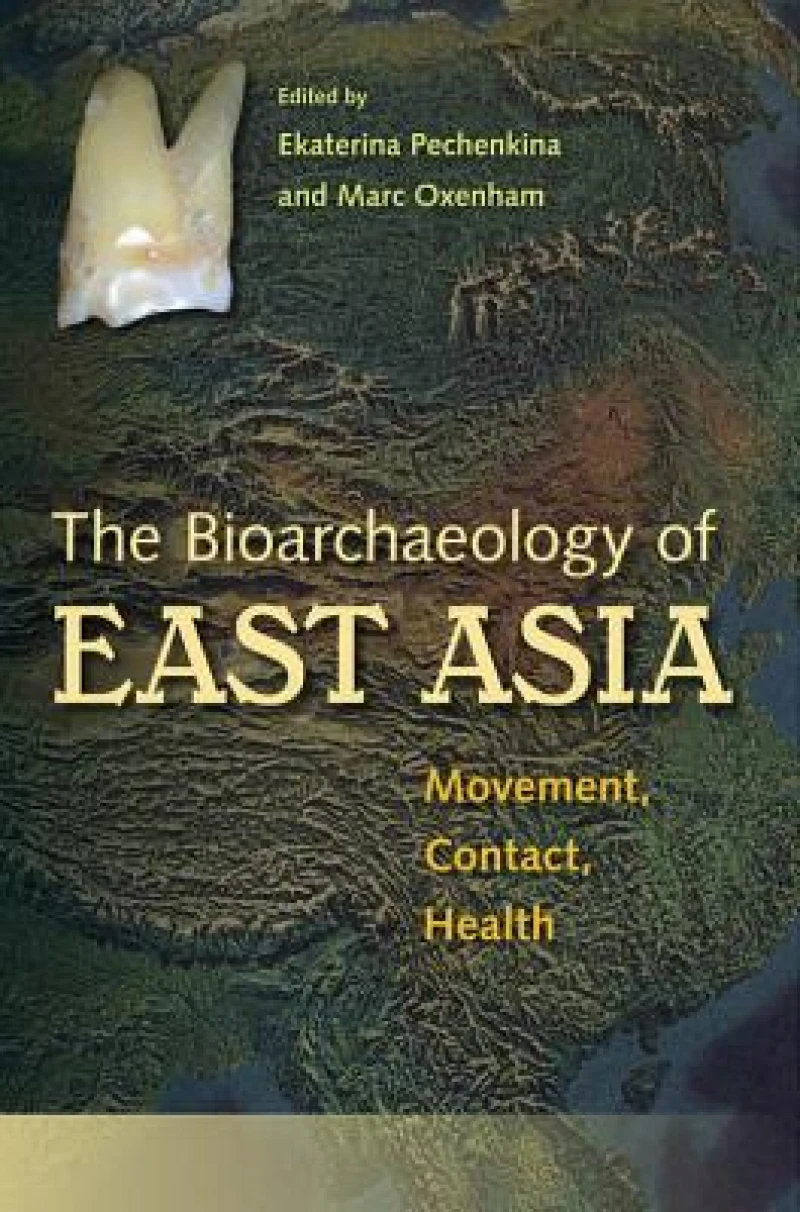
Bioarchaeology of East Asia : Movement, Contact, Health
Book Details
Format
Hardback or Cased Book
Book Series
Bioarchaeological Interpretations of the Human Past: Local, Regional, and Global Perspectives
ISBN-10
0813044278
ISBN-13
9780813044279
Publisher
University Press of Florida
Imprint
University Press of Florida
Country of Manufacture
US
Country of Publication
GB
Publication Date
Jul 9th, 2013
Print length
512 Pages
Weight
893 grams
Dimensions
23.10 x 15.70 x 4.00 cms
Product Classification:
Archaeology by period / regionArchaeology by period / region
Ksh 14,550.00
Temporarily out of stock, due soon
0 in stock
Delivery Location
Delivery fee: Select location
Secure
Quality
Fast
East Asia spans more than 10 million square kilometres. The human remains examined by the contributors in this volume date from the Early Neolithic (more than 12,000 years ago) to the Iron Age (up to AD 500).
Bioarchaeology of East Asia interprets human skeletal collections from a region where millets, rice, and several other important cereals were cultivated, leading to attendant forms of agricultural development that were accompanied by significant technological innovations. The contributors follow the diffusion of these advanced ideas to other parts of Asia, and unravel a maze of population movements. In addition, they explore the biological implications of relatively rare subsistence strategies more or less unique to East Asia: millet agriculture, mobile pastoralism with limited cereal farming, and rice farming combined with reliance on marine resources.
Diverse scholarly traditions—from China, Japan, Mongolia, Russia, Australia, and the United States—supply a constructive mix of conceptual frameworks and methodologies. Chinese-to-English translations make chapters available that might not otherwise be published outside of China. Ideas stemming from this collection will significantly boost collaborative work among bioarchaeologists and other scientists working in East Asia.
Bioarchaeology of East Asia interprets human skeletal collections from a region where millets, rice, and several other important cereals were cultivated, leading to attendant forms of agricultural development that were accompanied by significant technological innovations. The contributors follow the diffusion of these advanced ideas to other parts of Asia, and unravel a maze of population movements. In addition, they explore the biological implications of relatively rare subsistence strategies more or less unique to East Asia: millet agriculture, mobile pastoralism with limited cereal farming, and rice farming combined with reliance on marine resources.
Diverse scholarly traditions—from China, Japan, Mongolia, Russia, Australia, and the United States—supply a constructive mix of conceptual frameworks and methodologies. Chinese-to-English translations make chapters available that might not otherwise be published outside of China. Ideas stemming from this collection will significantly boost collaborative work among bioarchaeologists and other scientists working in East Asia.
Get Bioarchaeology of East Asia by at the best price and quality guaranteed only at Werezi Africa's largest book ecommerce store. The book was published by University Press of Florida and it has pages.

