
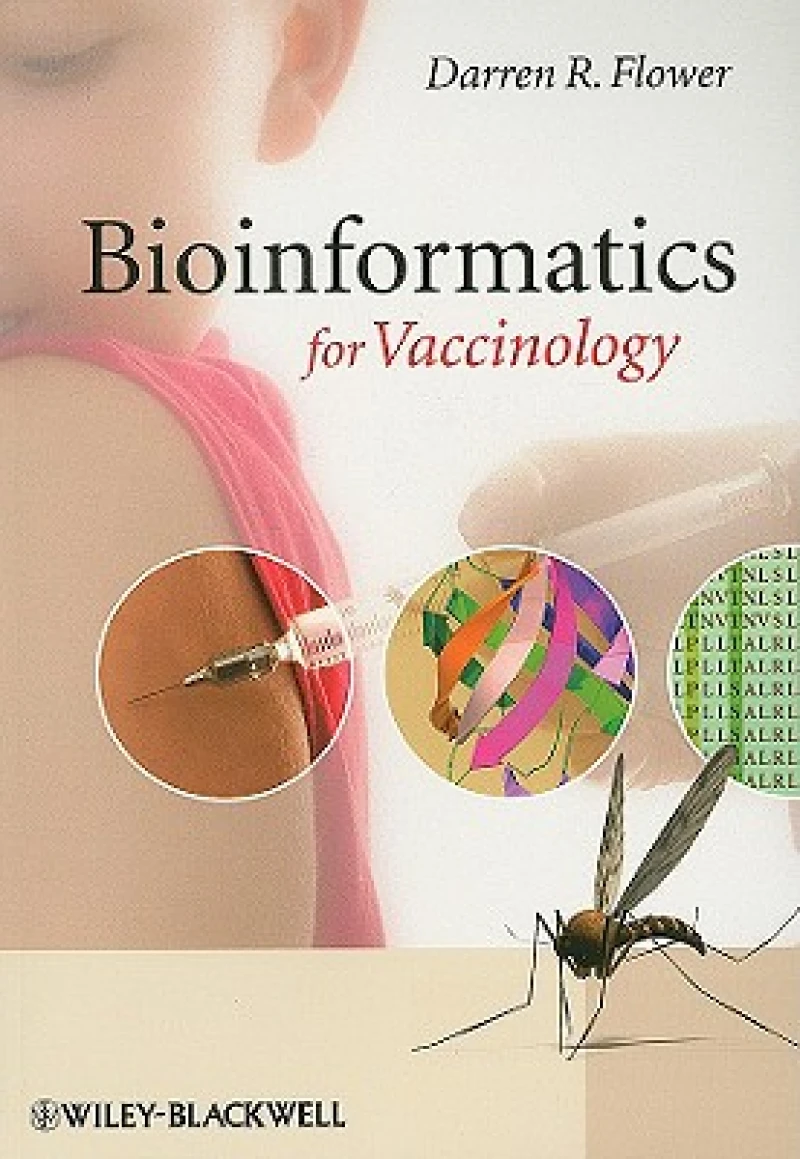
Bioinformatics for Vaccinology
Book Details
Format
Paperback / Softback
ISBN-10
0470027118
ISBN-13
9780470027110
Publisher
John Wiley & Sons Inc
Imprint
John Wiley & Sons Inc
Country of Manufacture
GB
Country of Publication
GB
Publication Date
Nov 7th, 2008
Print length
320 Pages
Weight
538 grams
Dimensions
24.80 x 17.20 x 1.70 cms
Ksh 15,450.00
Werezi Extended Catalogue
0 in stock
Delivery Location
Delivery fee: Select location
Secure
Quality
Fast
The recent expansion in genome data and the parallel increase in cheap computing power has placed the bioinformatics exploration of pathogen genomes centre stage for vaccine researchers. The book shows how bioinformatic techniques can solve key problems from vaccinology and immunology.
“… this book was written from start to finish by one extremely dedicated and erudite individual. The author has done an excellent job of covering the many topics that fall under the umbrella of computational biology for vaccine design, demonstrating an admirable command of subject matter in fields as disparate as object-oriented databases and regulation of T cell response. Simply put, it has just the right breadth and depth, and it reads well. In fact, readability is one of its virtues—making the book enticing and useful, all at once…” Human Vaccines, 2010 "... This book has several strong points. Although there are many textbooks that deal with vaccinology, few attempts have been made to bring together descriptions of vaccines in history, basic bioinformatics, various computational solutions and challenges in vaccinology, detailed experimental methodologies, and cutting-edge technologies... This book may well serve as a first line of reference for all biologists and computer scientists..." –Virology Journal, 2009 Vaccines have probably saved more lives and reduced suffering in a greater number of people than any other medical intervention in human history, succeeding in eradicating smallpox and significantly reducing the mortality and incidence of other diseases. However, with the emergence of diseases such as SARS and the threat of biological warfare, vaccination has once again become a topic of major interest in public health. Vaccinology now has at its disposal an array of post-genomic approaches of great power. None has a more persuasive potential impact than the application of computational informatics to vaccine discovery; the recent expansion in genome data and the parallel increase in cheap computing power have placed the bioinformatics exploration of pathogen genomes centre stage for vaccine researchers. This is the first book to address the area of bioinformatics as applied to rational vaccine design, discussing the ways in which bioinformatics can contribute to improved vaccine development by introducing the subject of harnessing the mathematical and computing power inherent in bioinformatics to the study of vaccinologyputting it into a historical and societal context, and exploring the scope of its methods and applications. Bioinformatics for Vaccinology is a one-stop introduction to computational vaccinology. It will be of particular interest to bioinformaticians with an interest in immunology, as well as to immunologists, and other biologists who need to understand how advances in theoretical and computational immunobiology can transform their working practices.
Get Bioinformatics for Vaccinology by at the best price and quality guaranteed only at Werezi Africa's largest book ecommerce store. The book was published by John Wiley & Sons Inc and it has pages.

