
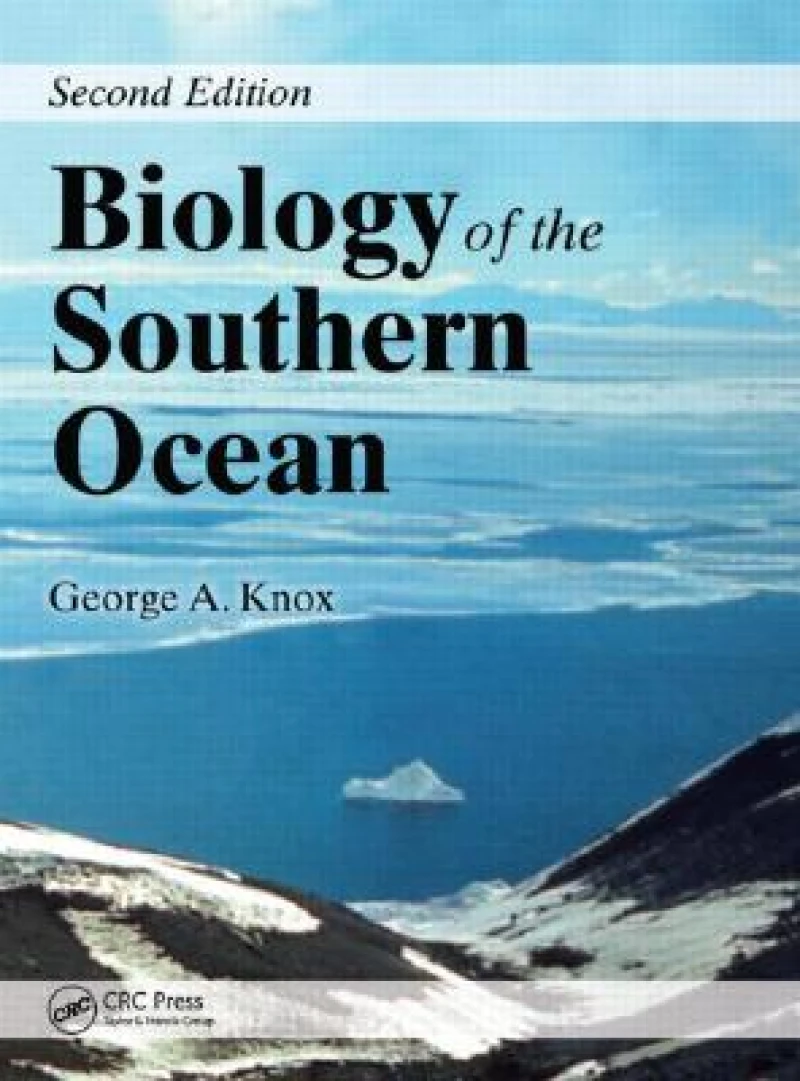
Biology of the Southern Ocean
Book Details
Format
Hardback or Cased Book
Book Series
CRC Marine Biology Series
ISBN-10
0849333946
ISBN-13
9780849333941
Publisher
Taylor & Francis Inc
Imprint
CRC Press Inc
Country of Manufacture
US
Country of Publication
GB
Publication Date
Dec 13th, 2006
Print length
634 Pages
Weight
1,640 grams
Dimensions
21.60 x 28.70 x 3.80 cms
Product Classification:
Marine biology
Ksh 52,200.00
Re-Printing
0 in stock
Delivery Location
Delivery fee: Select location
Secure
Quality
Fast
Covers phytoplankton and primary production, the sea ice microbial communities, and the secondary consumers, the zooplankton. This book describes the biology and ecology of Antarctic krill that highlights its central position in the Southern Ocean food web.
First published in 1993, The Biology of the Southern Ocean has been referred to as international research at its best and an invaluable reference. Drawing on the considerable volume of information published in the last ten years, this second edition retains the format that made the first edition a popular bestseller, while updating the information with the latest research results available.
The book begins with a description of the physico-chemical environment and, in a logical sequence, covers phytoplankton and primary production, the sea ice microbial communities and the secondary consumers, the zooplankton. The author includes an extended chapter on the biology and ecology of Antarctic krill that highlights its central position in the Southern Ocean food web. A series of chapters consider the higher consumers, nekton (with an emphasis on cephalopods) fish, seals, whales, and seabirds. The following chapters explore selected ecosystem components; the benthic communities, life beneath the fast ice and ice shelves, recent advances in understanding decomposition processes, and the role of bacteria and protozoa.
The author synthesizes ecosystem dynamics, with an emphasis on the pelagic ecosystem. He covers resource exploitation, the impact of such exploitation on the marine ecosystem, and the problems involved in the management of the living resources. His epilogue summarizes the extent to which our understanding of the functioning of the Antarctic marine ecosystem has changed in the last 50 years; for example, there has been a dramatic change in our view of krill and its role in the Southern Ocean marine ecosystem. The book concludes with the statement that research carried out under the AGCS Programme and the Scientific Committee on Antarctic Research (SCAR) will continue to provide critical information on the functioning of Antarctic marine ecosystems.
Intended for all those with an ongoing interest in Antarctic research, conservation, and management, this volume represents one of the most authoritative resources in the field as it covers all aspects of this important marine ecosystem.
The book begins with a description of the physico-chemical environment and, in a logical sequence, covers phytoplankton and primary production, the sea ice microbial communities and the secondary consumers, the zooplankton. The author includes an extended chapter on the biology and ecology of Antarctic krill that highlights its central position in the Southern Ocean food web. A series of chapters consider the higher consumers, nekton (with an emphasis on cephalopods) fish, seals, whales, and seabirds. The following chapters explore selected ecosystem components; the benthic communities, life beneath the fast ice and ice shelves, recent advances in understanding decomposition processes, and the role of bacteria and protozoa.
The author synthesizes ecosystem dynamics, with an emphasis on the pelagic ecosystem. He covers resource exploitation, the impact of such exploitation on the marine ecosystem, and the problems involved in the management of the living resources. His epilogue summarizes the extent to which our understanding of the functioning of the Antarctic marine ecosystem has changed in the last 50 years; for example, there has been a dramatic change in our view of krill and its role in the Southern Ocean marine ecosystem. The book concludes with the statement that research carried out under the AGCS Programme and the Scientific Committee on Antarctic Research (SCAR) will continue to provide critical information on the functioning of Antarctic marine ecosystems.
Intended for all those with an ongoing interest in Antarctic research, conservation, and management, this volume represents one of the most authoritative resources in the field as it covers all aspects of this important marine ecosystem.
Get Biology of the Southern Ocean by at the best price and quality guaranteed only at Werezi Africa's largest book ecommerce store. The book was published by Taylor & Francis Inc and it has pages.

