
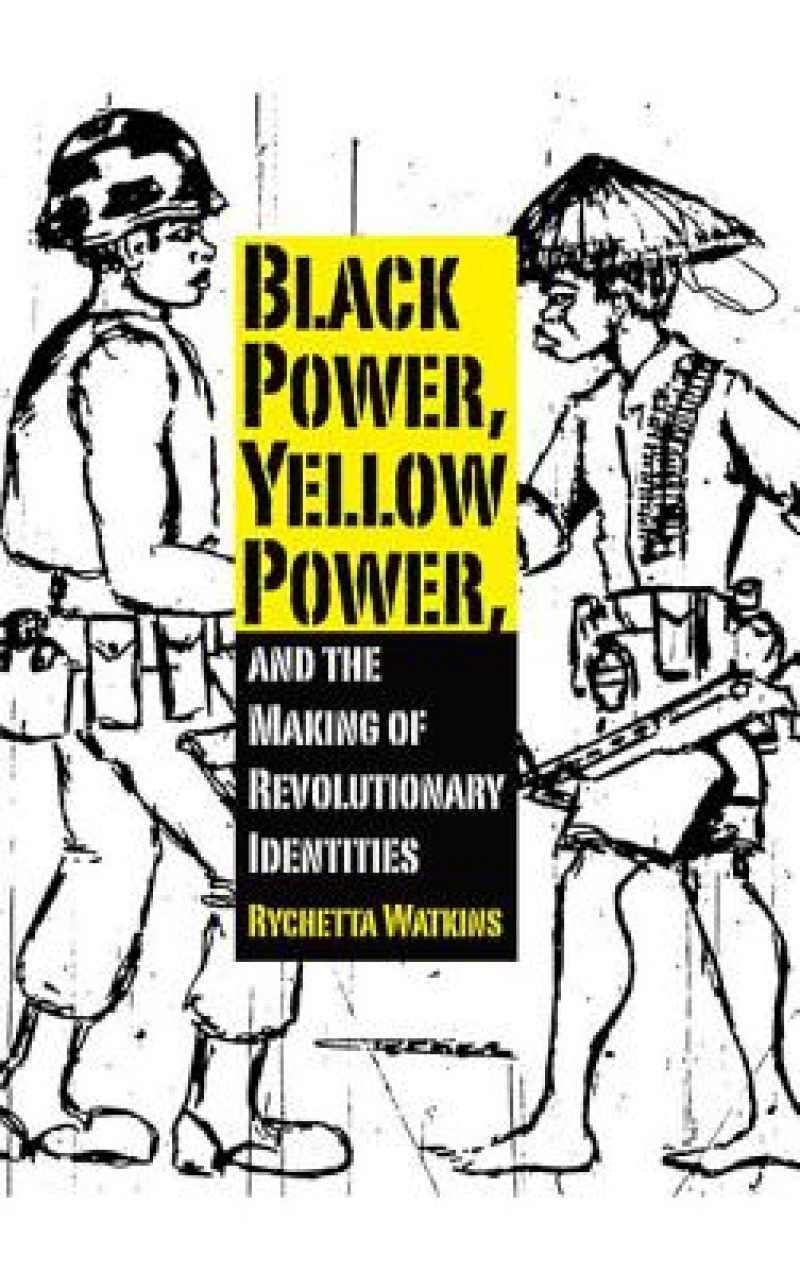
Black Power, Yellow Power, and the Making of Revolutionary Identities
Book Details
Format
Hardback or Cased Book
ISBN-10
1617031615
ISBN-13
9781617031618
Publisher
University Press of Mississippi
Imprint
University Press of Mississippi
Country of Manufacture
US
Country of Publication
GB
Publication Date
Jan 30th, 2012
Print length
176 Pages
Weight
333 grams
Dimensions
21.80 x 14.20 x 2.00 cms
Product Classification:
Ethnic studiesCivil rights & citizenship
Ksh 15,850.00
Publisher Out of Stock
0 in stock
Delivery Location
Delivery fee: Select location
Secure
Quality
Fast
The “guerilla” figure - taking the form of the black-leather-clad revolutionary within the Black Panther Party - has become an iconic trope in American popular culture. In this title, Rychetta Watkins uses the guerilla figure as a point of departure and shows how the trope's rhetoric animates discourses of representation and identity in African American and Asian American literature and culture.
Images of upraised fists, afros, and dashikis have long dominated the collective memory of Black Power and its proponents. The "guerilla" figure--taking the form of the black-leather-clad revolutionary within the Black Panther Party--has become an iconic trope in American popular culture. That politically radical figure, however, has been shaped as much by Asian American cultural discourse as by African American political ideology. From the Asian-African Conference held in April of 1955 in Bandung, Indonesia, onward to the present, Afro-Asian political collaboration has been active and influential.In Black Power, Yellow Power, and the Making of Revolutionary Identities, author Rychetta Watkins uses the guerilla figure as a point of departure and shows how the trope''s rhetoric animates discourses of representation and identity in African American and Asian American literature and culture. In doing so, she examines the notion of "Power," in terms of ethnic political identity, and explores collaborating--and sometimes competing-- ethnic interests that have drawn ideas from the concept. The project brings together a range of texts--editorial cartoons, newspaper articles, novels, visual propaganda, and essays--that illustrate the emergence of this subjectivity in Asian American and African American cultural productions during the Power period, roughly 1966 through 1981. After a case study of the cultural politics of academic anthologies and the cooperation between Frank Chin and Ishmael Reed, the volume culminates with analyses of this trope in Sam Greenlee''s The Spook Who Sat by the Door, Alice Walker''s Meridian, and John Okada''s No No Boy.Rychetta Watkins, Memphis, Tennessee, is assistant professor of English at Rhodes College. Her work has appeared in M/MLA Journal, MELUS, and the Southern Quarterly.
Get Black Power, Yellow Power, and the Making of Revolutionary Identities by at the best price and quality guaranteed only at Werezi Africa's largest book ecommerce store. The book was published by University Press of Mississippi and it has pages.

