
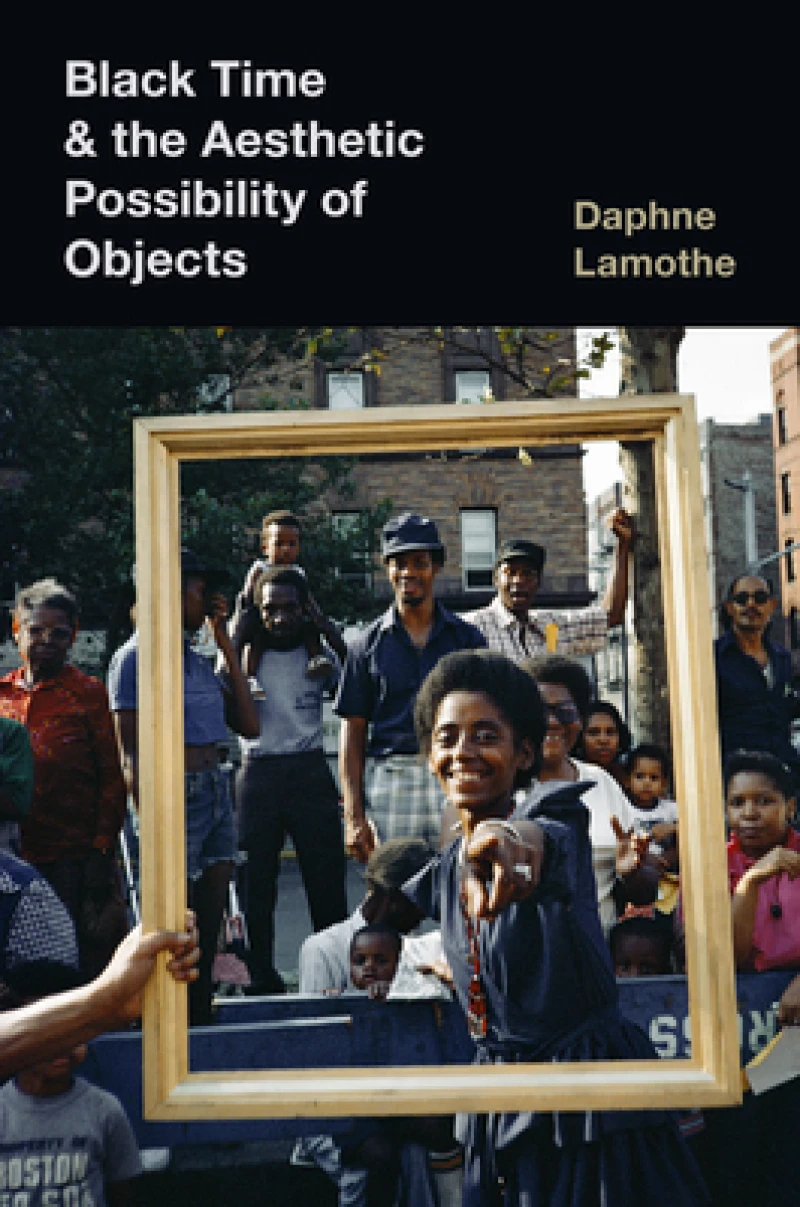
Black Time and the Aesthetic Possibility of Objects
Book Details
Format
Paperback / Softback
ISBN-10
1469675315
ISBN-13
9781469675312
Publisher
The University of North Carolina Press
Imprint
The University of North Carolina Press
Country of Manufacture
GB
Country of Publication
GB
Publication Date
Jan 9th, 2024
Print length
202 Pages
Weight
324 grams
Dimensions
15.50 x 23.40 x 1.60 cms
Ksh 4,700.00
Werezi Extended Catalogue
0 in stock
Delivery Location
Delivery fee: Select location
Secure
Quality
Fast
Developing the idea of ‘Black aesthetic time’ - a multipronged theoretical concept that analyses the ways race and time collide in the process of cultural production - Daphne Lamothe assesses Black fiction, poetry, and visual and musical texts.
The decades following the civil rights and decolonization movements of the sixties and seventies—termed the post-soul era—created new ways to understand the aesthetics of global racial representation. Daphne Lamothe shows that beginning around 1980 and continuing to the present day, Black literature, art, and music resisted the pull of singular and universal notions of racial identity. Developing the idea of "Black aesthetic time"—a multipronged theoretical concept that analyzes the ways race and time collide in the process of cultural production—she assesses Black fiction, poetry, and visual and musical texts by Paule Marshall, Zadie Smith, Tracy K. Smith, Dionne Brand, Toyin Ojih Odutola, and Stromae, among others. Lamothe asks how our understanding of Blackness might expand upon viewing racial representation without borders—or, to use her concept, from the permeable, supple place of Black aesthetic time.
Lamothe purposefully focuses on texts told from the vantage point of immigrants, migrants, and city dwellers to conceptualize Blackness as a global phenomenon without assuming the universality or homogeneity of racialized experience. In this new way to analyze Black global art, Lamothe foregrounds migratory subjects poised on thresholds between not only old and new worlds, but old and new selves.
Lamothe purposefully focuses on texts told from the vantage point of immigrants, migrants, and city dwellers to conceptualize Blackness as a global phenomenon without assuming the universality or homogeneity of racialized experience. In this new way to analyze Black global art, Lamothe foregrounds migratory subjects poised on thresholds between not only old and new worlds, but old and new selves.
Get Black Time and the Aesthetic Possibility of Objects by at the best price and quality guaranteed only at Werezi Africa's largest book ecommerce store. The book was published by The University of North Carolina Press and it has pages.

