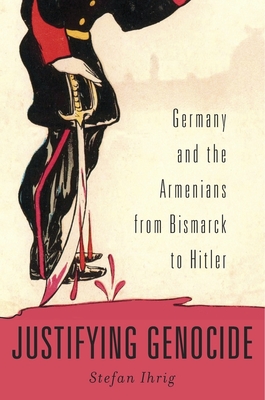
Blackness in Interwar Germany : Jazz, Race and the Making of the Third Reich
Book Details
Delivery Location
Delivery fee: Select location
The first comprehensive account of Blackness in Germany, spanning the late Empire, the Roaring Twenties and the aftermath of World War Two.
Germany’s past in relation to Blackness is often dismissed as peripheral: its colonial enterprise lasted merely three decades, and, until the end of World War Two, the Black population in Germany was small. Yet debates about Blackness, especially in the 1920s, were part of wider discussions in which social and political problems were articulated through race—problems the Nazis later claimed to have answers for.
Through a deep exploration of Germany’s imperial experiences in Africa, Stefan Ihrig reveals that ideas about Blackness played a significant role in German history, even when there were few Black people in Germany or, as under Hitler, Africa largely fell outside the regime’s predatory gaze. He examines the Weimar period, when Blackness served as a symbol—and to some extent the embodiment—of the Jazz Age. And he analyses how anxieties about racial mixing, the New Woman and the perceived corrupting influence of a Black and American modernity fuelled the cultural backlash in the years up to Hitler’s appointment as Chancellor. As Ihrig uncovers, anti-Blackness was a central theme in Nazi discourse.
This illuminating investigation is both a prehistory of the Third Reich and a history of an important, often overlooked dimension of modern Germany.
Get Blackness in Interwar Germany by Stefan Ihrig at the best price and quality guaranteed only at Werezi Africa's largest book ecommerce store. The book was published by C Hurst & Co Publishers Ltd and it has 344 pages.
Customers Who Bought This Also Bought
Age of Revolutions
KSh 2,350.00

Eichmann in Jerusalem
KSh 2,350.00

Trouble With Being Born
KSh 2,000.00

Hiroshima
KSh 2,000.00

Freedom
KSh 6,300.00

Holocaust
KSh 2,700.00
The History of the Peloponnesian War
KSh 2,700.00
Annals
KSh 2,350.00
Greek Lives
KSh 2,150.00
Sleepwalkers
KSh 3,400.00

Napoleon The Great
KSh 3,600.00
Diary of a Young Girl
KSh 1,800.00