
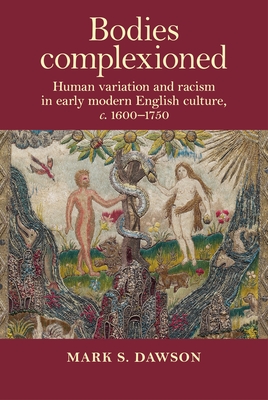
Bodies complexioned : Human Variation and Racism in Early Modern English Culture, c. 1600–1750
by
Mark Dawson
Book Details
Format
Hardback
ISBN-10
1526134489
ISBN-13
9781526134486
Publisher
Manchester University Press
Imprint
Manchester University Press
Country of Manufacture
GB
Country of Publication
GB
Publication Date
May 13th, 2019
Print length
280 Pages
Weight
570 grams
Dimensions
23.40 x 16.20 x 2.60 cms
KSh 15,300.00
Currently unavailable
0 in stock
Delivery Location
Delivery fee: Select location
Secure
Quality
Fast
Skin-tones mattered in early modern England. Indexing health, social status, religious affiliation and national allegiance, they helped explain (away) poverty, colonialism, war and slavery. Drawing physical distinctions as a means to power has a complex history – one belying racism’s assumption that such distinctions are natural or timeless. -- .
Bodily contrasts - from the colour of hair, eyes and skin to the shape of faces and skeletons - allowed the English of the seventeenth and early eighteenth centuries to discriminate systematically among themselves and against non-Anglophone groups. Making use of an array of sources, this book examines how early modern English people understood bodily difference. It demonstrates that individuals'' distinctive features were considered innate, even as discrete populations were believed to have characteristics in common, and challenges the idea that the humoral theory of bodily composition was incompatible with visceral inequality or racism. While ''race'' had not assumed its modern valence, and ''racial'' ideologies were still to come, such typecasting nonetheless had mundane, lasting consequences. Grounded in humoral physiology, and Christian universalism notwithstanding, bodily prejudices inflected social stratification, domestic politics, sectarian division and international relations.
Get Bodies complexioned by Mark Dawson at the best price and quality guaranteed only at Werezi Africa's largest book ecommerce store. The book was published by Manchester University Press and it has 280 pages.
Customers Who Bought This Also Bought

Churchill
KSh 3,700.00

Difficult Women
KSh 2,350.00

Legacy of Violence
KSh 3,150.00
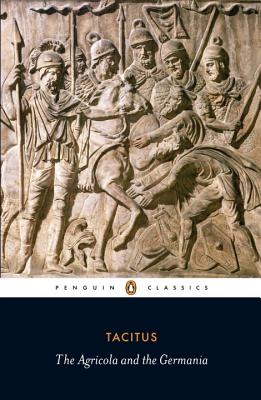
Agricola and the Germania
KSh 2,350.00

Empireland
KSh 2,150.00

The History of the Kings of Britain
KSh 2,350.00

Siege
KSh 2,000.00

Anarchy
KSh 2,700.00
What Matters in Jane Austen?
KSh 2,700.00
Unruly
KSh 2,150.00
Map Of A Nation
KSh 2,350.00

Black and British
KSh 2,350.00
More by Mark Dawson

The Inheritance
KSh 2,150.00

The Casebook of Atticus Priest
KSh 1,250.00

A Place to Bury Strangers
KSh 2,150.00

EU Law and Governance
KSh 14,750.00

The Red Room
KSh 2,200.00

Success in Groupwork
KSh 1,850.00

The Governance of EU Fundamental Rights
KSh 14,200.00

All The Devils Are Here
KSh 2,300.00

EU Law and Governance
KSh 6,200.00

The House in the Woods
KSh 2,200.00
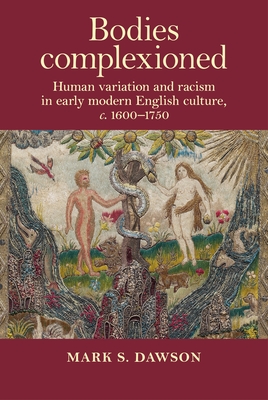
Bodies Complexioned
KSh 4,700.00

A Place to Bury Strangers
KSh 1,800.00
