
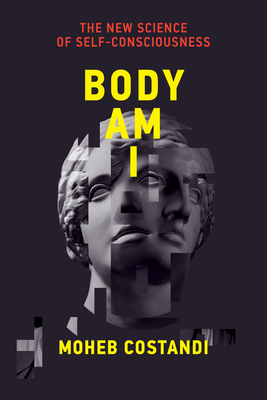
Body Am I : The New Science of Self-Consciousness
Book Details
Format
Hardback
ISBN-10
0262046598
ISBN-13
9780262046596
Publisher
MIT Press Ltd
Imprint
MIT Press
Country of Manufacture
GB
Country of Publication
GB
Publication Date
Oct 4th, 2022
Print length
216 Pages
Weight
440 grams
Dimensions
16.10 x 23.60 x 2.40 cms
Product Classification:
Biology, life sciences
KSh 4,700.00
Werezi Extended Catalogue
Delivery in 4 days
3 copies in stock
Delivery Location
Delivery fee: Select location
Delivery in 4 days
Secure
Quality
Fast
How the way we perceive our bodies plays a critical role in the way we perceive ourselves: stories of phantom limbs, rubber hands, anorexia, and other phenomena.
The body is central to our sense of identity. It can be a canvas for self-expression, decorated with clothing, jewelry, cosmetics, tattoos, and piercings. But the body is more than that. Bodily awareness, says scientist-writer Moheb Costandi, is key to self-consciousness. In Body Am I, Costandi examines how the brain perceives the body, how that perception translates into our conscious experience of the body, and how that experience contributes to our sense of self. Along the way, he explores what can happen when the mechanisms of bodily awareness are disturbed, leading to such phenomena as phantom limbs, alien hands, and amputee fetishes.
Costandi explains that the brain generates maps and models of the body that guide how we perceive and use it, and that these maps and models are repeatedly modified and reconstructed. Drawing on recent bodily awareness research, the new science of self-consciousness, and historical milestones in neurology, he describes a range of psychiatric and neurological disorders that result when body and brain are out of sync, including not only the well-known phantom limb syndrome but also phantom breast and phantom penis syndromes; body integrity identity disorder, which compels a person to disown and then amputate a healthy arm or leg; and such eating disorders as anorexia.
Wide-ranging and meticulously researched, Body Am I (the title comes from Nietzsche’s Thus Spoke Zarathustra) offers new insight into self-consciousness by describing it in terms of bodily awareness.
The body is central to our sense of identity. It can be a canvas for self-expression, decorated with clothing, jewelry, cosmetics, tattoos, and piercings. But the body is more than that. Bodily awareness, says scientist-writer Moheb Costandi, is key to self-consciousness. In Body Am I, Costandi examines how the brain perceives the body, how that perception translates into our conscious experience of the body, and how that experience contributes to our sense of self. Along the way, he explores what can happen when the mechanisms of bodily awareness are disturbed, leading to such phenomena as phantom limbs, alien hands, and amputee fetishes.
Costandi explains that the brain generates maps and models of the body that guide how we perceive and use it, and that these maps and models are repeatedly modified and reconstructed. Drawing on recent bodily awareness research, the new science of self-consciousness, and historical milestones in neurology, he describes a range of psychiatric and neurological disorders that result when body and brain are out of sync, including not only the well-known phantom limb syndrome but also phantom breast and phantom penis syndromes; body integrity identity disorder, which compels a person to disown and then amputate a healthy arm or leg; and such eating disorders as anorexia.
Wide-ranging and meticulously researched, Body Am I (the title comes from Nietzsche’s Thus Spoke Zarathustra) offers new insight into self-consciousness by describing it in terms of bodily awareness.
Get Body Am I by Moheb Costandi at the best price and quality guaranteed only at Werezi Africa's largest book ecommerce store. The book was published by MIT Press Ltd and it has 216 pages.
Customers Who Bought This Also Bought

Biology for Cambridge International AS & A Level Coursebook
KSh 12,150.00
Biology for the IB MYP 4 & 5
KSh 9,950.00
The Origin of Language
KSh 4,500.00
Animal Vegetable Criminal
KSh 1,800.00

Pearson Edexcel International A Level Biology Student Book
KSh 8,450.00

Pearson Edexcel International AS Level Biology Student Book
KSh 8,300.00

Pearson Edexcel International A Level Biology Lab Book
KSh 1,800.00
Bonk
KSh 2,000.00
The Gene
KSh 4,350.00
Caie as & a Level Biology SB
KSh 10,550.00

A-Level Biology: AQA Year 1 & 2 Complete Revision & Practice with Online Edition
KSh 4,450.00

They Had Names
KSh 3,900.00


More in This Genre
Biology for Cambridge International AS & A Level Coursebook
KSh 12,150.00
Biology for the IB MYP 4 & 5
KSh 9,950.00
The Origin of Language
KSh 4,500.00
Animal Vegetable Criminal
KSh 1,800.00
Pearson Edexcel International A Level Biology Student Book
KSh 8,450.00
Pearson Edexcel International AS Level Biology Student Book
KSh 8,300.00
