
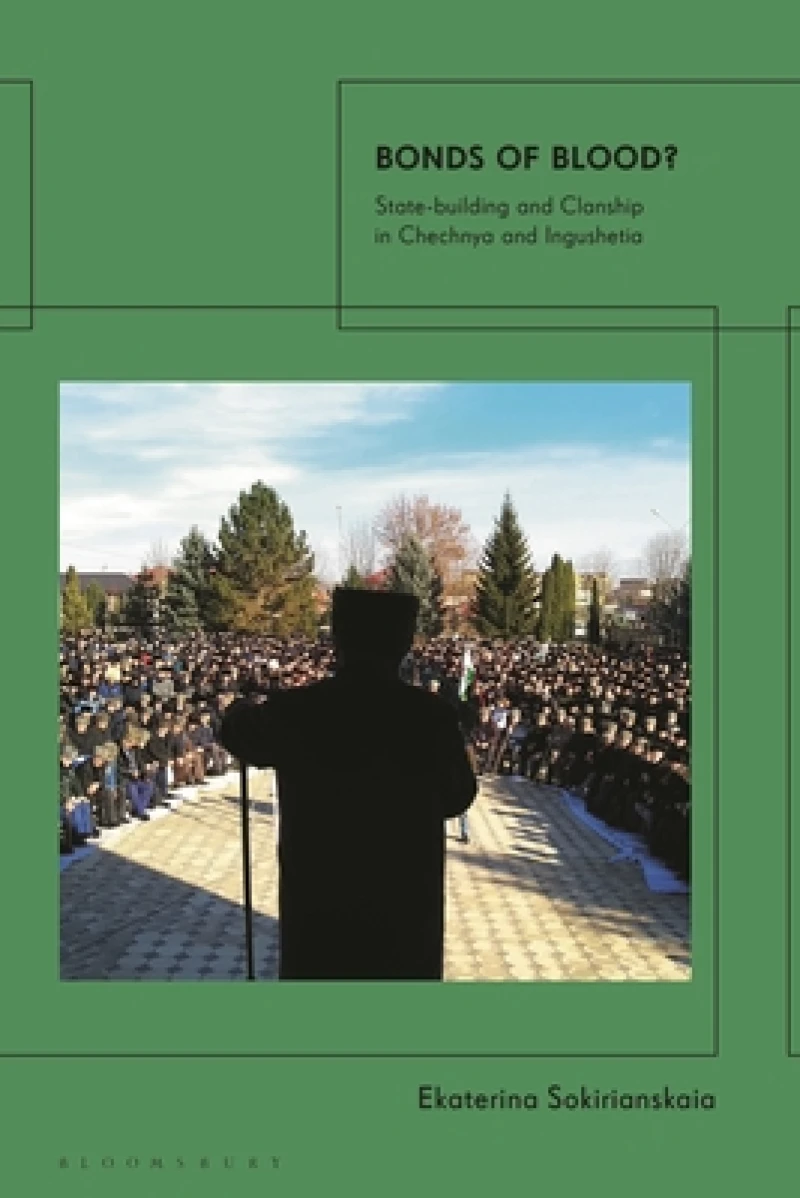
Bonds of Blood? : State-building and Clanship in Chechnya and Ingushetia
Book Details
Format
Hardback or Cased Book
ISBN-10
1350271691
ISBN-13
9781350271692
Publisher
Bloomsbury Publishing PLC
Imprint
Bloomsbury Academic
Country of Manufacture
GB
Country of Publication
GB
Publication Date
Mar 9th, 2023
Print length
280 Pages
Weight
572 grams
Dimensions
24.10 x 16.20 x 2.20 cms
Product Classification:
Political structure & processesGeopolitics
Ksh 17,600.00
Manufactured on Demand
0 in stock
Delivery Location
Delivery fee: Select location
Secure
Quality
Fast
The North Caucasus, specifically Chechnya and Ingushetia, is a region that has experienced some of the deadliest and most protracted conflicts in Europe. By examining the relationship between state and society, this book considers how state-building has unfolded in a region with highly complex social structures, a history of colonialism, Soviet authoritarianism, and later post-Soviet wars and trauma. Focusing on a systematic analysis of subnational state-building in post-Soviet Chechnya and Ingushetia, and the role of teips (clans) in this process, this study responds to the widely accepted academic claim that governance and ethnic consolidation in the North Caucasus is shaped by the politics of teips. Through socio-anthropological analysis of the clans and how they function towards political systems, Sokirianskaia shows how the teips lost their organizational structure and roles, becoming incapable of mobilizing for political action. While teip symbolism has remained politically relevant, and the bonds of kinship are highly important, they do not form the basis of politics and subnational statebuilding in Chechnya and Ingushetia. Consequently, subnational authoritarianism is not the result of the pre-existing social composition of the society, but a reflection of the rules of the game imposed by Moscow and political choices of the Kremlin-installed local elites.
The North Caucasus, specifically Chechnya and Ingushetia is a region that has experienced some of the deadliest and most protracted conflicts in Europe. Chechnya is currently a totalitarian enclave within the increasingly authoritarian Russian Federation, while Ingushetia still suffers from lingering political conflicts and chronic problems with the quality of governance. By examining the relationship between state and society, this book considers how state-building has unfolded in a region with highly complex social structures, a history of colonialism, Soviet authoritarianism, and later post-Soviet wars and trauma. Focusing on a systematic analysis of subnational state-building in post-Soviet Chechnya and Ingushetia and the role of teips (clans) in this process, this study responds to the widely accepted academic claim that governance and ethnic consolidation in the North Caucasus are shaped by the politics of teips and the belief that late and uneven modernization, and the survival of tribal structures have been accountable for systematic failures in state-building in the region.The research is based on over 200 interviews which the author carried out in Ingushetia and Chechnya, as well as interviews with Chechen exiled politicians in Europe. The book also features never-before-seen access to the archives of the Chechen Parliament during the period of de facto independence. Through research into the socio-anthropological analysis of the clans and how they function towards political systems, Sokirianskaia shows how the teips lost their traditional organizational structure and roles, becoming incapable of mobilizing for political action. She argues that while teip symbolism has remained politically relevant, and the bonds of kinship are highly important, they do not form the basis of politics and subnational state-building in Chechnya and Ingushetia. Consequently, subnational authoritarianism is not the result of the pre-existing social composition of the society, but a reflection of institutional rules imposed by Moscow.
Get Bonds of Blood? by at the best price and quality guaranteed only at Werezi Africa's largest book ecommerce store. The book was published by Bloomsbury Publishing PLC and it has pages.

