
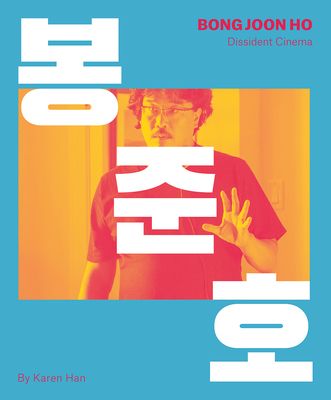
Bong Joon Ho : Dissident Cinema
by
Karen Han
Book Details
Format
Hardback
ISBN-10
1419758128
ISBN-13
9781419758126
Publisher
Abrams
Imprint
Abrams
Country of Manufacture
US
Country of Publication
GB
Publication Date
Dec 22nd, 2022
Print length
288 Pages
Weight
1,286 grams
Dimensions
23.50 x 28.30 x 2.80 cms
Product Classification:
Individual film directors, film-makersIndividual film directors, film-makers
KSh 6,300.00
Werezi Extended Catalogue
Delivery in 12 days
2 copies in stock
Delivery Location
Delivery fee: Select location
Delivery in 12 days
Secure
Quality
Fast
Brilliantly illustrated and designed by the London–based film magazine Little White Lies, Bong Joon Ho: Dissident Cinema examines the career of the South Korean writer/director who has been making critically acclaimed feature films for more than two decades.
First breaking out into the international scene with festival-favorite Barking Dogs Never Bite (2000), Bong then set his sights on the story of a real-life serial killer in 2003’s Memories of Murder and once again won strong international critical attention. But it was 2006’s The Host that proved to be a huge breakout moment both for Bong and the Korean film industry. The monster movie, set in Seoul, premiered at Cannes and became an instant hit—South Korea’s widest release ever, setting new box office records and selling remake rights in the US to Universal.
Bong’s next feature, Mother (2009), also premiered at Cannes, once again earning critical acclaim and appearing on many “best-of” lists for 2009/2010. Bong’s first English-language film, Snowpiercer (2013)—set on a postapocalyptic train where class divisions erupt into class warfare—followed on its heels, bringing his work outside of the South Korean and film festival markets and onto the stage of global commercial cinema. With 2017’s Okja , Bong became even more of an internationally known name, with the New York Times’ A. O. Scott calling the film “a miracle of imagination and technique.” Bong’s next film, the 2019 black comedy/thriller Parasite, simultaneously scaled back—the film is mostly set in just two locations, with two Korean families taking center stage—and took his career to new heights, winning the Palme d’Or with a unanimous vote, as well as history-making Academy Awards for Best Picture, Best Director, Best Original Screenplay, and Best International Feature Film.
Parasite’s jarring shifts in tone—encompassing darkness, drama, slapstick, and black humor—and its critiques of late capitalism and American imperialism are in conversation with Bong’s entire body of work, and Korean culture writer Karen Han’s mid-career monograph will survey the entirety of that work, including his short films and music videos, to flesh out the stories behind the films with supporting analytical text and interviews with Bong’s key collaborators. The book also explores Bong’s rise in the cultural eye of the West, catching up readers with his career before his next masterpiece arrives.
First breaking out into the international scene with festival-favorite Barking Dogs Never Bite (2000), Bong then set his sights on the story of a real-life serial killer in 2003’s Memories of Murder and once again won strong international critical attention. But it was 2006’s The Host that proved to be a huge breakout moment both for Bong and the Korean film industry. The monster movie, set in Seoul, premiered at Cannes and became an instant hit—South Korea’s widest release ever, setting new box office records and selling remake rights in the US to Universal.
Bong’s next feature, Mother (2009), also premiered at Cannes, once again earning critical acclaim and appearing on many “best-of” lists for 2009/2010. Bong’s first English-language film, Snowpiercer (2013)—set on a postapocalyptic train where class divisions erupt into class warfare—followed on its heels, bringing his work outside of the South Korean and film festival markets and onto the stage of global commercial cinema. With 2017’s Okja , Bong became even more of an internationally known name, with the New York Times’ A. O. Scott calling the film “a miracle of imagination and technique.” Bong’s next film, the 2019 black comedy/thriller Parasite, simultaneously scaled back—the film is mostly set in just two locations, with two Korean families taking center stage—and took his career to new heights, winning the Palme d’Or with a unanimous vote, as well as history-making Academy Awards for Best Picture, Best Director, Best Original Screenplay, and Best International Feature Film.
Parasite’s jarring shifts in tone—encompassing darkness, drama, slapstick, and black humor—and its critiques of late capitalism and American imperialism are in conversation with Bong’s entire body of work, and Korean culture writer Karen Han’s mid-career monograph will survey the entirety of that work, including his short films and music videos, to flesh out the stories behind the films with supporting analytical text and interviews with Bong’s key collaborators. The book also explores Bong’s rise in the cultural eye of the West, catching up readers with his career before his next masterpiece arrives.
Get Bong Joon Ho by Karen Han at the best price and quality guaranteed only at Werezi Africa's largest book ecommerce store. The book was published by Abrams and it has 288 pages.
Customers Who Bought This Also Bought

Oromay
KSh 2,350.00
Director
KSh 3,950.00

Oromay
KSh 3,600.00

Fassbinder Thousands of Mirrors
KSh 2,350.00

Anytime
KSh 2,000.00

I Feel Bad About My Neck
KSh 2,000.00

I Feel Bad About My Neck
KSh 2,700.00

Most of Nora Ephron
KSh 2,000.00
Dark Matter
KSh 3,600.00

Greta Gerwig’s Barbie
KSh 4,700.00
Infamous Players
KSh 3,850.00

The Crying Game
KSh 2,350.00
