
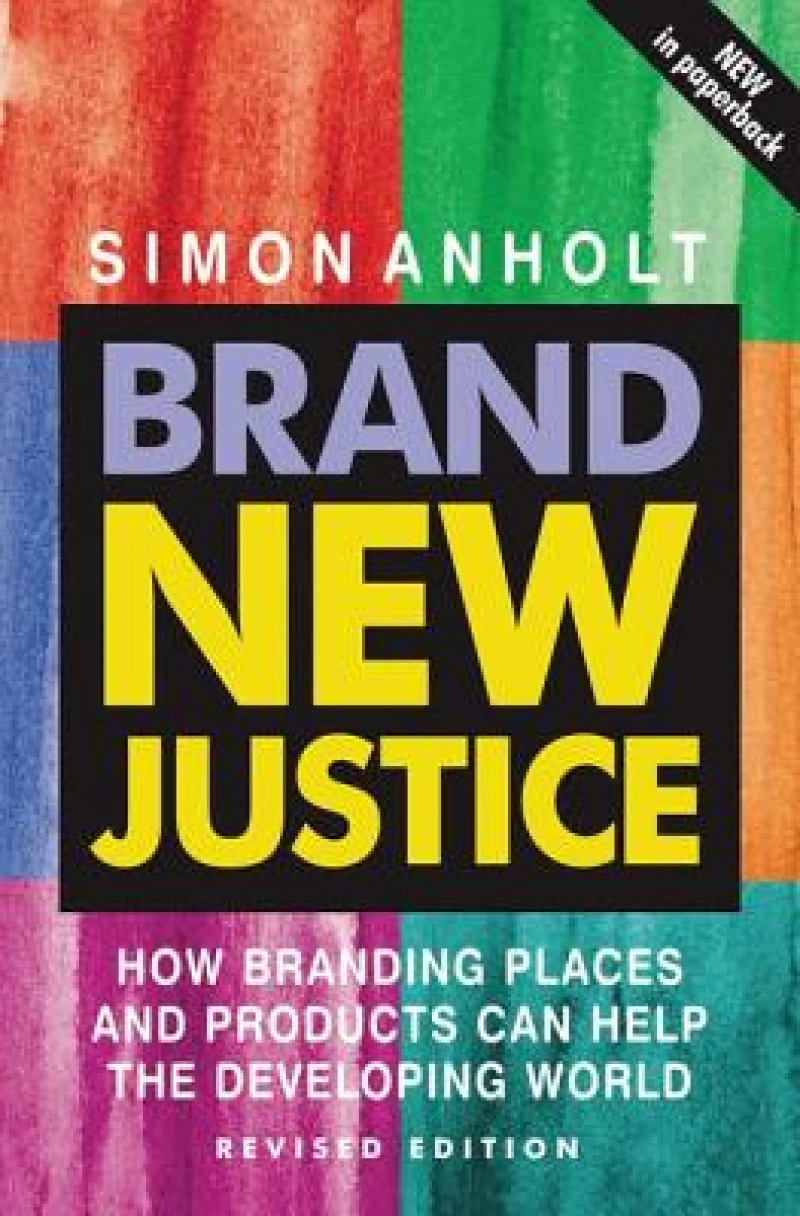
Brand New Justice
by
Simon Anholt
Book Details
Format
Hardback or Cased Book
ISBN-10
1138172405
ISBN-13
9781138172401
Publisher
Taylor & Francis Ltd
Imprint
Routledge
Country of Manufacture
GB
Country of Publication
GB
Publication Date
Apr 24th, 2016
Print length
184 Pages
Weight
500 grams
Product Classification:
Economics
Ksh 32,750.00
Werezi Extended Catalogue
0 in stock
Delivery Location
Delivery fee: Select location
Secure
Quality
Fast
Recently vilified as the prime dynamic driving home the breach between poor and rich nations, here the branding process is rehabilitated as a potential saviour of the economically underprivileged.
Brand New Justice, now in a revised paperback edition, systematically analyses the success stories of the Top Thirteen nations, demonstrating that their wealth is based on the ''last mile'' of the commercial process: buying raw materials and manufacturing cheaply in third world countries, these countries realise their lucrative profits by adding value through finishing, packaging and marketing and then selling the branded product on to the end-user at a hugely inflated price. The use of sophisticated global media techniques alongside a range of creative marketing activities are the lynchpins of this process.
Applying his observations on economic history and the development and impact of global marketing, Anholt presents a cogent plan for developing nations to benefit from globalization. So long the helpless victim of capitalist trading systems, he shows that they can cross the divide and graduate from supplier nation to producer nation. Branding native produce on a global scale, making a commercial virtue out of perceived authenticity and otherness and fully capitalising on the ''last mile'' benefits are key to this graduation and fundamental to forging a new global economic balance.
Anholt argues with a forceful logic, but also backs his hypothesis with enticing glimpses of this process actually beginning to take place. Examining activities in India, Thailand, Russia and Africa among others, he shows the risks, challenges and pressures inherent in ''turning the tide'', but above all he demonstrates the very real possibility of enlightened capitalism working as a force for good in global terms.
Brand New Justice, now in a revised paperback edition, systematically analyses the success stories of the Top Thirteen nations, demonstrating that their wealth is based on the ''last mile'' of the commercial process: buying raw materials and manufacturing cheaply in third world countries, these countries realise their lucrative profits by adding value through finishing, packaging and marketing and then selling the branded product on to the end-user at a hugely inflated price. The use of sophisticated global media techniques alongside a range of creative marketing activities are the lynchpins of this process.
Applying his observations on economic history and the development and impact of global marketing, Anholt presents a cogent plan for developing nations to benefit from globalization. So long the helpless victim of capitalist trading systems, he shows that they can cross the divide and graduate from supplier nation to producer nation. Branding native produce on a global scale, making a commercial virtue out of perceived authenticity and otherness and fully capitalising on the ''last mile'' benefits are key to this graduation and fundamental to forging a new global economic balance.
Anholt argues with a forceful logic, but also backs his hypothesis with enticing glimpses of this process actually beginning to take place. Examining activities in India, Thailand, Russia and Africa among others, he shows the risks, challenges and pressures inherent in ''turning the tide'', but above all he demonstrates the very real possibility of enlightened capitalism working as a force for good in global terms.
Get Brand New Justice by at the best price and quality guaranteed only at Werezi Africa's largest book ecommerce store. The book was published by Taylor & Francis Ltd and it has pages.

