
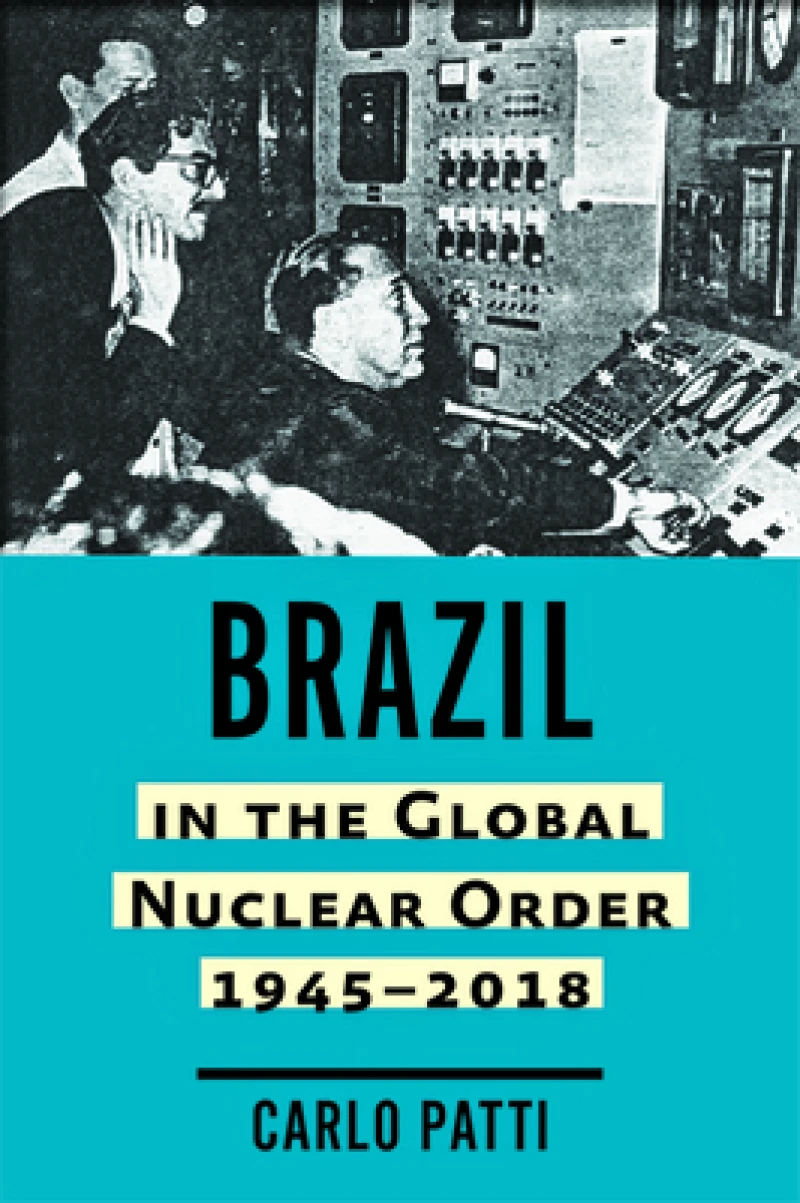
Brazil in the Global Nuclear Order, 1945–2018
by
Carlo Patti
Book Details
Format
Hardback or Cased Book
ISBN-10
1421442876
ISBN-13
9781421442877
Publisher
Johns Hopkins University Press
Imprint
Johns Hopkins University Press
Country of Manufacture
US
Country of Publication
GB
Publication Date
Feb 8th, 2022
Print length
312 Pages
Weight
576 grams
Dimensions
16.10 x 23.70 x 3.00 cms
Product Classification:
History of the AmericasThe Cold WarInternational relations
Ksh 8,000.00
Temporarily out of stock, due soon
0 in stock
Delivery Location
Delivery fee: Select location
Secure
Quality
Fast
The first comprehensive and definitive history of Brazil's decision to give up the nuclear weapon option. Why do countries capable of "going nuclear" choose not to? Brazil, which gained notoriety for developing a nuclear program and then backtracking into adherence to the nonproliferation regime, offers a fascinating window into the complex politics surrounding nuclear energy and American interference. Since the beginning of the nuclear age, author Carlo Patti writes, Brazil has tried to cooperate with other countries in order to master nuclear fuel cycle technology, but international limitations have constrained the country's approach. Brazil had the start of a nuclear program in the 1950s, which led to the United States interfering in agreements between Brazil and other countries with advanced nuclear industries, such as France and West Germany. These international constraints, especially those imposed by the United States, partly explain the country's decision to create a secret nuclear program in 1978 and to cooperate with other countries outside the Nuclear Non-Proliferation Treaty [NPT] regime, such as Argentina and China. Yet, in 1998, Brazil chose to adhere to the Nuclear Non-Proliferation Treaty it so actively opposed only three decades prior, although the country still critiques the unfair nature of the treaty. Patti draws on recent declassified primary sources collected during years of research in public and private archives in eight different countries, as well as interviews with former presidents, diplomats, and scientists, to show how US nonproliferation policies deeply affected Brazil's decisions. Assessing the domestic and international factors that informed the evolution of Brazil's nuclear diplomacy, Brazil in the Global Nuclear Order, 1945-2018 also discusses what it means with respect to Brazil's future political goals.
Get Brazil in the Global Nuclear Order, 1945–2018 by at the best price and quality guaranteed only at Werezi Africa's largest book ecommerce store. The book was published by Johns Hopkins University Press and it has pages.

