
Cart 0
Breaking Down Barriers
Click to zoom

Share this book

Breaking Down Barriers : Usability, Accessibility and Inclusive Design

2018 ed.

Book Details

Format Hardback or Cased Book
ISBN-10 3319750275
ISBN-13 9783319750279
Edition 2018 ed.
Publisher Springer International Publishing AG
Imprint Springer International Publishing AG
Country of Manufacture CH
Country of Publication GB
Publication Date Feb 20th, 2018
Print length 286 Pages
Weight 576 grams
Dimensions 16.60 x 24.40 x 1.80 cms
Ksh 36,000.00
Temporarily out of stock, due soon 0 in stock

Delivery Location

Delivery fee: Select location

Secure
Quality
Fast
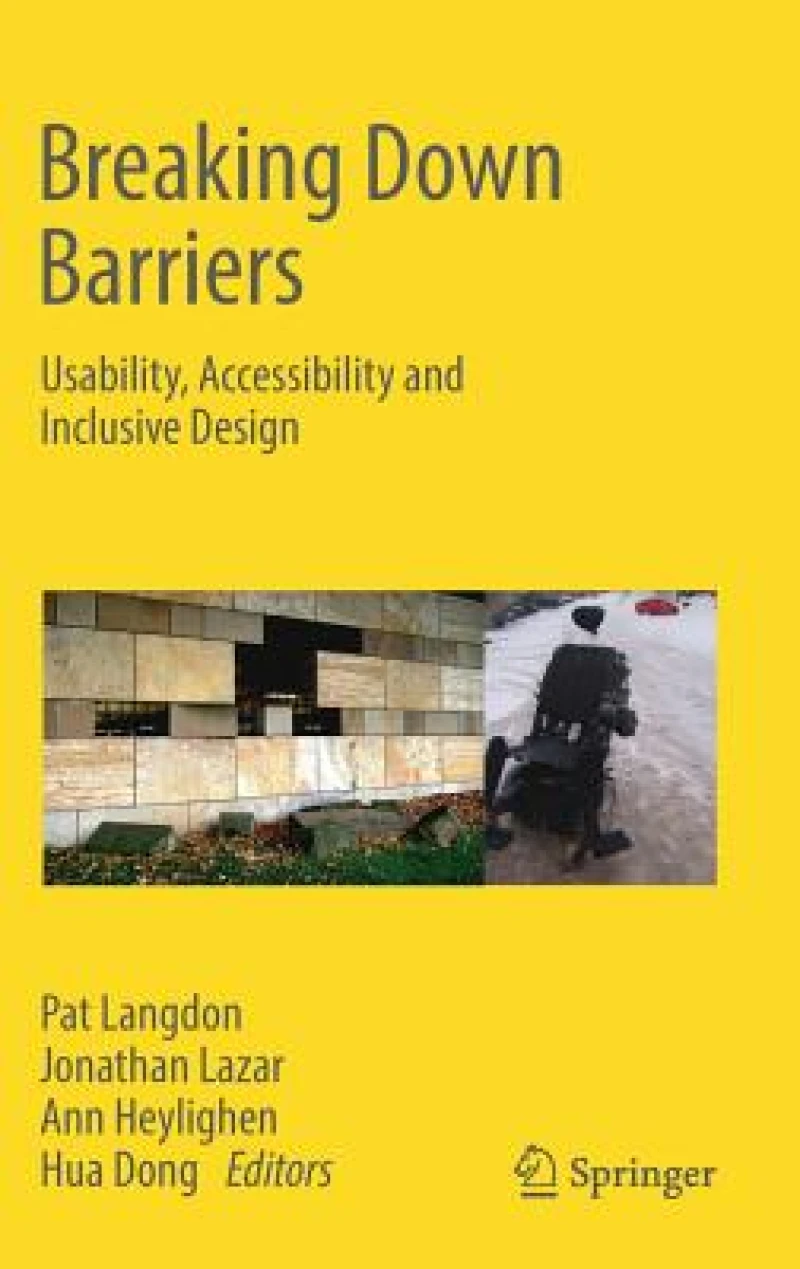
The Cambridge Workshops on Universal Access and Assistive Technology (CWUAAT)  is one of the few gatherings where people interested in inclusive design, across different fields, including designers, computer scientists, engineers, architects, ergonomists, ethnographers, policymakers and user communities, meet, discuss, and collaborate. CWUAAT has also become an international workshop, representing diverse cultures including Portugal, Germany, Trinidad and Tobago, Canada, Australia, China, Norway, USA, Belgium, UK, and many more.   The workshop has five main themes based on barriers identified in the developing field of design for inclusion: I   Breaking Down Barriers between Disciplines II   Breaking Down Barriers between Users, Designers and Developers III Removing Barriers to Usability, Accessibility and Inclusive Design IV Breaking Down Barriers between People with Impairments and Those without V   Breaking Down Barriers between Research and Policy-making     In the context of developing demographic changes leading to greater numbers of older people and people living with impairments, the general field of inclusive design research strives to relate the capabilities of the population to the design of products, services, and spaces. CWUAAT has always had a successful multidisciplinary focus, but if genuine transdisciplinary fields are to evolve from this, the final barriers to integrated research must be identified and characterised. Only then will benefits be realised in an inclusive society. Barriers do not arise from impairments themselves, but instead, are erected by humans, who often have not considered a greater variation in sensory, cognitive and physical user capabilities. Barriers are not only technical or architectural, but they also exist between different communities of professionals. Our continual goal with the CWUAAT workshop series is to break down barriers in technical, physical, and architectural design, as well as barriers between different professional communities.

The Cambridge Workshops on Universal Access and Assistive Technology (CWUAAT)  is one of the few gatherings where people interested in inclusive design, across different fields, including designers, computer scientists, engineers, architects, ergonomists, ethnographers, policymakers and user communities, meet, discuss, and collaborate. CWUAAT has also become an international workshop, representing diverse cultures including Portugal, Germany, Trinidad and Tobago, Canada, Australia, China, Norway, USA, Belgium, UK, and many more.
 

The workshop has five main themes based on barriers identified in the developing field of design for inclusion:
I   Breaking Down Barriers between Disciplines
II   Breaking Down Barriers between Users, Designers and Developers
III Removing Barriers to Usability, Accessibility and Inclusive Design
IV Breaking Down Barriers between People with Impairments and Those without
V   Breaking Down Barriers between Research and Policy-making
 
 
In the context of developing demographic changes leading to greater numbers of older people and people living with impairments, the general field of inclusive design research strives to relate the capabilities of the population to the design of products, services, and spaces. CWUAAT has always had a successful multidisciplinary focus, but if genuine transdisciplinary fields are to evolve from this, the final barriers to integrated research must be identified and characterised. Only then will benefits be realised in an inclusive society. Barriers do not arise from impairments themselves, but instead, are erected by humans, who often have not considered a greater variation in sensory, cognitive and physical user capabilities. Barriers are not only technical or architectural, but they also exist between different communities of professionals. Our continual goal with the CWUAAT workshop series is to break down barriers in technical, physical, and architectural design, as well as barriers between different professional communities.


Get Breaking Down Barriers by at the best price and quality guaranteed only at Werezi Africa's largest book ecommerce store. The book was published by Springer International Publishing AG and it has pages.


Mind, Body, & Spirit

Shopping Cart

Africa largest book store

Sub Total:
Ebooks

Digital Library
Coming Soon

Our digital collection is currently being curated to ensure the best possible reading experience on Werezi. We'll be launching our Ebooks platform shortly.