

Breaking the Silence : Toward a Black Male Feminist Criticism
by
David Ikard
Book Details
Format
Hardback
ISBN-10
0807132136
ISBN-13
9780807132135
Publisher
Louisiana State University Press
Imprint
Louisiana State University Press
Country of Manufacture
US
Country of Publication
GB
Publication Date
Feb 1st, 2007
Print length
208 Pages
Weight
386 grams
Dimensions
22.10 x 16.10 x 1.90 cms
KSh 5,900.00
Temporarily out of stock, due soon
0 in stock
Delivery Location
Delivery fee: Select location
Secure
Quality
Fast
Can black males offer useful insights on black women and patriarchy? David Ikard offers a series of provocative readings of key African American texts that demonstrate the possibility and value of a viable black male feminist perspective.
Can black males offer useful insights on black women and patriarchy? Many black feminists are doubtful. Their skepticism derives in part from a history of explosive encounters with black men who blamed feminism for stigmatizing black men and undermining racial solidarity and in part from a perception that black male feminists are opportunists capitalizing on the current popularity of black women's writing and criticism. In Breaking the Silence, David Ikard goes boldly to the crux of this debate through a series of provocative readings of key African American texts that demonstrate the possibility and value of a viable black male feminist perspective.
Seeking to advance the primary objectives of black feminism, Ikard provides literary models from Chester Himes's If He Hollers Let Him Go, James Baldwin's Go Tell It on the Mountain, Toni Morrison's Paradise, Toni Cade Bambara's The Salt Eaters, and Walter Mosley's Always Outnumbered, Always Outgunned and Walkin' the Dog that consciously wrestle with the concept of victim status for black men and women. He looks at how complicity across gender lines, far from rooting out patriarchy in the black community, has allowed it to thrive. This complicity, Ikard explains, is a process by which victimized groups invest in victim status to the point that they unintentionally concede power to their victimizers and engage in patterns of behavior that are perceived as revolutionary but actually reinforce the status quo.
While black feminism has fostered important and necessary discussions regarding the problems of patriarchy within the black community, little attention has been paid to the intersecting dynamics of complicity. By laying bare the nexus between victim status and complicity in oppression, Breaking the Silence charts a new direction for conceptualizing black women's complex humanity and provides the foundations for more expansive feminist approaches to resolving intraracial gender conflicts.
Seeking to advance the primary objectives of black feminism, Ikard provides literary models from Chester Himes's If He Hollers Let Him Go, James Baldwin's Go Tell It on the Mountain, Toni Morrison's Paradise, Toni Cade Bambara's The Salt Eaters, and Walter Mosley's Always Outnumbered, Always Outgunned and Walkin' the Dog that consciously wrestle with the concept of victim status for black men and women. He looks at how complicity across gender lines, far from rooting out patriarchy in the black community, has allowed it to thrive. This complicity, Ikard explains, is a process by which victimized groups invest in victim status to the point that they unintentionally concede power to their victimizers and engage in patterns of behavior that are perceived as revolutionary but actually reinforce the status quo.
While black feminism has fostered important and necessary discussions regarding the problems of patriarchy within the black community, little attention has been paid to the intersecting dynamics of complicity. By laying bare the nexus between victim status and complicity in oppression, Breaking the Silence charts a new direction for conceptualizing black women's complex humanity and provides the foundations for more expansive feminist approaches to resolving intraracial gender conflicts.
Get Breaking the Silence by David Ikard at the best price and quality guaranteed only at Werezi Africa's largest book ecommerce store. The book was published by Louisiana State University Press and it has 208 pages.
Customers Who Bought This Also Bought

On Freedom
KSh 2,350.00
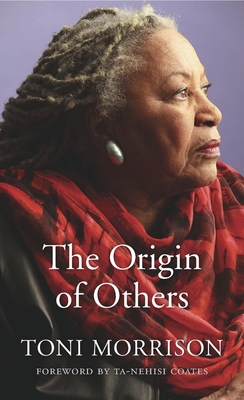
The Origin of Others
KSh 3,600.00

There Are Places in the World Where Rules Are Less Important Than Kindness
KSh 3,600.00

Amazing Peace
KSh 3,050.00

Lewis Carroll and "Alice" on Stage
KSh 9,350.00

There Are Places in the World Where Rules Are Less Important Than Kindness
KSh 2,350.00

Swim in a Pond in the Rain
KSh 2,000.00

The Obscene Bird of Night – unabridged, centennial edition
KSh 3,050.00

I''m Not Here to Give a Speech
KSh 1,800.00

This Craft of Verse
KSh 3,600.00

On Great Writing (On the Sublime)
KSh 2,000.00

The Naked Eye
KSh 2,350.00


More in This Genre
On Freedom
KSh 2,350.00
The Origin of Others
KSh 3,600.00
There Are Places in the World Where Rules Are Less Important Than Kindness
KSh 3,600.00
Amazing Peace
KSh 3,050.00
Lewis Carroll and "Alice" on Stage
KSh 9,350.00
There Are Places in the World Where Rules Are Less Important Than Kindness
KSh 2,350.00
