
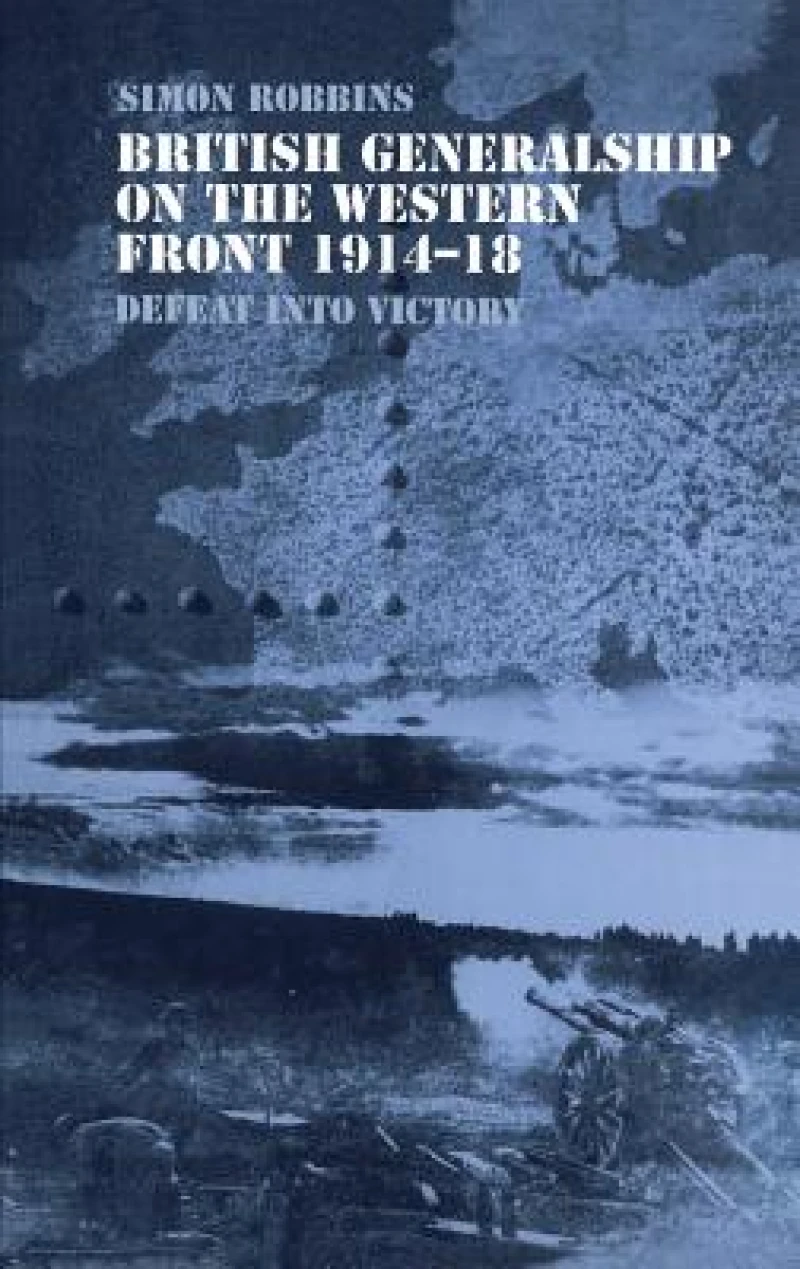
British Generalship on the Western Front 1914-1918 : Defeat into Victory
Book Details
Format
Hardback or Cased Book
Book Series
Military History and Policy
ISBN-10
0415350069
ISBN-13
9780415350068
Publisher
Taylor & Francis Ltd
Imprint
Routledge
Country of Manufacture
GB
Country of Publication
GB
Publication Date
Dec 21st, 2004
Print length
272 Pages
Weight
544 grams
Product Classification:
General & world history20th century history: c 1900 to c 2000First World War
Ksh 30,950.00
Werezi Extended Catalogue
0 in stock
Delivery Location
Delivery fee: Select location
Secure
Quality
Fast
This book explores how British Army learnt from the pyrrhic victories of 1915-17 and developed the new tactics, leadership and doctrine of combined arms to overcome the tactical stalemate hitherto bedevilling Allied offensives to defeat the
This book explores the British Army''s response on the Western Front to a period of seminal change in warfare. In particular it examines the impact of the pre-war emphasis on worldwide garrison, occupation and policing duties for the Empire''s defence of the mindset of the Army''s leadership and its lack of preparation for a continental war involving a massive, unplanned increase in men and material.
The reasons for the poor performance in the early years of the war, notably professionalism within the British Army, including poor staff work, ''trade unionism'', careerism within the high command, and the tendency of an overconfident hierarchy to ignore the need for reform to tackle the tactical stalemate prior to 1916, are analysed. The high command rapidly learnt from the defeats of 1915-16 and performed much better in 1916-18, an especially formative period resulting in the promotion of a younger, more professional leadership and the development of the first truly modern system of tactics which has dominated wars ever since.
During 1917-18 the Army''s commanders and staff evolved and improved these new methods; developing a doctrine of combined arms to overcome the tactical stalemate bedevilling Allied offensives.
The reasons for the poor performance in the early years of the war, notably professionalism within the British Army, including poor staff work, ''trade unionism'', careerism within the high command, and the tendency of an overconfident hierarchy to ignore the need for reform to tackle the tactical stalemate prior to 1916, are analysed. The high command rapidly learnt from the defeats of 1915-16 and performed much better in 1916-18, an especially formative period resulting in the promotion of a younger, more professional leadership and the development of the first truly modern system of tactics which has dominated wars ever since.
During 1917-18 the Army''s commanders and staff evolved and improved these new methods; developing a doctrine of combined arms to overcome the tactical stalemate bedevilling Allied offensives.
Get British Generalship on the Western Front 1914-1918 by at the best price and quality guaranteed only at Werezi Africa's largest book ecommerce store. The book was published by Taylor & Francis Ltd and it has pages.

