
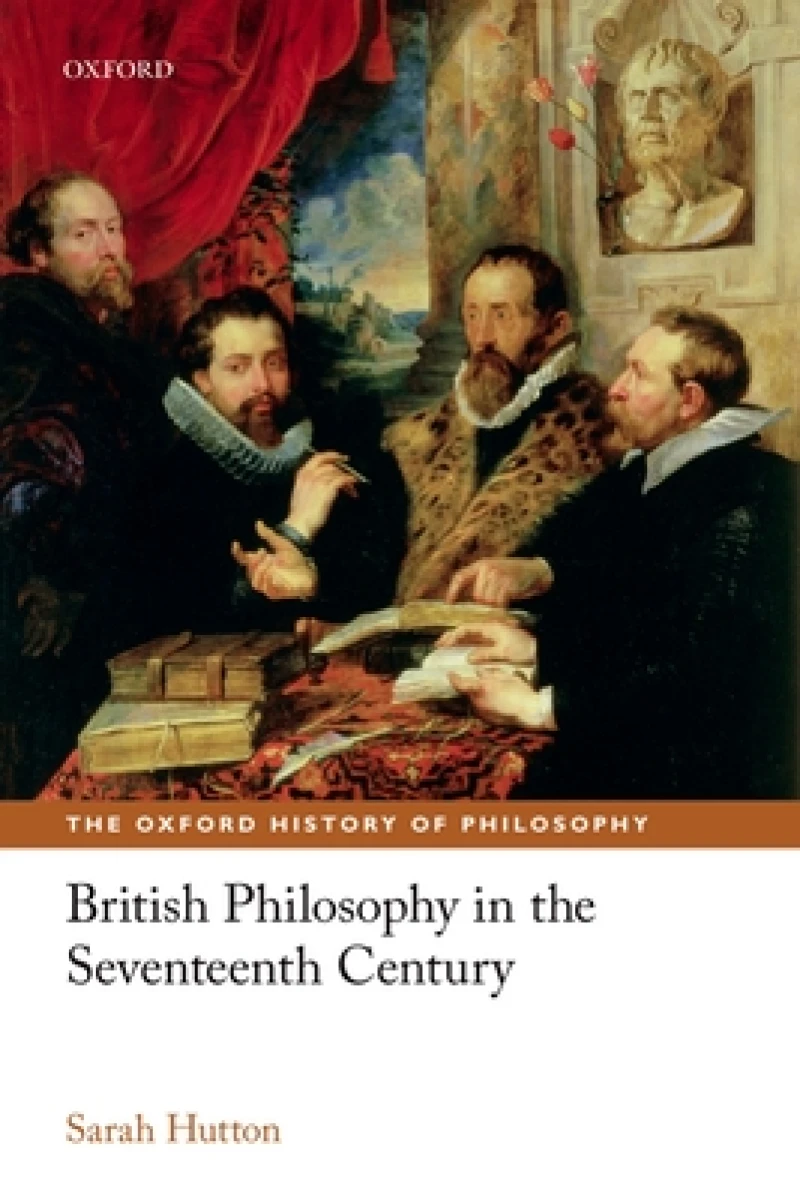
British Philosophy in the Seventeenth Century
by
Sarah Hutton
Book Details
Format
Paperback / Softback
Book Series
The Oxford History of Philosophy
ISBN-10
0198801548
ISBN-13
9780198801542
Publisher
Oxford University Press
Imprint
Oxford University Press
Country of Manufacture
GB
Country of Publication
GB
Publication Date
Jan 4th, 2018
Print length
296 Pages
Weight
450 grams
Dimensions
15.70 x 23.20 x 2.00 cms
Ksh 5,950.00
Manufactured on Demand
0 in stock
Delivery Location
Delivery fee: Select location
Secure
Quality
Fast
Sarah Hutton presents a rich historical study of one of the most fertile periods in philosophy. It was in the seventeenth century that Britain first produced philosophers of international stature. Bacon, Hobbes, and Locke, and many other thinkers are shown in their intellectual, social, political, and religious context.
Sarah Hutton presents a rich historical study of one of the most fertile periods in modern philosophy. It was in the seventeenth century that Britain''s first philosophers of international stature and lasting influence emerged. Its most famous names, Hobbes and Locke, rank alongside the greatest names in the European philosophical canon. Bacon too belongs with this constellation of great thinkers, although his status as a philosopher tends to be obscured by his status as father of modern science. The seventeenth century is normally regarded as the dawn of modernity following the breakdown of the Aristotelian synthesis which had dominated intellectual life since the middle ages. In this period of transformational change, Bacon, Hobbes, Locke are acknowledged to have contributed significantly to the shape of European philosophy from their own time to the present day. But these figures did not work in isolation. Sarah Hutton places them in their intellectual context, including the social, political and religious conditions in which philosophy was practised. She treats seventeenth-century philosophy as an ongoing conversation: like all conversations, some voices will dominate, some will be more persuasive than others and there will be enormous variations in tone from the polite to polemical, matter-of-fact, intemperate. The conversation model allows voices to be heard which would otherwise be discounted. Hutton shows the importance of figures normally regarded as ''minor'' players in philosophy (e.g. Herbert of Cherbury, Cudworth, More, Burthogge, Norris, Toland) as well as others who have been completely overlooked, notably female philosophers. Crucially, instead of emphasizing the break between seventeenth-century philosophy and its past, the conversation model makes it possible to trace continuities between the Renaissance and seventeenth century, across the seventeenth century and into the eighteenth century, while at the same time acknowledging the major changes which occurred.
Get British Philosophy in the Seventeenth Century by at the best price and quality guaranteed only at Werezi Africa's largest book ecommerce store. The book was published by Oxford University Press and it has pages.

