
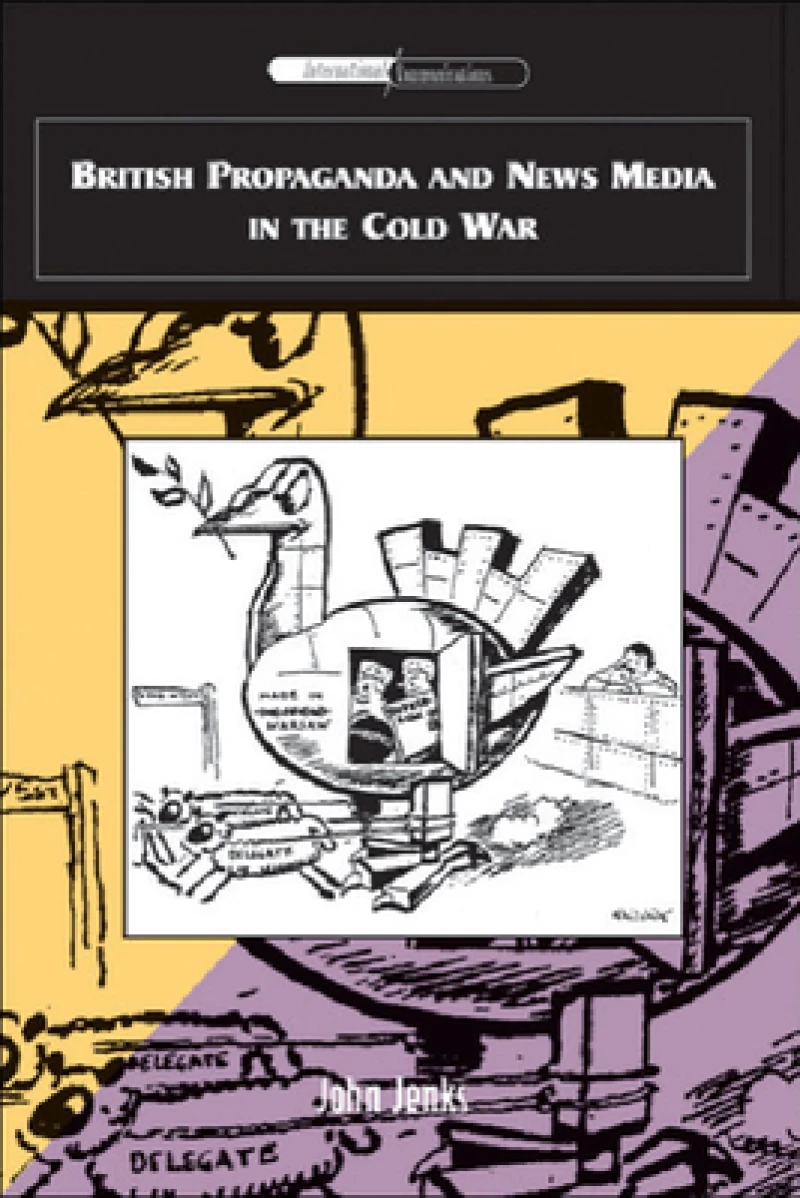
British Propaganda and News Media in the Cold War
by
John Jenks
Book Details
Format
Hardback or Cased Book
ISBN-10
0748623140
ISBN-13
9780748623143
Publisher
Edinburgh University Press
Imprint
Edinburgh University Press
Country of Manufacture
GB
Country of Publication
GB
Publication Date
Apr 19th, 2006
Print length
176 Pages
Weight
418 grams
Dimensions
24.10 x 16.40 x 1.90 cms
Product Classification:
Media studiesPropaganda
Ksh 19,800.00
Werezi Extended Catalogue
0 in stock
Delivery Location
Delivery fee: Select location
Secure
Quality
Fast
This is a study of the British state's generation, suppression and manipulation of news to further foreign policy goals during the early Cold War.
This is a study of the British state''s generation, suppression and manipulation of news to further foreign policy goals during the early Cold War. Bribing editors, blackballing "unreliable" journalists, creating instant media experts through provision of carefully edited "inside information", and exploiting the global media system to plant propaganda--disguised as news--around the world: these were all methods used by the British to try to convince the international public of Soviet deceit and criminality and thus gain support for anti-Soviet policies at home and abroad.
Britain''s shaky international position heightened the importance of propaganda. The Soviets and Americans were investing heavily in propaganda to win the "hearts and minds" of the world and substitute for increasingly unthinkable nuclear war. The British exploited and enhanced their media power and propaganda expertise to keep up with the superpowers and preserve their own global influence at a time when British economic, political and military power was sharply declining. This activity directly influenced domestic media relations, as officials used British media to launder foreign-bound propaganda and to create the desired images of British "public opinion" for foreign audiences.
By the early 1950s censorship waned but covert propaganda had become addictive. The endless tension of the Cold War normalized what had previously been abnormal state involvement in the media, and led it to use similar tools against Egyptian nationalists, Irish republicans and British leftists. Much more recently, official manipulation of news about Iraq indicates that a behind-the-scenes examination of state propaganda''s earlier days is highly relevant.
John Jenks draws heavily on recently declassified archival material for this book, especially files of the Foreign Office''s anti-Communist Information Research Department (IRD) propaganda agency, and the papers of key media organisations, journalists, politicians and officials. Readers will therefore gain a greater understanding of the depth of the state''s power with the media at a time when concerns about propaganda and media manipulation are once again at the fore.
Britain''s shaky international position heightened the importance of propaganda. The Soviets and Americans were investing heavily in propaganda to win the "hearts and minds" of the world and substitute for increasingly unthinkable nuclear war. The British exploited and enhanced their media power and propaganda expertise to keep up with the superpowers and preserve their own global influence at a time when British economic, political and military power was sharply declining. This activity directly influenced domestic media relations, as officials used British media to launder foreign-bound propaganda and to create the desired images of British "public opinion" for foreign audiences.
By the early 1950s censorship waned but covert propaganda had become addictive. The endless tension of the Cold War normalized what had previously been abnormal state involvement in the media, and led it to use similar tools against Egyptian nationalists, Irish republicans and British leftists. Much more recently, official manipulation of news about Iraq indicates that a behind-the-scenes examination of state propaganda''s earlier days is highly relevant.
John Jenks draws heavily on recently declassified archival material for this book, especially files of the Foreign Office''s anti-Communist Information Research Department (IRD) propaganda agency, and the papers of key media organisations, journalists, politicians and officials. Readers will therefore gain a greater understanding of the depth of the state''s power with the media at a time when concerns about propaganda and media manipulation are once again at the fore.
Get British Propaganda and News Media in the Cold War by at the best price and quality guaranteed only at Werezi Africa's largest book ecommerce store. The book was published by Edinburgh University Press and it has pages.

