
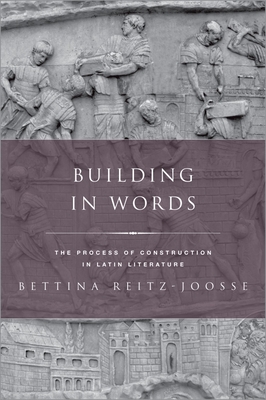
Building in Words : The Process of Construction in Latin Literature
Book Details
Format
Hardback
Book Series
Classical Culture and Society
ISBN-10
0197610684
ISBN-13
9780197610688
Publisher
Oxford University Press Inc
Imprint
Oxford University Press Inc
Country of Manufacture
US
Country of Publication
GB
Publication Date
Apr 29th, 2022
Print length
284 Pages
Weight
558 grams
Dimensions
17.80 x 24.30 x 2.70 cms
Product Classification:
Ancient, classical and medieval textsClassical textsAncient history: to c 500 CEAncient history
KSh 19,450.00
Currently unavailable
0 in stock
Delivery Location
Delivery fee: Select location
Secure
Quality
Fast
Building in Words explores the relationship between text and architecture in the Roman world from the perspective of architectural process. Original readings of literary texts are placed in dialogue with epigraphic and archaeological material. Through its focus on construction, this book furthers our understanding of the aesthetics of Roman architecture and literature.
Building in Words explores the relationship between text and architecture in the Roman world from the perspective of architectural process. Ancient Romans frequently encountered buildings under construction - they experienced noisy building work, disruptive transportation of materials, and sometimes spectacular engineering feats. Bettina Reitz-Joosse analyzes how Roman authors responded to the process of building and construction in their literary works. Roman authors tell stories of architectural creation to give meaning to finished monuments. Their narratives can stress technological or logistic mastery or highlight morally problematic aspects of construction, particularly in large-scale engineering projects. While offering descriptions of the process of creating architecture, Roman writers also reflect on the creation of their own works. Building in Words demonstrates the richness of the image of construction for literary composition: writers use it to comment on the aesthetics or ambition of their literary work, to articulate the power and durability, but also the fragility of literature.Reitz-Joosse here offers original readings of a range of literary authors of the early Roman empire, including Vergil, Pliny the Elder, Tacitus, and Statius, and places literary texts in dialogue with contemporary epigraphic and archaeological material. Through its focus on building as a process, Building in Words furthers our understanding of the aesthetics of both architecture and literature in ancient Rome.
Get Building in Words by Bettina Reitz-Joosse at the best price and quality guaranteed only at Werezi Africa's largest book ecommerce store. The book was published by Oxford University Press Inc and it has 284 pages.
Customers Who Bought This Also Bought
Agricola and the Germania
KSh 2,350.00
The Nicomachean Ethics
KSh 1,600.00
The Odyssey
KSh 1,800.00
The Odyssey
KSh 1,600.00

The Iliad
KSh 1,450.00
Annals
KSh 2,350.00
The Iliad
KSh 2,000.00
The Odyssey
KSh 1,800.00
Great Dialogues of Plato
KSh 1,450.00
The Iliad
KSh 1,800.00
Phaedo
KSh 1,450.00
Xrepublic
KSh 850.00
