
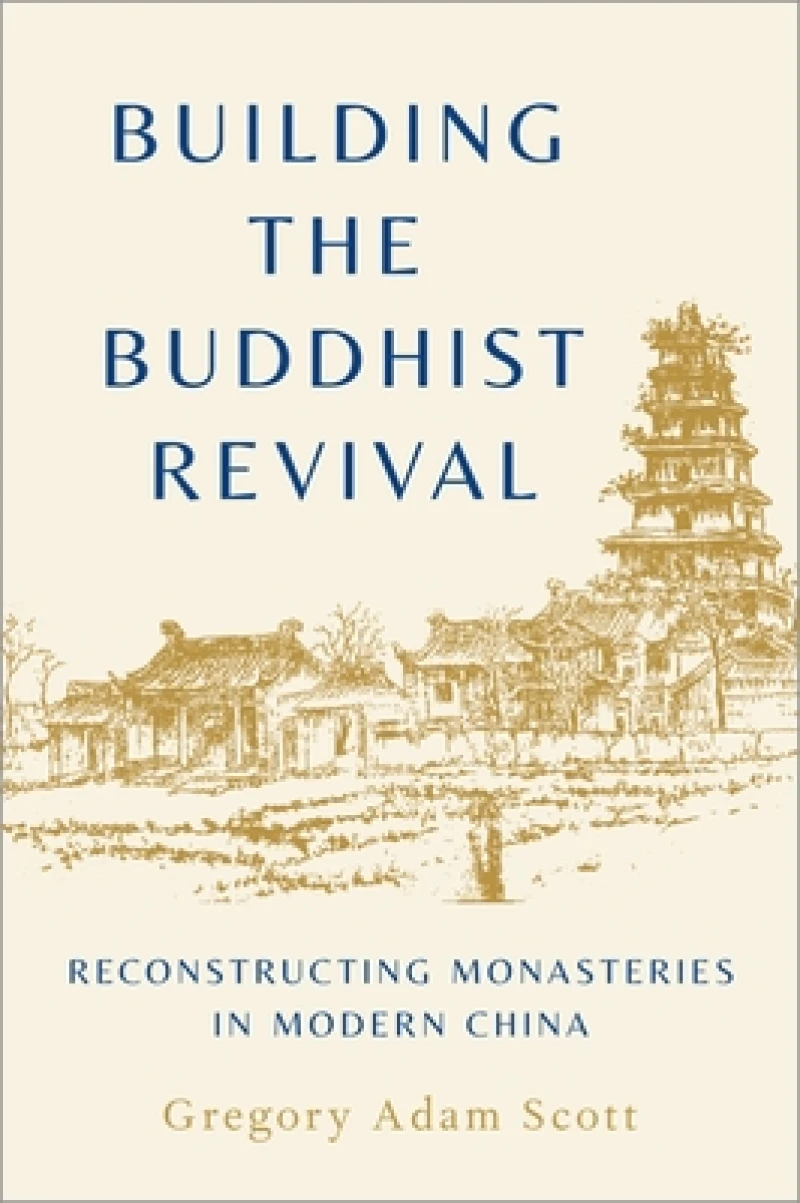
Building the Buddhist Revival : Reconstructing Monasteries in Modern China
Book Details
Format
Hardback or Cased Book
ISBN-10
0190930721
ISBN-13
9780190930721
Publisher
Oxford University Press Inc
Imprint
Oxford University Press Inc
Country of Manufacture
US
Country of Publication
GB
Publication Date
Apr 22nd, 2020
Print length
264 Pages
Weight
499 grams
Dimensions
16.00 x 23.60 x 2.50 cms
Product Classification:
Asian historyReligious intolerance, persecution & conflictBuddhism
Ksh 12,650.00
Manufactured on Demand
0 in stock
Delivery Location
Delivery fee: Select location
Secure
Quality
Fast
Between 1850 and 1966, tens of thousands of Buddhist sacred sites in China were destroyed, victims of targeted destruction, accidental damage, or simply neglect. During the same period, however, many of these sites were reconstructed, a process that involved both rebuilding material structures and reviving religious communities. Gregory Adam Scott argues that over the course of this period monastery reconstruction in China changed drastically. The power to determine whether and how a monastery would be reconstructed, and the types of activities that would be reinstated or newly introduced, began to shift from religious leaders and communities to state agencies that had a radically different set of motivations and values.Building the Buddhist Revival explores the history of Chinese Buddhist monastery reconstruction from the end of the Imperial period through the first seventeen years of the People''s Republic.
Between 1850 and 1966, tens of thousands of Buddhist sacred sites in China were destroyed, victims of targeted destruction, accidental damage, or simply neglect. During the same period, however, many of these sites were reconstructed, a process that involved both rebuilding material structures and reviving religious communities. The conventionally accepted narrative of Chinese Buddhism during the modern era is that it underwent a revival initiated by innovative monastics and laypersons, leaders who reinvented Buddhist traditions to meet the challenges of modernity. Gregory Adam Scott shows, however, that over time it became increasingly difficult for reconstruction leaders to resist the interests of state actors, who sought to refashion monastery sites as cultural monuments rather than as living religious communities. These sites were then intended to serve as symbols of Chinese history and cultural heritage, while their function as a frame for religious life was increasingly pushed aside. As a result, the power to determine whether and how a monastery would be reconstructed, and the types of activities that would be reinstated or newly introduced, began to shift from religious leaders and communities to state agencies that had a radically different set of motivations and values.Building the Buddhist Revival explores the history of Chinese Buddhist monastery reconstruction from the end of the Imperial period through the first seventeen years of the People''s Republic. Over this century of history, the nature and significance of reconstructing Buddhist monasteries changes drastically, mirroring broader changes in Chinese society. Yet this book argues that change has always been in the nature of religious communities such as Buddhist monasteries, and that reconstruction, rather than a return to the past, represents innovative and adaptive change. In this way, it helps us understand the broader significance of the Buddhist "revival" in China during this era, as a creative reconstruction of religion upon longstanding foundations.
Get Building the Buddhist Revival by at the best price and quality guaranteed only at Werezi Africa's largest book ecommerce store. The book was published by Oxford University Press Inc and it has pages.

