
Cart 0
Business Transitions: A Path to Sustainability
Click to zoom

Share this book

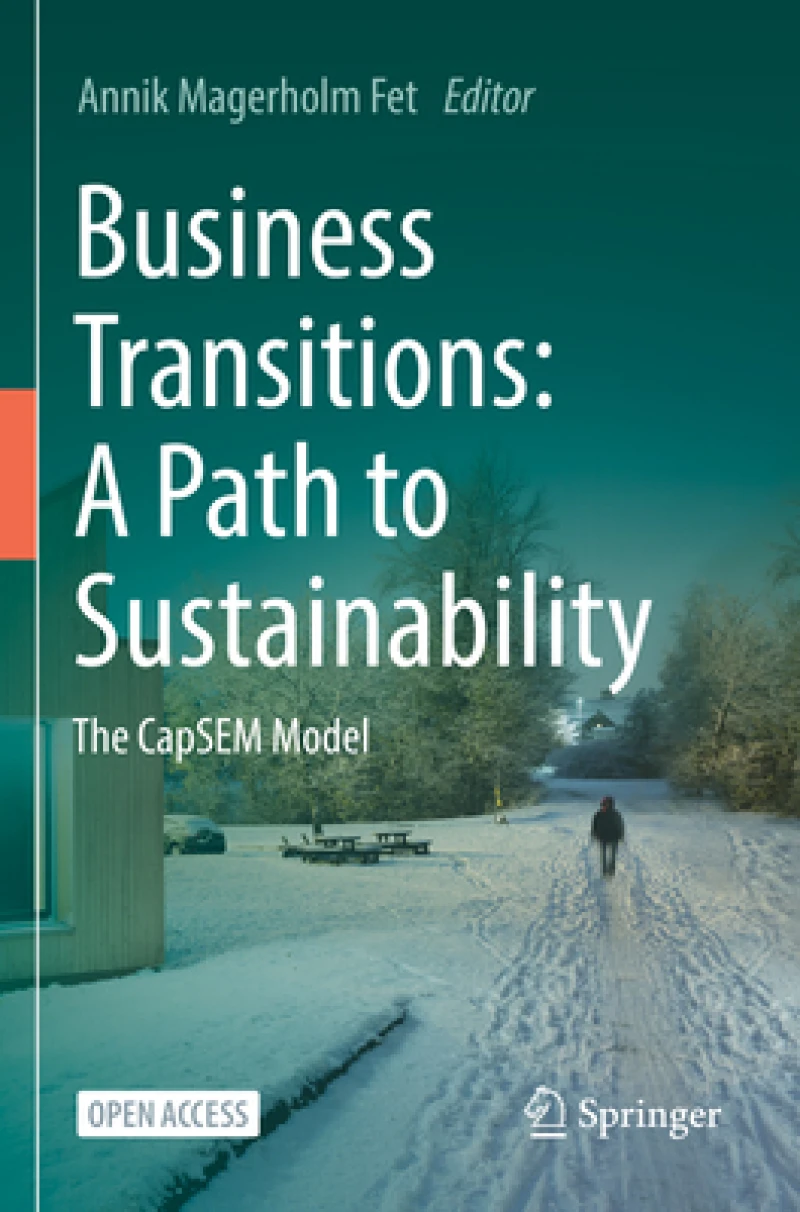
Business Transitions: A Path to Sustainability : The CapSEM Model

1st ed. 2023

Book Details

Format Paperback / Softback
ISBN-10 3031222474
ISBN-13 9783031222474
Edition 1st ed. 2023
Publisher Springer International Publishing AG
Imprint Springer International Publishing AG
Country of Manufacture GB
Country of Publication GB
Publication Date Feb 22nd, 2023
Print length 261 Pages
Ksh 6,300.00
Temporarily out of stock, due soon 0 in stock

Delivery Location

Delivery fee: Select location

Secure
Quality
Fast
This open access book represents a journey documenting the development of tools and methodologies over 3 decades and asks where the future lies. It further develops seminal work carried out under the auspices of the Capacity building in Sustainability and Environmental Management (CapSEM) project co-funded by the EU Erasmus programme from 2016-2019 as well as research projects such as IGLO-MP2020, SUSPRO, and SISVI. It gathers existing paradigms of environmental management within the relevant frameworks which have driven the way in which this discipline has developed. It seeks to both challenge and support the way in which business sectors have approached this previously, with a more holistic and overarching model being provided, moving through four very distinct levels.  It therefore provides not only a different approach, but a different way of thinking. Systems thinking is characterized by four levels: Process, Product Value Chain, Organisational and Systemic which combinesMaterial Flow Analysis (MFA), Life Cycle Assessment (LCA), Corporate Social Responsibility (CSR) and Industrial Ecology (IE) principles. In its practical application, Corporate Social Responsibility, for example, thus becomes an integral part of a much wider business strategy and impacts on all business activity, not added value for its own sake, but a valuable component in a wider toolbox as a fundamental part of any business strategy and plan, changing, flexing and developing over the years. The book is divided into 4 parts: moving from context and background, to the theoretical model or toolbox, onto its practical application in case studies and culminates in looking at the future and potential developments. It represents the multi-disciplined collaboration at NTNU and beyond, exemplifying its use in a wealth of business sectors and a range of stakeholders from construction to textiles to wind power as outlined in the European Circular Action Plan.

This open access book represents a journey documenting the development of tools and methodologies over 3 decades and asks where the future lies. It further develops seminal work carried out under the auspices of the Capacity building in Sustainability and Environmental Management (CapSEM) project co-funded by the EU Erasmus programme from 2016-2019 as well as research projects such as IGLO-MP2020, SUSPRO, and SISVI. It gathers existing paradigms of environmental management within the relevant frameworks which have driven the way in which this discipline has developed. It seeks to both challenge and support the way in which business sectors have approached this previously, with a more holistic and overarching model being provided, moving through four very distinct levels.  It therefore provides not only a different approach, but a different way of thinking. Systems thinking is characterized by four levels: Process, Product Value Chain, Organisational and Systemic which combines Material Flow Analysis (MFA), Life Cycle Assessment (LCA), Corporate Social Responsibility (CSR) and Industrial Ecology (IE) principles. In its practical application, Corporate Social Responsibility, for example, thus becomes an integral part of a much wider business strategy and impacts on all business activity, not added value for its own sake, but a valuable component in a wider toolbox as a fundamental part of any business strategy and plan, changing, flexing and developing over the years.

The book is divided into 4 parts: moving from context and background, to the theoretical model or toolbox, onto its practical application in case studies and culminates in looking at the future and potential developments. It represents the multi-disciplined collaboration at NTNU and beyond, exemplifying its use in a wealth of business sectors and a range of stakeholders from construction to textiles to wind power as outlined in the European Circular Action Plan.


Get Business Transitions: A Path to Sustainability by at the best price and quality guaranteed only at Werezi Africa's largest book ecommerce store. The book was published by Springer International Publishing AG and it has pages.


Mind, Body, & Spirit

Shopping Cart

Africa largest book store

Sub Total:
Ebooks

Digital Library
Coming Soon

Our digital collection is currently being curated to ensure the best possible reading experience on Werezi. We'll be launching our Ebooks platform shortly.