
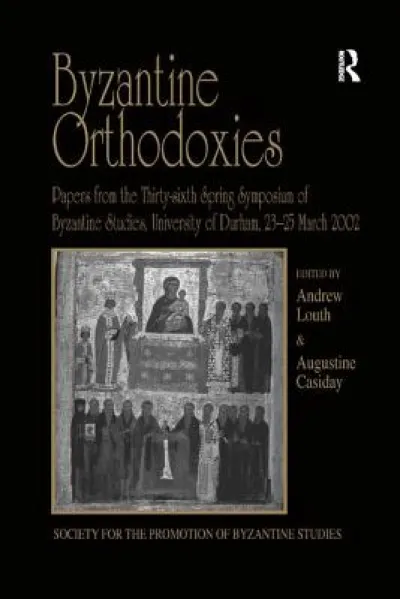
Byzantine Orthodoxies : Papers from the Thirty-sixth Spring Symposium of Byzantine Studies, University of Durham, 23–25 March 2002
Book Details
Format
Paperback / Softback
ISBN-10
1138264997
ISBN-13
9781138264991
Publisher
Taylor & Francis Ltd
Imprint
Routledge
Country of Manufacture
GB
Country of Publication
GB
Publication Date
Oct 9th, 2017
Print length
250 Pages
Weight
398 grams
Dimensions
15.80 x 23.50 x 2.10 cms
Ksh 9,350.00
Werezi Extended Catalogue
0 in stock
Delivery Location
Delivery fee: Select location
Secure
Quality
Fast
The Byzantine Empire - the Christianized Roman Empire - very soon defined itself in terms of correct theological belief, ''orthodoxy''. The terms of this belief were hammered out, for the most part, by bishops, but doctrinal decisions were made in councils called by the Emperors, many of whom involved themselves directly in the definition of ''orthodoxy''. Iconoclasm was an example of such imperial involvement, as was the final overthrow of iconoclasm. That controversy ensured that questions of Christian art were also seen by Byzantines as implicated in the question of orthodoxy. The papers gathered in this volume derive from those presented at the 36th Spring Symposium of Byzantine Studies, Durham, March 2002. They discuss how orthodoxy was defined, and the different interests that it represented; how orthodoxy was expressed in art and the music of the liturgy; and how orthodoxy helped shape the Byzantine Empire''s sense of its own identity, an identity defined against the ''other'' - Jews, heretics and, especially from the turn of the first millennium, the Latin West. These considerations raise wider questions about the way in which societies and groups use world-views and issues of belief to express and articulate identity. At a time when, with the enlargement of the European Union, questions of identity within Europe are once again becoming pressing, there is much in these essays of topical relevance.
Get Byzantine Orthodoxies by at the best price and quality guaranteed only at Werezi Africa's largest book ecommerce store. The book was published by Taylor & Francis Ltd and it has pages.

