
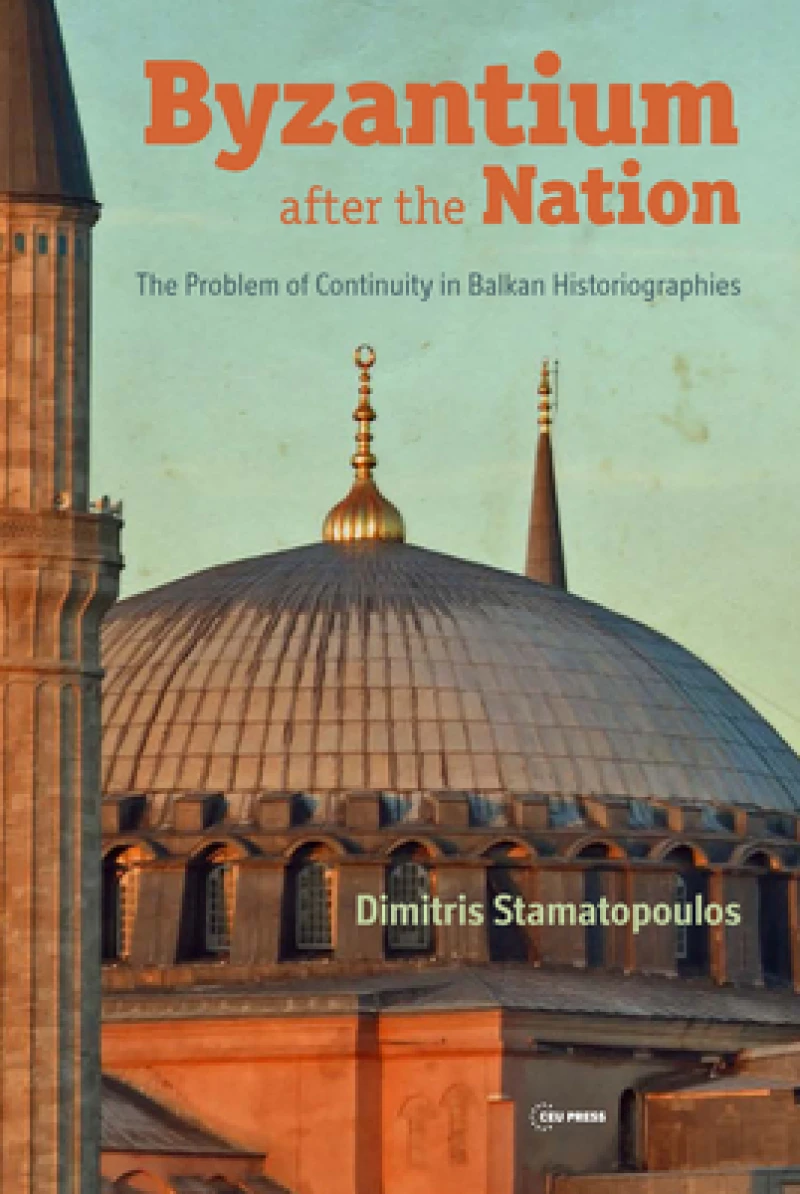
Byzantium after the Nation : The Problem of Continuity in Balkan Historiographies
Book Details
Format
Hardback or Cased Book
ISBN-10
9633863074
ISBN-13
9789633863077
Publisher
Central European University Press
Imprint
Central European University Press
Country of Manufacture
HU
Country of Publication
GB
Publication Date
Nov 15th, 2022
Print length
410 Pages
Weight
750 grams
Dimensions
15.80 x 23.80 x 3.00 cms
Product Classification:
HistoriographyEuropean historyModern history to 20th century: c 1700 to c 1900
Ksh 12,550.00
Werezi Extended Catalogue
0 in stock
Delivery Location
Delivery fee: Select location
Secure
Quality
Fast
Stamatopoulos undertakes the first systematic comparison of the dominant ethnic historiographic models and divergences elaborated by Greek, Bulgarian, Serbian, Albanian, Romanian, Turkish, and Russian intellectuals with reference to the ambiguous inheritance of Byzantium. The title alludes to the seminal work of Nicolae Iorga in the 1930s, Byzantium after Byzantium, that argued for the continuity between the Byzantine and the Ottoman empires. Rival Balkan nationalisms engaged in a “war of interpretation” as to the nature of Byzantium, assuming different positions of adoption or rejection of its imperial model and leading to various schemes of continuity in each national historiographic canon. Stamatopoulos discusses what Byzantium represented for nineteenth-, and twentieth-century scholars and how their perceptions related to their treatment of the imperial model: whether a different perception of the medieval Byzantine period prevailed in the Greek national center as opposed to Constantinople; how nineteenth-century Balkan nationalists and Russian scholars used Byzantium to invent their own medieval period (and, by extension, their own antiquity); and finally, whether there exist continuities or discontinuities in these modes of making ideological use of the past.
Get Byzantium after the Nation by at the best price and quality guaranteed only at Werezi Africa's largest book ecommerce store. The book was published by Central European University Press and it has pages.

