
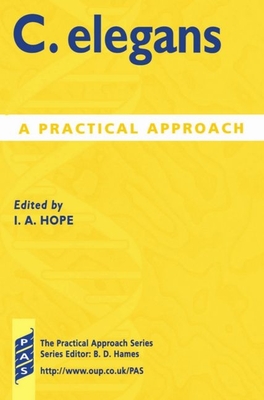
C. elegans : A Practical Approach
Book Details
Format
Paperback / softback
Book Series
Practical Approach Series
ISBN-10
0199637385
ISBN-13
9780199637386
Publisher
Oxford University Press
Imprint
Oxford University Press
Country of Manufacture
GB
Country of Publication
GB
Publication Date
Dec 9th, 1999
Print length
304 Pages
Weight
480 grams
Dimensions
23.10 x 15.70 x 1.70 cms
Product Classification:
Cellular biology (cytology)Zoology: invertebratesZoology: InvertebratesGenetic engineering
KSh 15,050.00
Currently unavailable
0 in stock
Delivery Location
Delivery fee: Select location
Secure
Quality
Fast
Gives all the basic information on C. elegans required to use it, including details on how to obtain, grow, and maintain C. elegans for use as a model system. Chapters also describe the genome project, provide practical details of transformation and describe strategies for gene inactivation.
Caenorhabditis Elegans has been a popular model organism for biological research for over thirty years and has been used to investigate many aspects of animal development, for example apoptosis, the Hox genes, signal transduction pathways, and the development of the nervous system. It has recently taken on new importance with the publication of the entire genome sequence in 1998. The first chapter gives all the basic information on C. elegans required to use it: it''s natural history, anatomy, life cycle, development, and evolution. Information on how to obtain, grow, and maintain C. elegans for use as a model system is given in Chapter 4. Chapters 2 and 3 describe the genome project and show how to use genome sequence information by searching the database for homologues using different search methods and then how to analyse the search data. The next chapter gives the essential practical details of transformation and common uses for the technique. Chapter 6 covers reverse genetics and describes strategies for gene inactivation that are known to work in C elegans: epigenetic inactivation and mutational germ line inactivation. Chapter 7 is designed to help the user analyse phenotype by microscopy and includes Normaski, fluorescence, 4-dimensional, and electron microscopy. Techniques for studying the neurobiology of C. elegans are given in chapter 8. Chapter 9 describes the three commonly used approaches for studying gene expression and Chapter 10 deals with the common methods of molecular biology essential for gene characterization. C. elegans is not the ideal organism for biochemical studies, but chapter 11 describes several procedures for producing biochemically useful quantities of pure tissues. The final chapter is about conventional genetics and details the standard procedures for selfing and crossing; mutagenesis and mutant screening; characterization of mutants; gene mapping; temperature-shift experiments and mosaic analysis. Caenorhabditis Elegans: A Practical Approach will therefore provide all the background information necessary for use of C. elegans as a model system.
Get C. elegans by Ian A. Hope at the best price and quality guaranteed only at Werezi Africa's largest book ecommerce store. The book was published by Oxford University Press and it has 304 pages.
Customers Who Bought This Also Bought

Chemical Signatures of the Brain
KSh 35,800.00
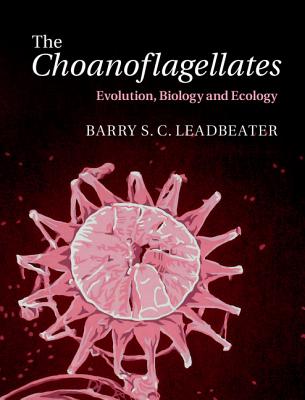
The Choanoflagellates
KSh 20,500.00

Metal Toxicity in Plants
KSh 23,400.00

Electrical Properties of Cells
KSh 36,000.00
Living in a Seasonal World
KSh 32,400.00
Bio-Materials and Prototyping Applications in Medicine
KSh 19,800.00
Mass Spectrometry-Based Metabolomics
KSh 33,850.00
Histochemical and Cytochemical Methods of Visulaization
KSh 46,800.00
Lysosomes – Biology, Diseases, and Therapeutics
KSh 27,350.00
Cell and Tissue Reaction Engineering
KSh 18,000.00

Microalgal Cell Cycles
KSh 11,150.00

Purinergic and Pyrimidinergic Signalling
KSh 45,000.00
