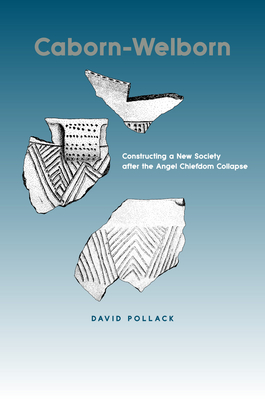
Caborn-Welborn : Constructing a New Society After the Angel Chiefdom Collapse
Book Details
Format
Paperback / softback
ISBN-10
0817351264
ISBN-13
9780817351267
Publisher
The University of Alabama Press
Imprint
The University of Alabama Press
Country of Manufacture
US
Country of Publication
GB
Publication Date
Aug 19th, 2004
Print length
320 Pages
Weight
419 grams
Dimensions
23.50 x 15.50 x 1.70 cms
Product Classification:
Archaeology by period / regionArchaeology by period / region
KSh 4,450.00
Temporarily out of stock, due soon
0 in stock
Delivery Location
Delivery fee: Select location
Secure
Quality
Fast
Caborn-Welborn, a late Mississippian (A.D. 1400-1700) farming society, developed following the collapse of the Angel chiefdom (A.D. 1000-1400). David Pollack examines the ways in which that new society reconstructed social, political, and economic relationships from the remnants of the Angel chiefdom.
Caborn-Welborn, a late Mississippian (A.D. 1400-1700) farming society centered at the confluence of the Ohio and Wabash Rivers (in what is now southwestern Indiana, southeastern Illinois, and northwestern Kentucky), developed following the collapse of the Angel chiefdom (A.D. 1000-1400). Using ceramic and settlement data, David Pollack examines the ways in which that new society reconstructed social, political, and economic relationships from the remnants of the Angel chiefdom. Unlike most instances of the demise of a complex society led by elites, the Caborn-Welborn population did not become more inward-looking, as indicated by an increase in extraregional interaction, nor did they disperse to smaller more widely scattered settlements, as evidenced by a continuation of a hierarchy that included large villages. This book makes available for the first time detailed, well-illustrated descriptions of Caborn-Welborn ceramics, identifies ceramic types and attributes that reflect Caborn-Welborn interaction with Oneonta tribal groups and central Mississippi valley Mississippian groups, and offers an internal regional chronology. Based on intraregional differences in ceramic decoration, the types of vessels interred with the dead, and cemetery location, Pollack suggests that in addition to the former Angel population, Caborn-Welborn society may have included households that relocated to the Ohio/Wabash confluence from nearby collapsing polities, and that Caborn-Welborn''s sociopolitical organization could be better considered as a riverine confederacy.
Get Caborn-Welborn by David Pollack at the best price and quality guaranteed only at Werezi Africa's largest book ecommerce store. The book was published by The University of Alabama Press and it has 320 pages.
Customers Who Bought This Also Bought
Andean Expressions
KSh 6,350.00

Forgotten
KSh 2,000.00

Ocmulgee Archaeology, 1936-1986
KSh 6,700.00
Mound Sites of the Ancient South
KSh 7,950.00

The Limits of Tyranny
KSh 11,500.00

Conquistador’s Wake
KSh 22,600.00
The Ancient Maya, 6th Edition
KSh 7,400.00

The Punic Mediterranean
KSh 21,600.00
The Palace of Minos
KSh 14,250.00

The Penetration of Arabia
KSh 8,300.00
Chogha Mish, Volume 2
KSh 15,300.00

A Primer of Assyriology
KSh 3,800.00