
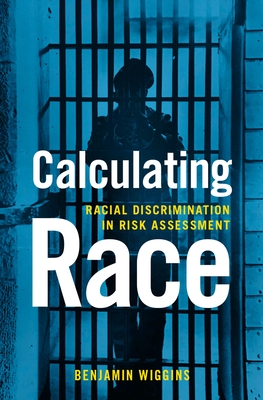
Calculating Race : Racial Discrimination in Risk Assessment
Book Details
Format
Hardback
Book Series
Religion and Democracy
ISBN-10
0197504000
ISBN-13
9780197504000
Publisher
Oxford University Press Inc
Imprint
Oxford University Press Inc
Country of Manufacture
US
Country of Publication
GB
Publication Date
Dec 9th, 2020
Print length
160 Pages
Weight
390 grams
Dimensions
16.30 x 24.30 x 2.00 cms
Product Classification:
Social & cultural historyEthnic studiesEthnic minorities & multicultural studies
KSh 16,250.00
Temporarily out of stock, due soon
0 in stock
Delivery Location
Delivery fee: Select location
Secure
Quality
Fast
It is well established that significant gaps in wealth, incarceration, and homeownership exist between the racial groups of the United States, with whites at the top and blacks, Latinx, and indigenous peoples at the bottom. However, scholars have not fully grasped the role that risk-assessment calculations play in creating and maintaining such disparities. Calculating Race expands our understanding of racial disparities in the United States by recounting how insurers, criminologists, the federal government, financial institutions, and others constructed people of color as risks. It illustrates how, as industry and government strove to base policy on "objective" data and "sound" mathematics, they read evidence of racial disparities as evidence of racial inferiority and, in that miscalculation, advanced racialized structural violence.
In Calculating Race, Benjamin Wiggins analyzes the historical relationship between statistical risk assessment and race in the United States. He illustrates how, through a reliance on the variable of race, actuarial science transformed the nature of racism and helped usher racial disparities in wealth, incarceration, and housing from the nineteenth century into the twentieth. Wiggins begins by tracing how the life insurance industry utilized race in its calculations at the end of the nineteenth century, focusing particularly on Prudential and its aggressive battles with state regulators to discriminate against clients and adjust rates on the basis of race. He then turns his focus to the collection of racial statistics in the Illinois state penitentiary system in the late nineteenth century and the state''s subsequent development of predictive sentencing and parole formulas in the 1920s that weighed race as a key factor. Next, he investigates the role of race in the state-sponsored mortgage insurance program of the Federal Housing Administration between the start of the New Deal and the beginning of the Cold War and its prolonged effects on mortgage lending. Wiggins concludes with an analysis of the use of race in the statistical risk assessments across financial institutions and government programs during the post-civil rights movement era, and how that practice has been transformed in the twenty-first century through "proxy" variables which stand in for the now taboo category of race. Offering readers a new perspective on the historical importance of actuarial science in structural racism, Calculating Race is a particularly timely contribution as Big Data and algorithmic decision making increasingly pervade our lives.
Get Calculating Race by Benjamin Wiggins at the best price and quality guaranteed only at Werezi Africa's largest book ecommerce store. The book was published by Oxford University Press Inc and it has 160 pages.
Customers Who Bought This Also Bought

The Finest Hotel in Kabul
KSh 2,150.00

Black Wave
KSh 2,700.00

Migrations
KSh 5,450.00

Art of War / The Book of Lord Shang
KSh 1,100.00

Nexus
KSh 2,350.00

World According to Colour
KSh 2,700.00

Crusade for Justice – The Autobiography of Ida B. Wells, Second Edition
KSh 4,050.00

Modern Classics Road To Wigan Pier
KSh 1,800.00

The Origins of Totalitarianism
KSh 2,700.00

In the Wake
KSh 3,600.00

Question of Palestine
KSh 2,700.00

Palestine
KSh 2,400.00
