
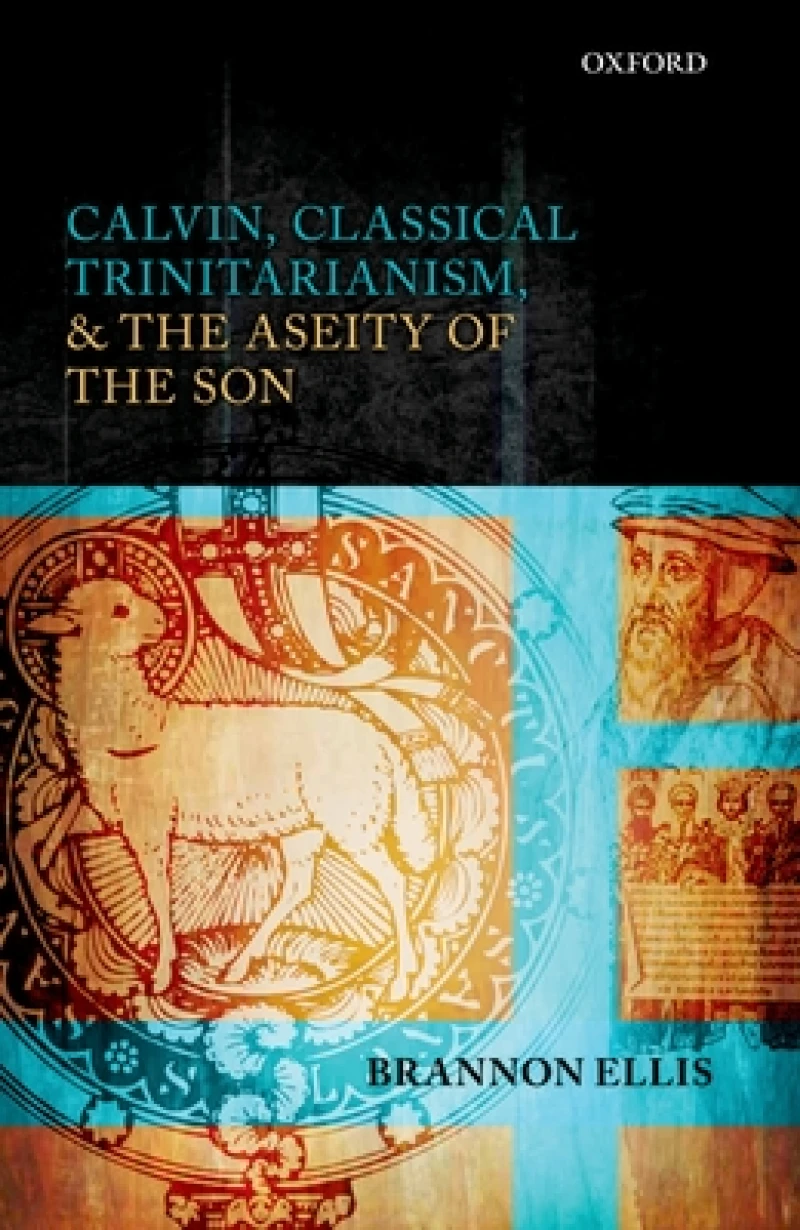
Calvin, Classical Trinitarianism, and the Aseity of the Son
Book Details
Format
Hardback or Cased Book
ISBN-10
0199652406
ISBN-13
9780199652402
Publisher
Oxford University Press
Imprint
Oxford University Press
Country of Manufacture
GB
Country of Publication
GB
Publication Date
Jun 28th, 2012
Print length
272 Pages
Weight
554 grams
Dimensions
24.00 x 16.20 x 1.90 cms
Ksh 19,900.00
Manufactured on Demand
0 in stock
Delivery Location
Delivery fee: Select location
Secure
Quality
Fast
For much of his career as a Reformer John Calvin was involved in controversy over the doctrine of the Trinity. This book investigates the various Reformation and post-Reformation responses to Calvin's affirmation of the Son's aseity (or essential self-existence), a significant episode in the history of theology.
For much of his career as a Reformer John Calvin was involved in trinitarian controversy. Not only did these controversies span his career, but his opponents ranged across the spectrum of theological approaches-from staunch traditionalists to radical antitrinitarians. Remarkably, the heart of Calvin''s argument, and the heart of others'' criticism, remained the same throughout: Calvin claimed that the only-begotten Son of the Father is also, as the one true God, ''of himself''. Brannon Ellis investigates the various Reformation and post-Reformation responses to Calvin''s affirmation of the Son''s aseity (or essential self-existence), a significant episode in the history of theology that is often ignored or misunderstood. Calvin neither rejected eternal generation, nor merely toed the line of classical exposition. As such, these debates turned on the crucial pivot between simple unity and ordered plurality-the relationship between the processions and consubstantiality-at the heart of the doctrine of the Trinity. Ellis''s aim is to explain the historical significance and explore the theological implications of Calvin''s complex solidarity with the classical tradition in his approach to thinking and speaking of the Triune God. He contends that Calvin''s approach, rather than an alternative to classical trinitarianism, is actually more consistent with this tradition''s fundamental commitments regarding the ineffable generation of God from God than its own received exposition.
Get Calvin, Classical Trinitarianism, and the Aseity of the Son by at the best price and quality guaranteed only at Werezi Africa's largest book ecommerce store. The book was published by Oxford University Press and it has pages.

