
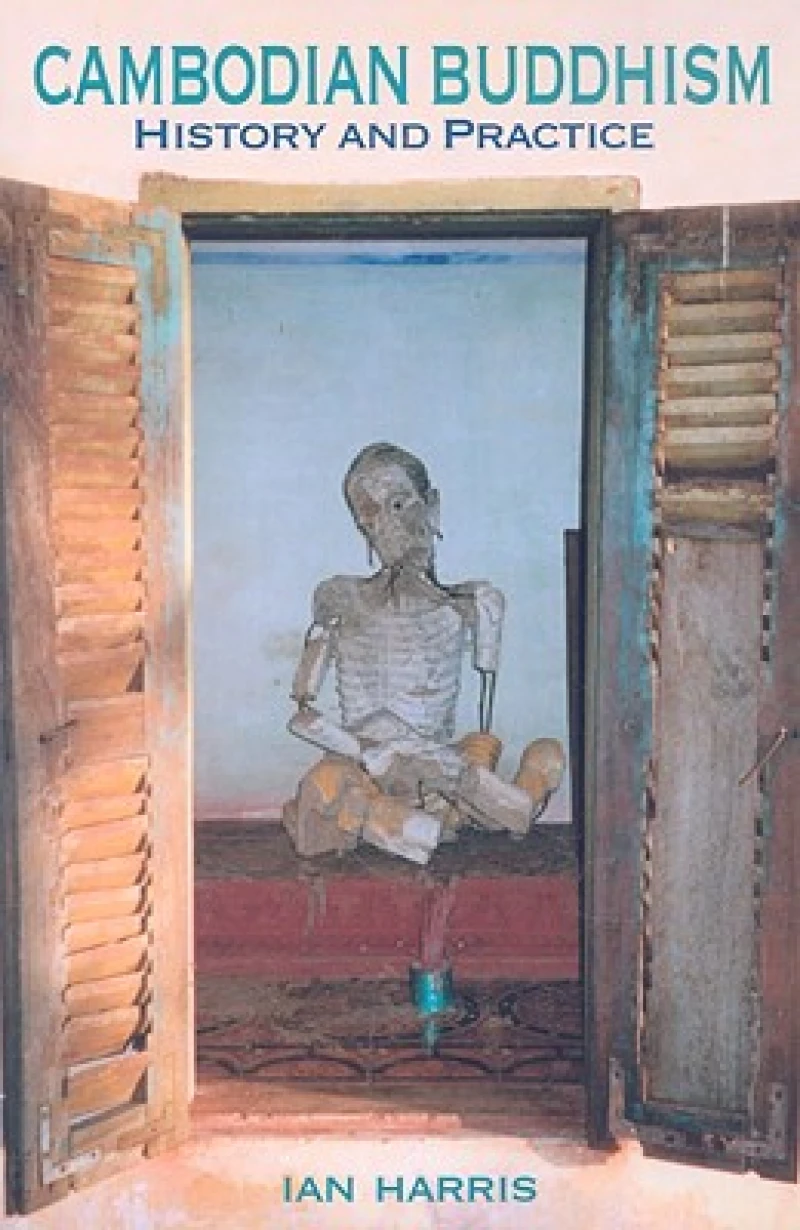
Cambodian Buddhism : History and Practice
by
Ian Harris
Book Details
Format
Paperback / Softback
ISBN-10
0824832981
ISBN-13
9780824832988
Publisher
University of Hawai'i Press
Imprint
University of Hawai'i Press
Country of Manufacture
US
Country of Publication
GB
Publication Date
Mar 11th, 2008
Print length
368 Pages
Weight
592 grams
Dimensions
15.30 x 22.80 x 2.90 cms
Product Classification:
History of religionBuddhismHistory of religionBuddhism
Ksh 3,950.00
Werezi Extended Catalogue
0 in stock
Delivery Location
Delivery fee: Select location
Secure
Quality
Fast
Ian Harris offers English-language scholars a treatment of the religious aspects of Cambodian culture, with a a coherent history of the presence of religion in the country from its inception to the present day.
The study of Cambodian religion has long been hampered by a lack of easily accessible scholarship. This impressive new work by Ian Harris thus fills a major gap and offers English-language scholars a booklength, up-to-date treatment of the religious aspects of Cambodian culture. Beginning with a coherent history of the presence of religion in the country from its inception to the present day, the book goes on to furnish insights into the distinctive nature of Cambodia's important yet overlooked manifestation of Theravada Buddhist tradition and to show how it reestablished itself following almost total annihilation during the Pol Pot period.
Historical sections cover the dominant role of tantric Mahayana concepts and rituals under the last great king of Angkor, Jayavarman VII (1181–c. 1220); the rise of Theravada traditions after the collapse of the Angkorian civilization; the impact of foreign influences on the development of the nineteenth-century monastic order; and politicized Buddhism and the Buddhist contribution to an emerging sense of Khmer nationhood. The Buddhism practiced in Cambodia has much in common with parallel traditions in Thailand and Sri Lanka, yet there are also significant differences. The book concentrates on these and illustrates how a distinctly Cambodian Theravada developed by accommodating itself to premodern Khmer modes of thought. Following the overthrow of Prince Sihanouk in 1970, Cambodia slid rapidly into disorder and violence. Later chapters chart the elimination of institutional Buddhism under the Khmer Rouge and its gradual reemergence after Pol Pot, the restoration of the monastic order's prerevolutionary institutional forms, and the emergence of contemporary Buddhist groupings.
Historical sections cover the dominant role of tantric Mahayana concepts and rituals under the last great king of Angkor, Jayavarman VII (1181–c. 1220); the rise of Theravada traditions after the collapse of the Angkorian civilization; the impact of foreign influences on the development of the nineteenth-century monastic order; and politicized Buddhism and the Buddhist contribution to an emerging sense of Khmer nationhood. The Buddhism practiced in Cambodia has much in common with parallel traditions in Thailand and Sri Lanka, yet there are also significant differences. The book concentrates on these and illustrates how a distinctly Cambodian Theravada developed by accommodating itself to premodern Khmer modes of thought. Following the overthrow of Prince Sihanouk in 1970, Cambodia slid rapidly into disorder and violence. Later chapters chart the elimination of institutional Buddhism under the Khmer Rouge and its gradual reemergence after Pol Pot, the restoration of the monastic order's prerevolutionary institutional forms, and the emergence of contemporary Buddhist groupings.
Get Cambodian Buddhism by at the best price and quality guaranteed only at Werezi Africa's largest book ecommerce store. The book was published by University of Hawai'i Press and it has pages.

