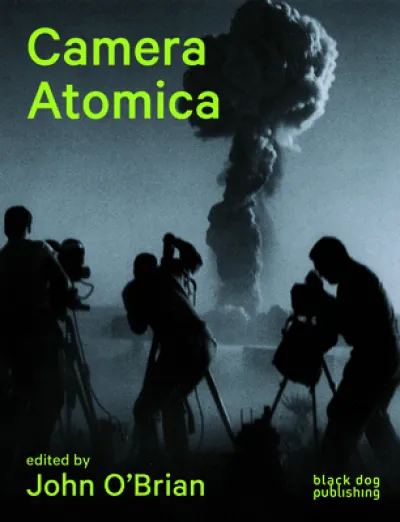
Camera Atomica : Photographing the Nuclear World
Book Details
Delivery Location
Delivery fee: Select location
Photographs have a crucial place in the representation of the atomic age and its anxieties. Camera Atomica examines narratives beyond the ''technological sublime'' that dominates much nuclear photography, suppressing representations of the human form in favor of representations of B-52 bombers and mushroom clouds.
The book proposes that the body is the site where the social environment interacts with the so-called ''atomic road'': uranium mining and processing, radiation research, nuclear reactor construction and operation, and weapons testing. Cameras have both recorded and ''in certain instances'' provided motivation for the production of nuclear events.
Their histories and technological development are intimately intertwined: at McGill University in the early 1900s, for example, Ernest Rutherford employed photography to identify the properties of radioactive materials, winning a Nobel Prize for his research, and at Los Alamos in the mid-1940s, Julian E.Mack and Berlyn Brixner designed specialized cameras for measuring the blast yield of nuclear weapons. All photographs, including nuclear photographs, have the capability to function affectively by working on the emotions and fascinating audiences.
Through a wide range of visual documentation, Camera Atomica raises questions such as: what has the role of photography been in underwriting a public image of the bomb and nuclear energy? Has the circulation of photographic images heightened or lessened anxieties, or done both at the same time? How should the different visual protocols of photography ''scientific, journalistic, documentary, touristic, and artistic ''be understood''?
Get Camera Atomica by at the best price and quality guaranteed only at Werezi Africa's largest book ecommerce store. The book was published by Black Dog Press and it has pages.