Cart 0
Capital Wars
Click to zoom

Share this book

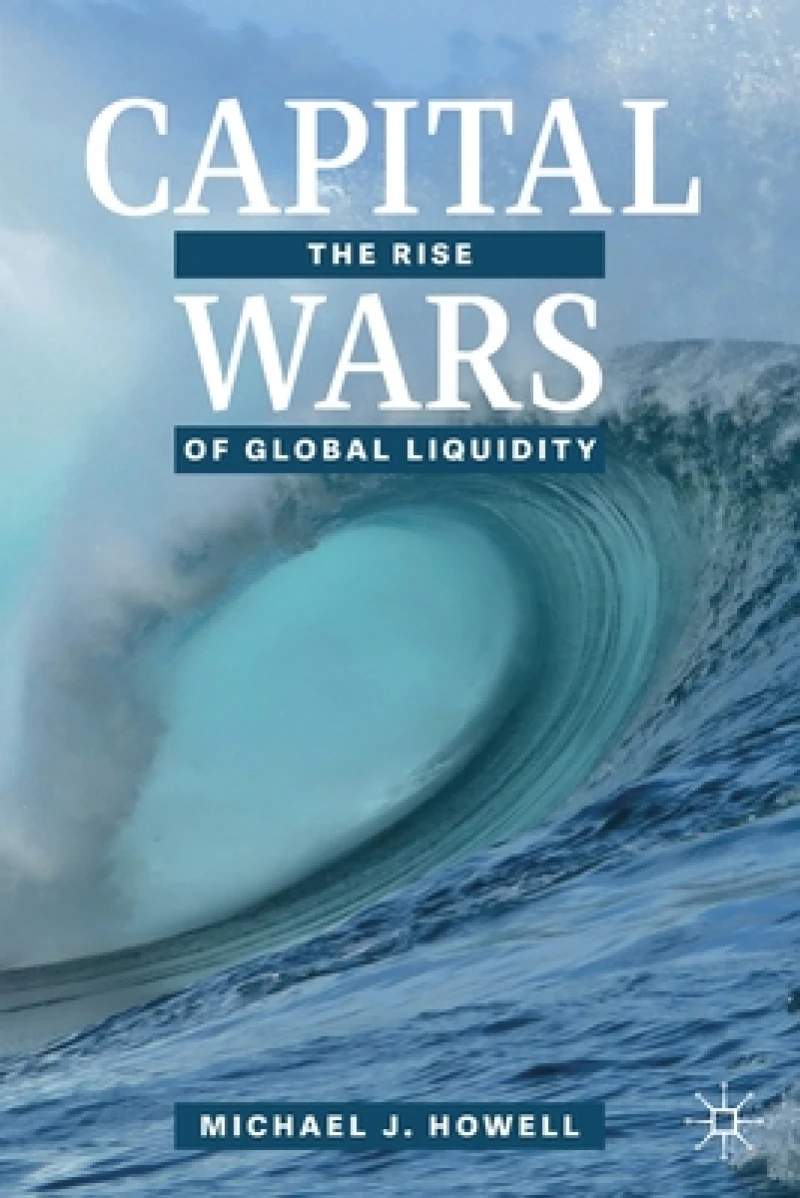
Capital Wars : The Rise of Global Liquidity

2020 ed.

Book Details

Format Paperback / Softback
ISBN-10 3030392902
ISBN-13 9783030392901
Edition 2020 ed.
Publisher Springer Nature Switzerland AG
Imprint Springer Nature Switzerland AG
Country of Manufacture GB
Country of Publication GB
Publication Date Mar 25th, 2021
Print length 304 Pages
Weight 504 grams
Dimensions 15.50 x 23.40 x 2.10 cms
Ksh 9,900.00
Werezi Extended Catalogue Delivery in 28 days

Delivery Location

Delivery fee: Select location

Delivery in 28 days

Secure
Quality
Fast
Economic cycles are driven by financial flows, namely quantities of savings and credits, and not by high street inflation or interest rates. Their sweeping destructive powers are expressed through Global Liquidity, a $130 trillion pool of footloose cash. Global Liquidity describes the gross flows of credit and international capital feeding through the world’s banking systems and wholesale money markets. The huge jump in the volume of international financial markets since the mid-1980s has been boosted by deregulation, innovation and easy money, with financial globalisation now surpassing the peaks of integration reached before the First World War. Global Liquidity drives these markets: it is often determinant, frequently disruptive and always fast-moving. Barely one fifth of Wall Street’s huge gains over recent decades have come from earnings: rising liquidity and investors’ appetite for riskier financial assets have propelled stock prices higher. Similar experiences are shared worldwide and even in emerging markets, such as India, flat earnings have not deterred waves of foreign money and domestic mutual funds from driving-up stock prices. Now with central banks actively pursuing quantitative easing policies, industrial corporations flush with cash and rising wealth levels among emerging market investors, the liquidity theory of investment has never been more important. International spill-overs of these rapacious cross-border flows sets off capital wars and exposes the unattractive face of liquidity called ‘risk.’ As the world grows bigger, it becomes ever more volatile. From the early 1960s onwards, the world economy and its financial markets have suffered from three broad types of shocks – labour costs, oil and commodities, and global liquidity. Financial markets spin on fragile axes and the absence of liquidity often provides a warning of upcoming troubles. Global Liquidity is a much-discussed, but narrowly-researchedand vaguely-defined topic. This book deeply explores the subject by clearly defining and measuring liquidity worldwide and by showing its importance for investors. The roles of central banks, shadow banking, the rise of Repo and growth of wholesale money are discussed. Additionally, covering the latest developments in China’s increasingly dominant financial economy, this book will appeal to practitioners, policy-makers, economists and academics, as well as those with a general interest in how financial markets work.

Economic cycles are driven by financial flows, namely quantities of savings and credits, and not by high street inflation or interest rates. Their sweeping destructive powers are expressed through Global Liquidity, a $130 trillion pool of footloose cash. Global Liquidity describes the gross flows of credit and international capital feeding through the world’s banking systems and wholesale money markets. The huge jump in the volume of international financial markets since the mid-1980s has been boosted by deregulation, innovation and easy money, with financial globalisation now surpassing the peaks of integration reached before the First World War. Global Liquidity drives these markets: it is often determinant, frequently disruptive and always fast-moving. Barely one fifth of Wall Street’s huge gains over recent decades have come from earnings: rising liquidity and investors’ appetite for riskier financial assets have propelled stock prices higher. Similar experiences are shared worldwide and even in emerging markets, such as India, flat earnings have not deterred waves of foreign money and domestic mutual funds from driving-up stock prices. Now with central banks actively pursuing quantitative easing policies, industrial corporations flush with cash and rising wealth levels among emerging market investors, the liquidity theory of investment has never been more important.

International spill-overs of these rapacious cross-border flows sets off capital wars and exposes the unattractive face of liquidity called ‘risk.’ As the world grows bigger, it becomes ever more volatile. From the early 1960s onwards, the world economy and its financial markets have suffered from three broad types of shocks – labour costs, oil and commodities, and global liquidity. Financial markets spin on fragile axes and the absence of liquidity often provides a warning of upcoming troubles.

Global Liquidity is a much-discussed, but narrowly-researchedand vaguely-defined topic. This book deeply explores the subject by clearly defining and measuring liquidity worldwide and by showing its importance for investors. The roles of central banks, shadow banking, the rise of Repo and growth of wholesale money are discussed. Additionally, covering the latest developments in China’s increasingly dominant financial economy, this book will appeal to practitioners, policy-makers, economists and academics, as well as those with a general interest in how financial markets work.


Get Capital Wars by at the best price and quality guaranteed only at Werezi Africa's largest book ecommerce store. The book was published by Springer Nature Switzerland AG and it has pages.


Mind, Body, & Spirit

Price

Ksh 9,900.00

Shopping Cart

Africa largest book store

Sub Total:
Ebooks

Digital Library
Coming Soon

Our digital collection is currently being curated to ensure the best possible reading experience on Werezi. We'll be launching our Ebooks platform shortly.