
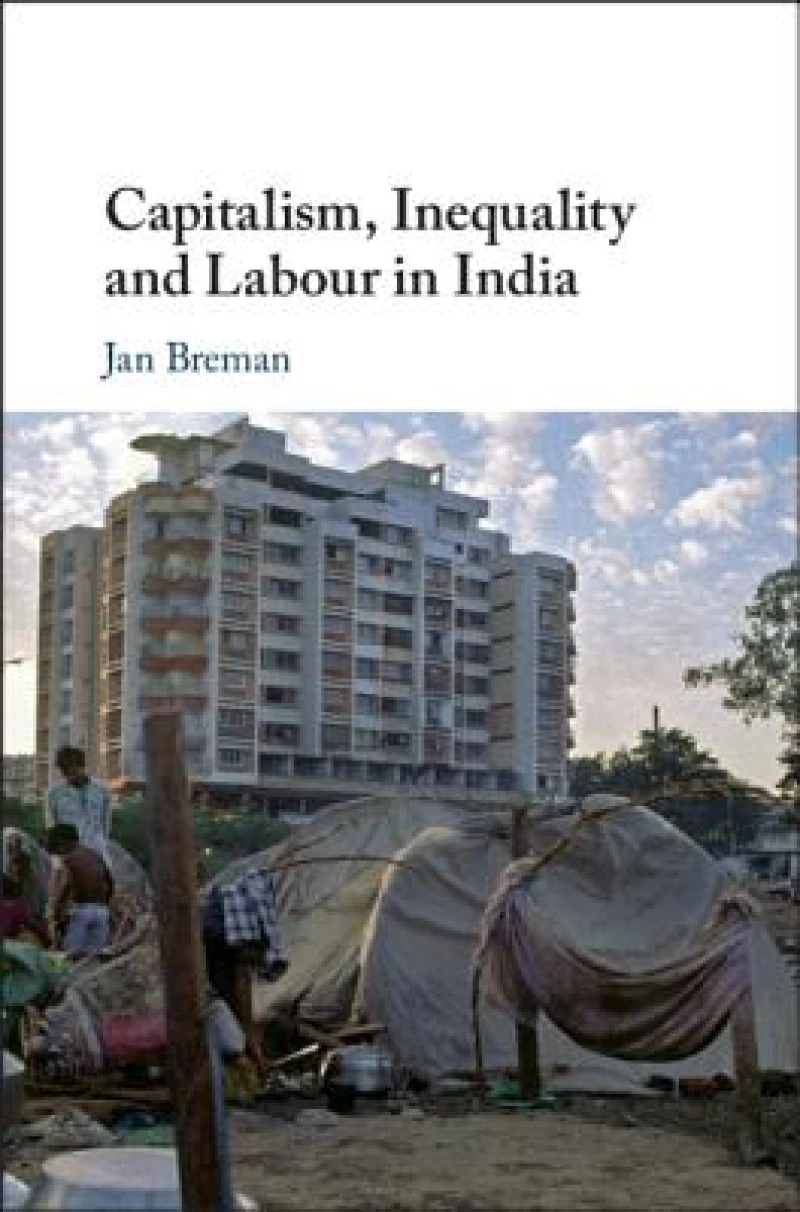
Capitalism, Inequality and Labour in India
by
Jan Breman
Book Details
Format
Hardback or Cased Book
ISBN-10
1108482414
ISBN-13
9781108482417
Publisher
Cambridge University Press
Imprint
Cambridge University Press
Country of Manufacture
GB
Country of Publication
GB
Publication Date
Aug 15th, 2019
Print length
298 Pages
Weight
540 grams
Dimensions
23.10 x 14.60 x 2.10 cms
Ksh 17,100.00
Werezi Extended Catalogue
Delivery in 14 days
1 copies in stock
Delivery Location
Delivery fee: Select location
Delivery in 14 days
Secure
Quality
Fast
Jan Breman analyses labour bondage in India's changing political economy from 1962 to 2017. Focusing on what has happened since Independence, he argues that colonial rule changed the country's agrarian economy. Capitalism has led to progressive inequality, lack of welfare and the exclusion of the dispossessed from mainstream society.
Jan Breman takes dispossession as his central theme in this ambitious analysis of labour bondage in India''s changing political economy from 1962 to 2017. When, in a remote past, tribal and low-caste communities were attached to landowning households, their lack of freedom was framed as subsistence-oriented dependency. Breman argues that with colonial rule came the intrusion of capitalism into India''s agrarian economy, leading to a decline in the idea of patronage in the relationship between bonded labour and landowner. Instead, servitude was reshaped as indebtedness. As labour became transformed into a commodity, peasant workers were increasingly pushed out of agriculture and the village but remained adrift in the wider economy. This footloose workforce is subjected to exploitation when their labour power is required and is left in a state of exclusion when it is surplus to demand. The outcome is progressive inequality that is thoroughly capitalist in nature.
Get Capitalism, Inequality and Labour in India by at the best price and quality guaranteed only at Werezi Africa's largest book ecommerce store. The book was published by Cambridge University Press and it has pages.

