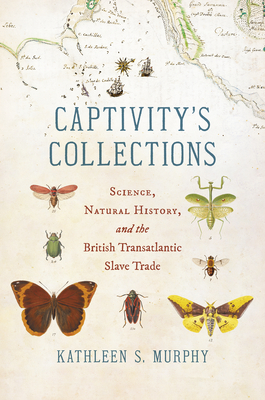
Captivity''s Collections : Science, Natural History, and the British Transatlantic Slave Trade
Book Details
Format
Paperback / softback
Book Series
Flows, Migrations, and Exchanges
ISBN-10
1469675919
ISBN-13
9781469675916
Publisher
The University of North Carolina Press
Imprint
The University of North Carolina Press
Country of Manufacture
GB
Country of Publication
GB
Publication Date
Oct 17th, 2023
Print length
256 Pages
Weight
414 grams
Dimensions
15.60 x 23.40 x 1.70 cms
KSh 4,300.00
Currently unavailable
0 in stock
Delivery Location
Delivery fee: Select location
Secure
Quality
Fast
Argues that the eighteenth century’s explosion of new natural knowledge was deeply connected to the circulation of individuals, objects, and ideas through the networks of the British transatlantic slave trade.
Cashews from Africa's Gold Coast, butterflies from Sierra Leone, jalap root from Veracruz, shells from Jamaica—in the eighteenth century, these specimens from faraway corners of the Atlantic were tucked away onboard inhumane British slaving vessels. Kathleen S. Murphy argues that the era's explosion of new natural knowledge was deeply connected to the circulation of individuals, objects, and ideas through the networks of the British transatlantic slave trade. Plants, seeds, preserved animals and insects, and other specimens were gathered by British slave ship surgeons, mariners, and traders at slaving factories in West Africa, in ports where captive Africans disembarked, and near the British South Sea Company's trading factories in Spanish America. The specimens were displayed in British museums and herbaria, depicted in published natural histories, and discussed in the halls of scientific societies.
Grounded in extensive archival research on both sides of the Atlantic, Captivity's Collections mines scientific treatises, slaving companies' records, naturalists' correspondence, and museum catalogs to recover in rich detail the scope of the slave trade's collecting operations. The book reveals the scientific and natural historical profit derived from these activities and the crucial role of specimens gathered along the routes of the slave trade on emerging ideas in natural history.
Grounded in extensive archival research on both sides of the Atlantic, Captivity's Collections mines scientific treatises, slaving companies' records, naturalists' correspondence, and museum catalogs to recover in rich detail the scope of the slave trade's collecting operations. The book reveals the scientific and natural historical profit derived from these activities and the crucial role of specimens gathered along the routes of the slave trade on emerging ideas in natural history.
Get Captivity''s Collections by Kathleen S. Murphy at the best price and quality guaranteed only at Werezi Africa's largest book ecommerce store. The book was published by The University of North Carolina Press and it has 256 pages.
Customers Who Bought This Also Bought

Churchill
KSh 3,700.00

Difficult Women
KSh 2,350.00

Legacy of Violence
KSh 3,150.00

Agricola and the Germania
KSh 2,350.00

Empireland
KSh 2,150.00

The History of the Kings of Britain
KSh 2,350.00

Siege
KSh 2,000.00

Anarchy
KSh 2,700.00

What Matters in Jane Austen?
KSh 2,700.00

Unruly
KSh 2,150.00
Map Of A Nation
KSh 2,350.00

Black and British
KSh 2,350.00