
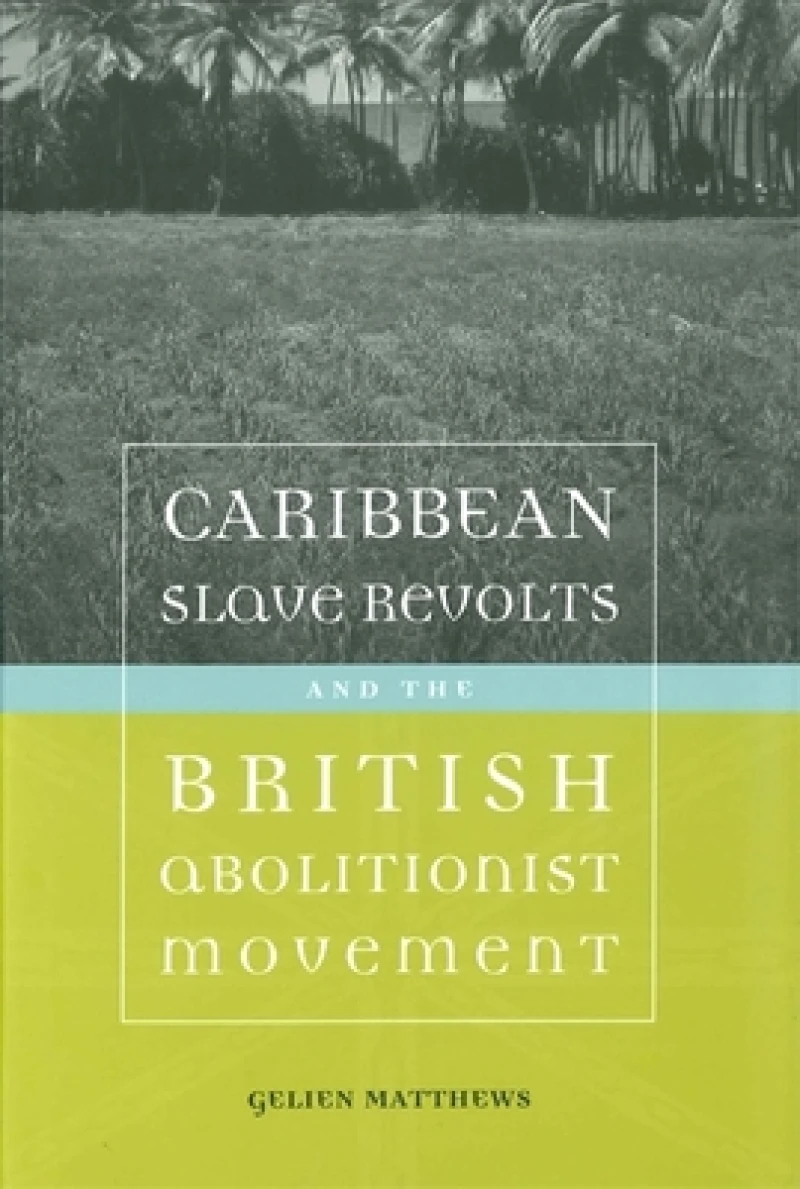
Caribbean Slave Revolts and the British Abolitionist Movement
Book Details
Format
Paperback / Softback
Book Series
Antislavery, Abolition, and the Atlantic World
ISBN-10
0807150088
ISBN-13
9780807150085
Publisher
Louisiana State University Press
Imprint
Louisiana State University Press
Country of Manufacture
US
Country of Publication
GB
Publication Date
Jan 2nd, 2013
Print length
212 Pages
Weight
318 grams
Dimensions
15.30 x 22.80 x 1.40 cms
Product Classification:
History of the AmericasHistory of the Americas
Ksh 5,450.00
Werezi Extended Catalogue
0 in stock
Delivery Location
Delivery fee: Select location
Secure
Quality
Fast
In this illuminating study, Gelien Matthews demonstrates how slave rebellions in the British West Indies influenced the tactics of abolitionists in England and how the rhetoric and actions of the abolitionists emboldened slaves.
In this illuminating study, Gelien Matthews demonstrates how slave rebellions in the British West Indies influenced the tactics of abolitionists in England and how the rhetoric and actions of the abolitionists emboldened slaves. Moving between the world of the British Parliament and the realm of Caribbean plantations, Matthews reveals a transatlantic dialectic of antislavery agitation and slave insurrection that eventually influenced the dismantling of slavery in British-held territories. Focusing on slave revolts that took place in Barbados in 1816, in Demerara in 1823, and in Jamaica in 1831--32, Matthews identifies four key aspects in British abolitionist propaganda regarding Caribbean slavery: the denial that antislavery activism prompted slave revolts, the attempt to understand and recount slave uprisings from the slaves' perspectives, the portrayal of slave rebels as victims of armed suppressors and as agents of the antislavery movement, and the presentation of revolts as a rationale against the continuance of slavery. She makes shrewd use of previously overlooked publications of British abolitionists to prove that their language changed over time in response to slave uprisings. Historians previously have examined the economic, religious, and political bases for slavery's abolishment in the Caribbean, but Matthews here emphasises the agency of slaves in the march toward freedom. Her compelling work is a valuable analytical tool in the interpretation of abolition in North America, uncovering the important connections between rebellious slaves on one side of the Atlantic and abolitionists on the other side.
Get Caribbean Slave Revolts and the British Abolitionist Movement by at the best price and quality guaranteed only at Werezi Africa's largest book ecommerce store. The book was published by Louisiana State University Press and it has pages.

