
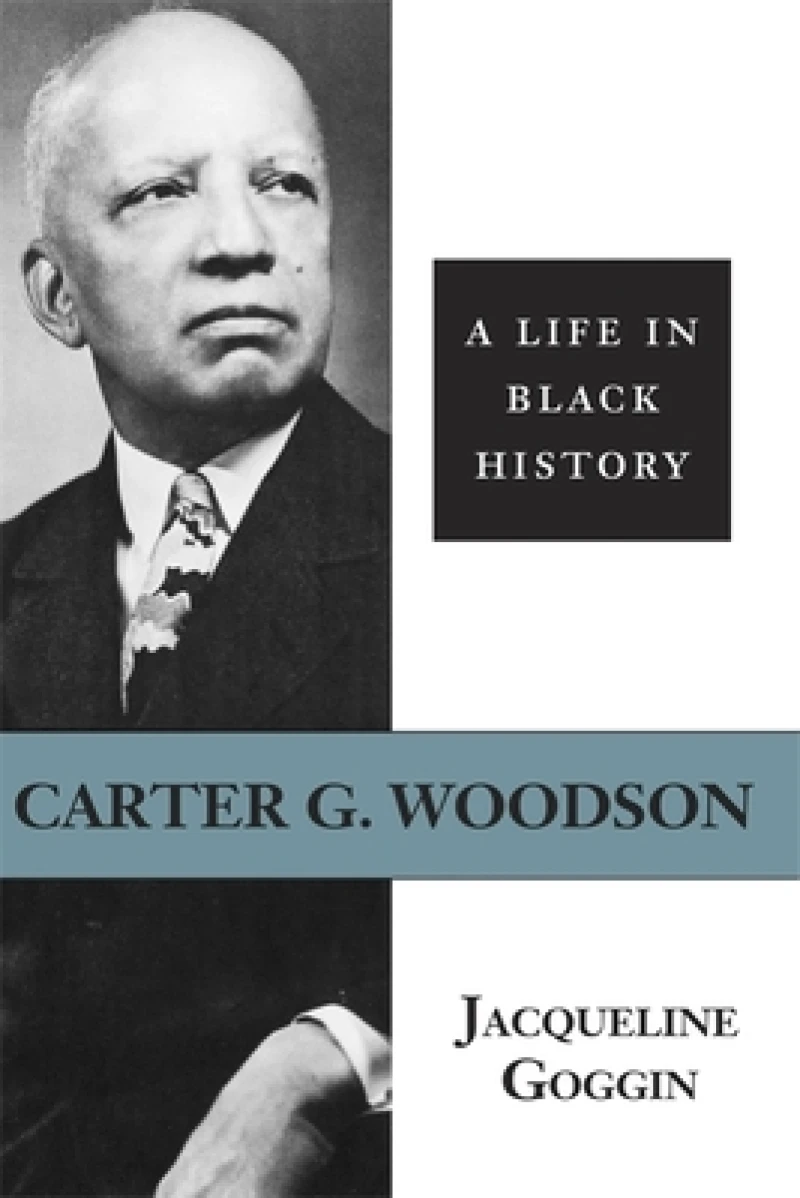
Carter G. Woodson : A Life in Black History
Book Details
Format
Paperback / Softback
Book Series
Southern Biography Series
ISBN-10
0807121843
ISBN-13
9780807121849
Publisher
Louisiana State University Press
Imprint
Louisiana State University Press
Country of Manufacture
US
Country of Publication
GB
Publication Date
May 1st, 1997
Print length
240 Pages
Weight
362 grams
Dimensions
15.20 x 22.80 x 1.60 cms
Ksh 5,500.00
Werezi Extended Catalogue
0 in stock
Delivery Location
Delivery fee: Select location
Secure
Quality
Fast
Born in rural Virginia during Reconstruction, Carter G. Woodson (1875-1950) was a central figure in black history and an important American scholar. This important intellectual biography reveals the complex and dedicated individual Woodson was and the lasting significance of his pioneering work in black history.
Born in rural Virginia during Reconstruction, Carter G. Woodson (1875-1950) was a central figure in black history and an important American scholar. In 1912, he became the first and only individual of slave parentage to earn a Ph.D. in history. In 1915 he founded the Association for the Study of Negro (now African-American) Life and History, and he devoted the remainder of his life to the study and advancement of the history of his race. His legacy of achievement extends to the present day.
In preparing this detailed biography of Woodson, the first book-length treatment of his life, Jacqueline Goggin conducted extensive research in archival sources throughout the country. From a paucity of primary materials, she provides as complete an account as possible of Woodson's humble upbringing and early influences. She also describes his education at Berea College, the University of Chicago, and Harvard University, and his early career as a teacher in the public schools of Washington, D.C., an experience that deepened his belief in the uplifting power of education for blacks. Drawing upon Woodson's own writings, correspondence from a wide range of collections, and numerous secondary sources, the author delineates Woodson's work both within and outside the ASNLH, as well as his contributions to the interpretation of American history.
Woodson maintained that knowledge of Negro history would inculcate blacks with a sense of self-esteem and alleviate white racism, and he initiated a series of educational programs and publications directed toward black and white intellectuals as well as the mass of African Americans. He edited the Journal of Negro History and the Negro History Bulletin and wrote many influential books, notably The Education of the Negro Prior to 1861 and The Negro in Our History. Through his research and writing, he challenged prevailing stereotypes about blacks and established black history as a legitimate field of inquiry, enduring all the while the patronizing attitudes of many white historians, educators, and philanthropists, on whom he relied for always-scarce funding. Woodson also used his scholarship to influence the policies of black social welfare and protest organisations such as the National Urban League, the NAACP, and the more radical Friends of Negro Freedom.
W. E. B. Du Bois said of Woodson that he ""kept to one goal, and worked at it stubbornly and with unwavering application and died knowing that he accomplished much if not all that he planned."" This important intellectual biography reveals the complex and dedicated individual Woodson was and the lasting significance of his pioneering work in black history.
In preparing this detailed biography of Woodson, the first book-length treatment of his life, Jacqueline Goggin conducted extensive research in archival sources throughout the country. From a paucity of primary materials, she provides as complete an account as possible of Woodson's humble upbringing and early influences. She also describes his education at Berea College, the University of Chicago, and Harvard University, and his early career as a teacher in the public schools of Washington, D.C., an experience that deepened his belief in the uplifting power of education for blacks. Drawing upon Woodson's own writings, correspondence from a wide range of collections, and numerous secondary sources, the author delineates Woodson's work both within and outside the ASNLH, as well as his contributions to the interpretation of American history.
Woodson maintained that knowledge of Negro history would inculcate blacks with a sense of self-esteem and alleviate white racism, and he initiated a series of educational programs and publications directed toward black and white intellectuals as well as the mass of African Americans. He edited the Journal of Negro History and the Negro History Bulletin and wrote many influential books, notably The Education of the Negro Prior to 1861 and The Negro in Our History. Through his research and writing, he challenged prevailing stereotypes about blacks and established black history as a legitimate field of inquiry, enduring all the while the patronizing attitudes of many white historians, educators, and philanthropists, on whom he relied for always-scarce funding. Woodson also used his scholarship to influence the policies of black social welfare and protest organisations such as the National Urban League, the NAACP, and the more radical Friends of Negro Freedom.
W. E. B. Du Bois said of Woodson that he ""kept to one goal, and worked at it stubbornly and with unwavering application and died knowing that he accomplished much if not all that he planned."" This important intellectual biography reveals the complex and dedicated individual Woodson was and the lasting significance of his pioneering work in black history.
Get Carter G. Woodson by at the best price and quality guaranteed only at Werezi Africa's largest book ecommerce store. The book was published by Louisiana State University Press and it has pages.

