
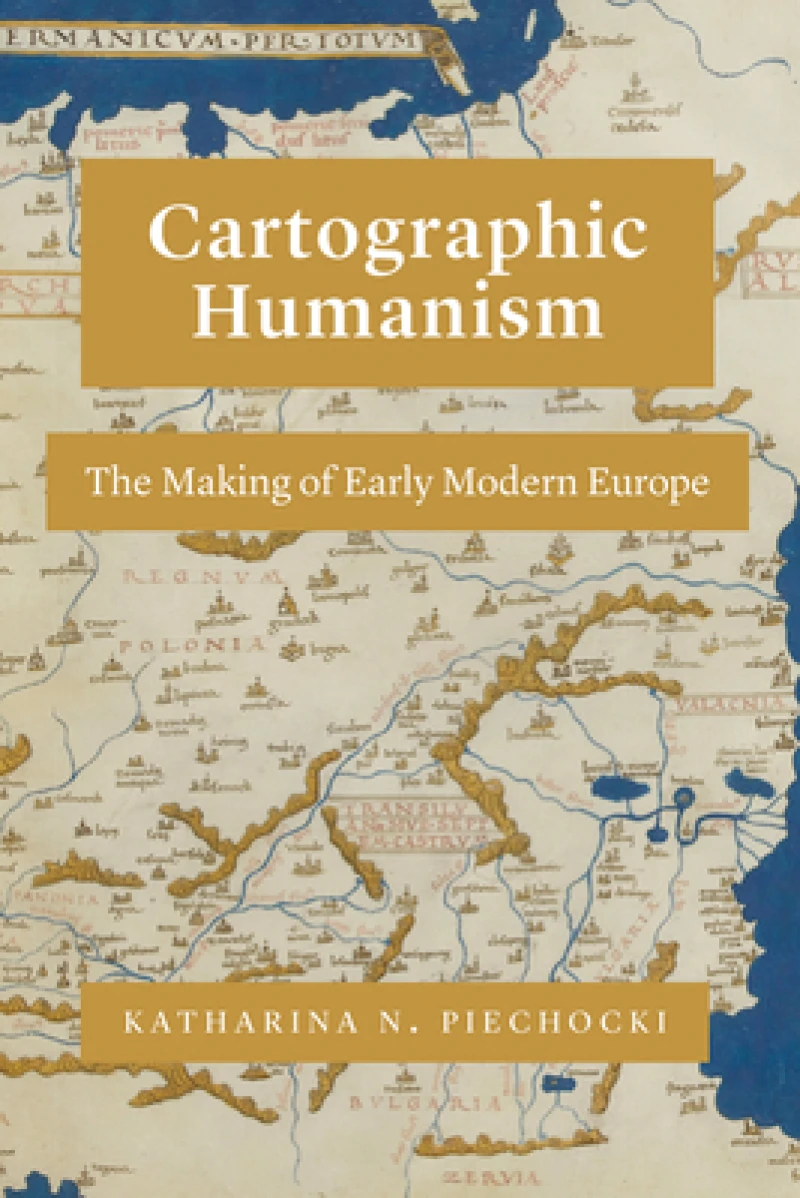
Cartographic Humanism – The Making of Early Modern Europe : The Making of Early Modern Europe
Book Details
Format
Paperback / Softback
ISBN-10
0226816818
ISBN-13
9780226816814
Publisher
The University of Chicago Press
Imprint
University of Chicago Press
Country of Manufacture
GB
Country of Publication
GB
Publication Date
Sep 13th, 2021
Print length
304 Pages
Weight
494 grams
Dimensions
15.20 x 22.90 x 2.40 cms
Ksh 5,850.00
Werezi Extended Catalogue
Delivery in 14 days
1 copies in stock
Delivery Location
Delivery fee: Select location
Delivery in 14 days
Secure
Quality
Fast
Piechocki calls for an examination of the idea of Europe as a geographical concept, tracing its development in the 15th and 16th centuries.
What is "Europe," and when did it come to be? In the Renaissance, the term "Europe" circulated widely. But as Katharina N. Piechocki argues in this compelling book, the continent itself was only in the making in the fifteenth and sixteenth centuries. Cartographic Humanism sheds new light on how humanists negotiated and defined Europe's boundaries at a momentous shift in the continent's formation: when a new imagining of Europe was driven by the rise of cartography. As Piechocki shows, this tool of geography, philosophy, and philology was used not only to represent but, more importantly, also to shape and promote an image of Europe quite unparalleled in previous centuries. Engaging with poets, historians, and mapmakers, Piechocki resists an easy categorization of the continent, scrutinizing Europe as an unexamined category that demands a much more careful and nuanced investigation than scholars of early modernity have hitherto undertaken. Unprecedented in its geographic scope, Cartographic Humanism is the first book to chart new itineraries across Europe as it brings France, Germany, Italy, Poland, and Portugal into a lively, interdisciplinary dialogue.
Get Cartographic Humanism – The Making of Early Modern Europe by at the best price and quality guaranteed only at Werezi Africa's largest book ecommerce store. The book was published by The University of Chicago Press and it has pages.

