
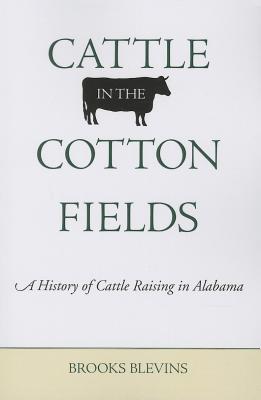
Cattle in the Cotton Fields : A History of Cattle Raising in Alabama
Book Details
Format
Paperback / softback
ISBN-10
0817357718
ISBN-13
9780817357719
Publisher
The University of Alabama Press
Imprint
The University of Alabama Press
Country of Manufacture
US
Country of Publication
GB
Publication Date
Apr 1st, 2014
Print length
240 Pages
Weight
456 grams
Dimensions
23.10 x 15.40 x 3.00 cms
Product Classification:
History: specific events & topicsHistory: specific events and topicsAnimal husbandry
KSh 4,500.00
Temporarily out of stock, due soon
0 in stock
Delivery Location
Delivery fee: Select location
Secure
Quality
Fast
Cattle raising today is the most widely practiced form of agriculture in Alabama and ranks second only to the poultry industry in terms of revenue. Brooks Blevins not only relates the development and importance of the industry to agricultural practices but also presents it as an integral component of southern history, inextricably linked to issues of sectional politics, progressivism, race and class struggles, and rural depopulation. Most historians believe cattle were first introduced by the Spanish explorers and missionaries during the early decades of the 16th century. Native Americans quickly took up cattle raising, and the practice was reinforced with the arrival of the French and the British. By 1819--after massive immigration of Anglo-American herders, farmers, and planters--cattle played an integral role in the territory''s agriculture and economy. Despite the dominance of the cotton industry during the antebellum period, cattle herding continued to grow and to become identified as an important part of the region''s agriculture.
In the early decades of the 20th century, the boll weevil drove many planters out of the cotton business. These planters adopted a midwestern model of cattle raising consisting of purebred English breeds, enclosed pastures, scientific breeding and feeding practices, and intimate cooperation among cattlemen, government agents, and business interests. This model of farming gradually replaced the open range herding tradition.
In the early decades of the 20th century, the boll weevil drove many planters out of the cotton business. These planters adopted a midwestern model of cattle raising consisting of purebred English breeds, enclosed pastures, scientific breeding and feeding practices, and intimate cooperation among cattlemen, government agents, and business interests. This model of farming gradually replaced the open range herding tradition.
Get Cattle in the Cotton Fields by Brooks Blevins at the best price and quality guaranteed only at Werezi Africa's largest book ecommerce store. The book was published by The University of Alabama Press and it has 240 pages.
Customers Who Bought This Also Bought

Killers of the Flower Moon
KSh 2,000.00

Homeland Elegies
KSh 1,800.00

History of Western Philosophy
KSh 5,300.00

Only Plane in the Sky
KSh 2,700.00

Map Of A Nation
KSh 2,350.00

38 Londres Street
KSh 4,500.00

A New World Begins
KSh 3,950.00

On Antisemitism
KSh 4,500.00

Killers of the Flower Moon
KSh 1,800.00

A New World Begins
KSh 6,600.00

Trial and Death of Socrates
KSh 2,000.00

Capital & Ideology
KSh 3,050.00