
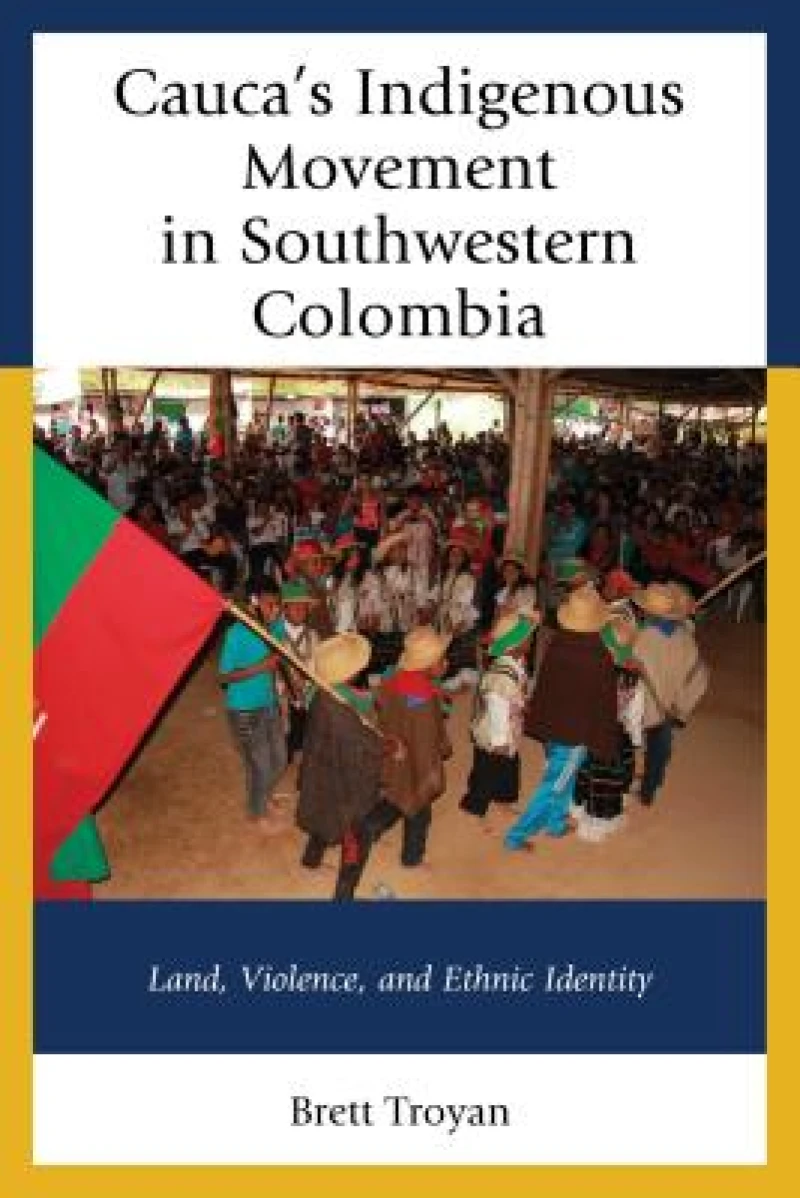
Cauca's Indigenous Movement in Southwestern Colombia : Land, Violence, and Ethnic Identity
by
Brett Troyan
Book Details
Format
Hardback or Cased Book
Book Series
The Peoples of "Latin" America and the Caribbean
ISBN-10
1498502288
ISBN-13
9781498502283
Publisher
Bloomsbury Publishing Plc
Imprint
Lexington Books
Country of Manufacture
GB
Country of Publication
GB
Publication Date
Jun 10th, 2015
Print length
220 Pages
Weight
449 grams
Dimensions
23.60 x 16.10 x 2.00 cms
Product Classification:
Indigenous peoplesLand rightsRevolutionary groups & movements
Ksh 18,350.00
Manufactured on Demand
0 in stock
Delivery Location
Delivery fee: Select location
Secure
Quality
Fast
This book provides a vivid account of how the indigenous communities of Cauca in southwestern Colombia engaged with the Colombian central state. Troyan examines the state initiatives in the 1930s, '50s, '60s, and '70s toward indigenous communities in Cauca, which sheds light on the political and social construction of Colombian indigenous identity.
Cauca''s Indigenous Movement in Southwestern Colombia: Land, Violence, and Ethnic Identity provides a vivid account of how the indigenous communities of Cauca in southwestern Colombia engaged with the Colombian central state. Troyan begins with the question of how 3.4 percent of the Colombian population obtained legal rights to close to a quarter of the national territory. Her in-depth study of the correspondence between the central state and indigenous communities of Cauca reveals that the nation state played a key role in the legitimization of land claims based on ethnic identity. Starting with the indigenous movement led by Manuel Quintín Lame in 1914, this book shows how, in contrast to the local authorities of Cauca, the central state adopted a more sympathetic albeit contradictory approach to indigenous communities’ grievances throughout the twentieth century. Land, Violence, and Cauca''s Indigenous Movement in Southwestern Colombia presents an examination of state initiatives in the 1930s, 1950s, 1960s, and 1970s toward indigenous communities in Cauca, which sheds light on the political and social construction of Colombian indigenous identity. Troyan also reveals how violence and the representation of violence shaped the conversations between the central state and indigenous communities of Cauca; the central state’s inability to exert a monopoly on violence, Troyan argues, places indigenous communities and their leaders in jeopardy despite the discursive legitimization of land claims based on ethnic identity.
Get Cauca's Indigenous Movement in Southwestern Colombia by at the best price and quality guaranteed only at Werezi Africa's largest book ecommerce store. The book was published by Bloomsbury Publishing Plc and it has pages.

