
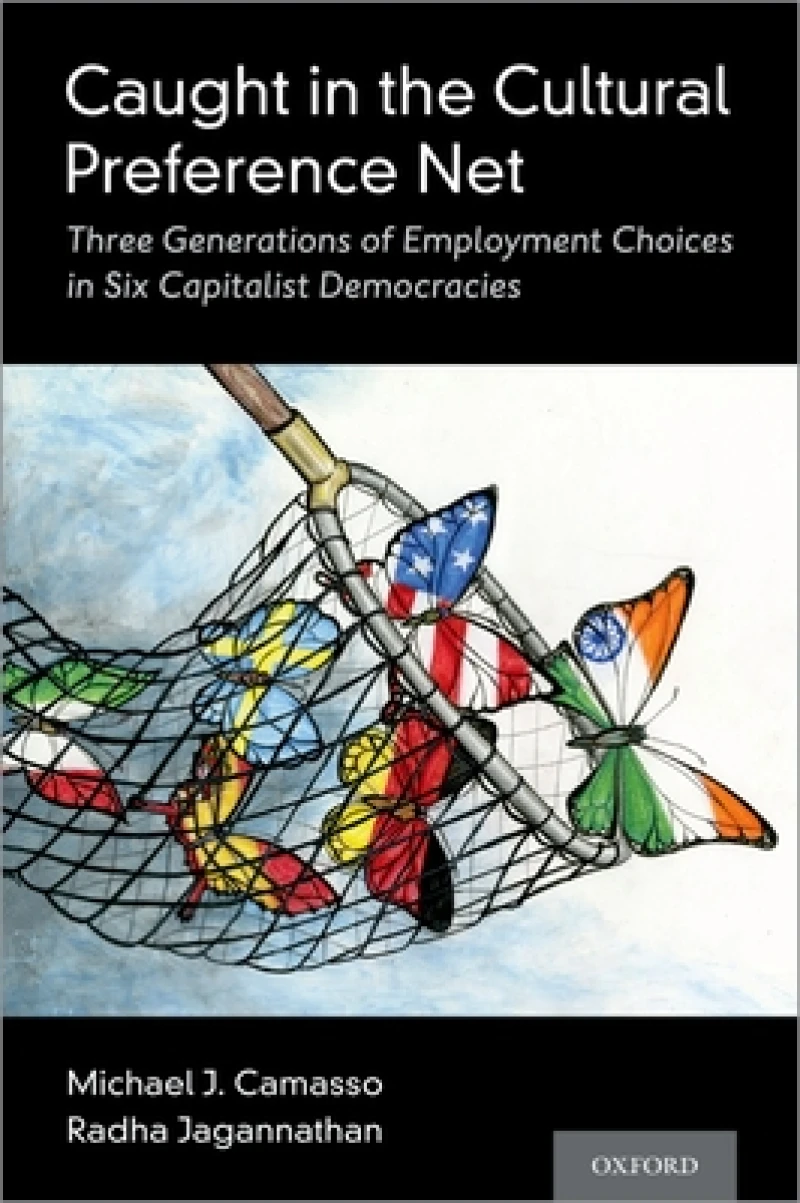
Caught in the Cultural Preference Net : Three Generations of Employment Choices in Six Capitalist Democracies
Book Details
Format
Hardback or Cased Book
ISBN-10
0190672781
ISBN-13
9780190672782
Publisher
Oxford University Press Inc
Imprint
Oxford University Press Inc
Country of Manufacture
US
Country of Publication
GB
Publication Date
Apr 15th, 2021
Print length
276 Pages
Weight
522 grams
Dimensions
15.70 x 23.60 x 2.00 cms
Product Classification:
Social workPublic administrationWelfare economics
Ksh 9,550.00
Werezi Extended Catalogue
0 in stock
Delivery Location
Delivery fee: Select location
Secure
Quality
Fast
This book presents and analyzes the work-related attitudes, beliefs, and preferences of three generation of people in Sweden, Germany, Italy, Spain, India, and the United States. Camasso and Jagannathan dig into why these differences hinder efforts to create international and equal standards of labor overtime and how these value orientation influence productivity and quality of life on a global scale.
How big of a role have national cultures--the collection of values, beliefs, attitudes and preferences--played in the formation of social and economic identities? If substantial, can these identities impact work related attitudes and impact personal decision as specific as the preferred type of job or even the choice of seeking employment at all? At a time when Millennials and Generation Z''ers are facing prodigious employment challenges, it is more timely than ever to examine the ways culture, especially cultural transmission from older to younger generations facilitate (hinder) influence labor force attachment and even the work ethic itself. Caught in the Cultural Preference Net examines work-related beliefs, attitudes and preferences that characterize the value orientations of three generational families in Germany, Sweden, Spain, Italy, India and the United States. These six countries have developed significantly different forms of capitalism ranging from the social democratic form in Sweden to the relatively unfettered, free market capitalism in the United States. Michael J. Camasso and Radha Jagannathan investigate whether these cultural and economic contexts have resulted in enduring attitude and preference structures or if these values and preferences have been changing as economic conditions in a nation have changed. These two experts focus a great deal of their attention on the roles that parents and grandparents have in socializing Millennials into the world of work and if this influence trumps the often competing influences of education, labor market and peers.The book is organized around three lines of inquiry: (1) Do some national cultures possess value orientations that are more successful than others in promoting economic opportunity? (2) Does the transmission of these value orientations demonstrate a persistence irrespective of economic conditions or are they simply the results of these conditions? (3) If a nation''s value orientation does indeed impact economic opportunity, does it do so by influencing an individual''s preferences? To answer this third question, Camasso and Jagannathan conduct a cross-national, multi-generational stated preference experiment--one of the very few ever attempted.The resulting book reveals substantial cultural stability across generations in some of the six capitalist democracies and substantial intergenerational change in others. The implications of this differential impact for national employment strategies are explored as are the implications for a global economy distinguished by abundant, well-paying service jobs for youth.
Get Caught in the Cultural Preference Net by at the best price and quality guaranteed only at Werezi Africa's largest book ecommerce store. The book was published by Oxford University Press Inc and it has pages.

