
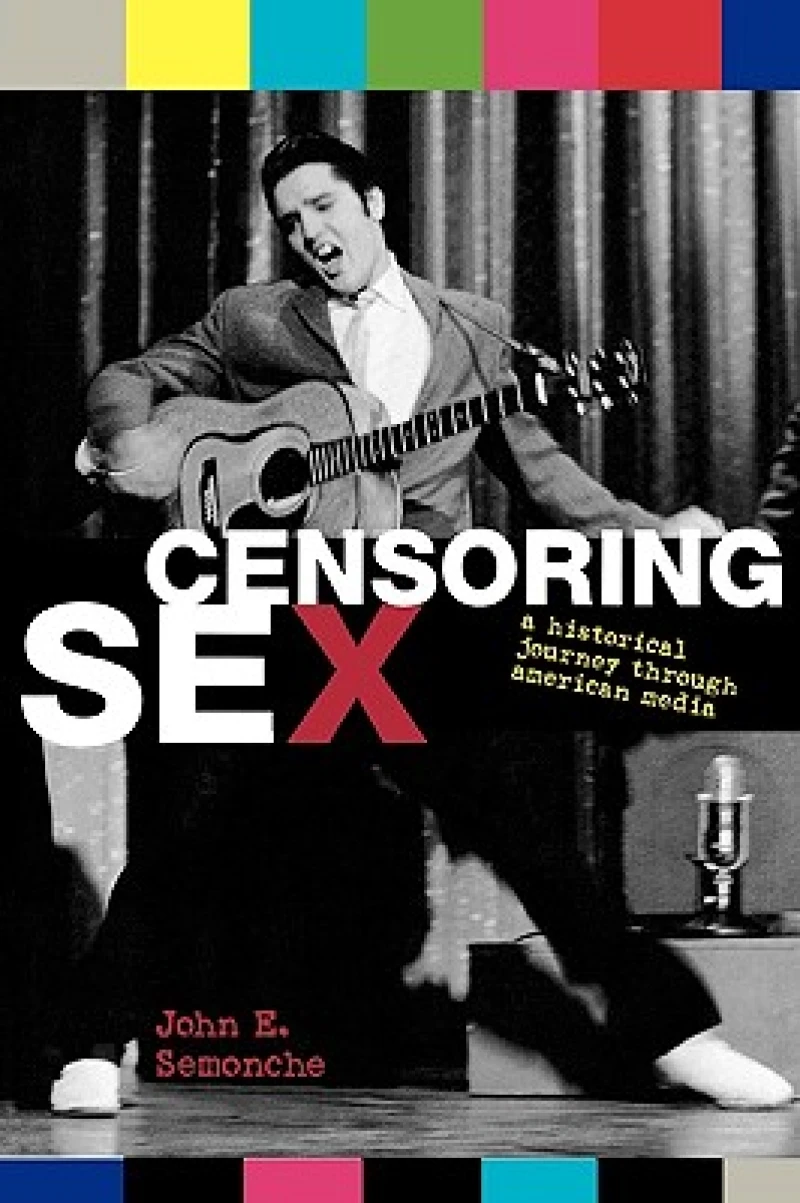
Censoring Sex : A Historical Journey Through American Media
Book Details
Format
Paperback / Softback
ISBN-10
0742551326
ISBN-13
9780742551329
Publisher
Bloomsbury Publishing Plc
Imprint
Rowman & Littlefield Publishers
Country of Manufacture
US
Country of Publication
GB
Publication Date
Jul 20th, 2007
Print length
310 Pages
Weight
500 grams
Dimensions
22.70 x 15.20 x 1.80 cms
Ksh 7,550.00
Manufactured on Demand
0 in stock
Delivery Location
Delivery fee: Select location
Secure
Quality
Fast
Surveys censorship for reasons of sex from nineteenth century onwards. This book covers various forms of American media-books and periodicals, pictorial art, motion pictures, music and dance, and radio, television, and the Internet. It explains via examples how and why censorship took place.
In this gracefully written, accessible and entertaining volume, John Semonche surveys censorship for reasons of sex from the nineteenth century up to the present. He covers the various forms of American media—books and periodicals, pictorial art, motion pictures, music and dance, and radio, television, and the Internet. The tale is varied and interesting, replete with a stock of colorful characters such as Anthony Comstock, Mae West, Theodore Dreiser, Marcel Duchamp, Opie and Anthony, Judy Blume, Jerry Falwell, Alfred Kinsey, Hugh Hefner, and the Guerilla Girls. Covering the history of censorship of sexual ideas and images is one way of telling the story of modern America, and Semonche tells that tale with insight and flair. Despite the varieties of censorship, running from self-censorship to government bans, a common story is told. Censorship, whether undertaken to ward off government regulation, to help preserve the social order, or to protect the weak and vulnerable, proceeds on the assumption that the censor knows best and that limiting the choices of media consumers is justified. At various times all of the following groups were perceived as needing protection from sexually explicit materials: children, women, the lower classes, and foreigners. As social and political conditions changed, however, the simple fact that someone was a woman or a day laborer did not support stereotyping that person as weak or impressionable. What would remain as the only acceptable rationale for censorship of sexual materials was the protection of children and unconsenting adults. For each mode of media, Semonche explains via abundant examples how and why censorship took place in America. Censoring Sex also traces the story of how the cultural territory contested by those advocating and opposing censorship has diminished over the course of the last two centuries. Yet, Semonche argues, the censorship of sexual materials that continues in the United States poses a challenge to the free speech that is part of the f
Get Censoring Sex by at the best price and quality guaranteed only at Werezi Africa's largest book ecommerce store. The book was published by Bloomsbury Publishing Plc and it has pages.

