
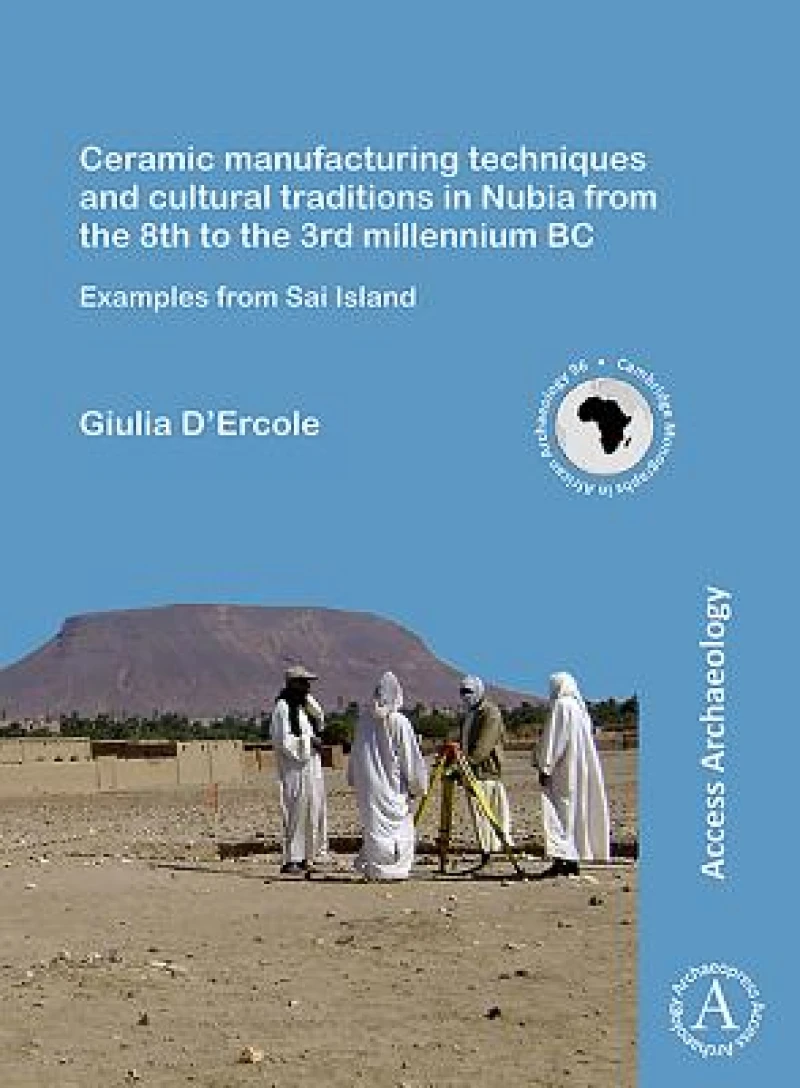
Ceramic manufacturing techniques and cultural traditions in Nubia from the 8th to the 3rd millennium BC : Examples from Sai Island
Book Details
Format
Paperback / Softback
Book Series
Cambridge Monographs in African Archaeology
ISBN-10
1784916714
ISBN-13
9781784916718
Publisher
Archaeopress
Imprint
Archaeopress Access Archaeology
Country of Manufacture
GB
Country of Publication
GB
Publication Date
Dec 31st, 2017
Print length
210 Pages
Weight
714 grams
Dimensions
20.50 x 27.50 x 1.60 cms
Product Classification:
African historyPrehistoric archaeologyAfrican historyArchaeology by period / region
Ksh 7,700.00
Werezi Extended Catalogue
Delivery in 14 days
1 copies in stock
Delivery Location
Delivery fee: Select location
Delivery in 14 days
Secure
Quality
Fast
This book presents a comprehensive critical analysis of diverse ceramic assemblages from Sai Island, in the Middle Nile Valley of Northern Sudan, on the border between ancient Upper and Lower Nubia. The assemblages included in this study cover about five millennia, spanning the period c. 8000 to c. 2500 BC.
In Sudan the first ceramic containers appeared at the beginning of the 9th millennium BC, with the earliest dates c. 8700 BC from Sorourab 2, in Central Sudan, and c. 8600 BC from the district of Amara West, in Northern Sudan.
This book presents a comprehensive critical analysis of diverse ceramic assemblages from Sai Island, in the Middle Nile Valley of Northern Sudan, on the border between ancient Upper and Lower Nubia. The assemblages included in this study cover about five millennia, spanning the period c. 8000 to c. 2500 BC. They go from the initial appearance of ceramic technology within hunting-fishing-gathering communities living in permanent or semi-permanent settlements (locally named ‘Khartoum Variant’ or ‘Mesolithic’ horizon: c. 7600–4800 BC), through the ceramic productions of the first ‘Neolithic’ pastoral societies (Abkan horizon: c. 5550-3700 BC), to those of the Pre-Kerma Nubian culture (c. 3600-2500 BC).
A thorough stylistic macroscopic observation of the finds is integrated with a solid technological approach by means of archaeometric petrographic (OM), mineralogical (XRPD) and chemical (XRF) analyses. Data are discussed and compared across a broad geographical area, including Lower and Upper Nubia, Central Sudan and the Egyptian Western Desert. They provide an original synthesis and interpretation of the ceramic traditions in Nubia and Sudan and propose a critical review of the debate on the invention of pottery and the functional and cultural reasons for the emergence of the ceramic technology.
This book presents a comprehensive critical analysis of diverse ceramic assemblages from Sai Island, in the Middle Nile Valley of Northern Sudan, on the border between ancient Upper and Lower Nubia. The assemblages included in this study cover about five millennia, spanning the period c. 8000 to c. 2500 BC. They go from the initial appearance of ceramic technology within hunting-fishing-gathering communities living in permanent or semi-permanent settlements (locally named ‘Khartoum Variant’ or ‘Mesolithic’ horizon: c. 7600–4800 BC), through the ceramic productions of the first ‘Neolithic’ pastoral societies (Abkan horizon: c. 5550-3700 BC), to those of the Pre-Kerma Nubian culture (c. 3600-2500 BC).
A thorough stylistic macroscopic observation of the finds is integrated with a solid technological approach by means of archaeometric petrographic (OM), mineralogical (XRPD) and chemical (XRF) analyses. Data are discussed and compared across a broad geographical area, including Lower and Upper Nubia, Central Sudan and the Egyptian Western Desert. They provide an original synthesis and interpretation of the ceramic traditions in Nubia and Sudan and propose a critical review of the debate on the invention of pottery and the functional and cultural reasons for the emergence of the ceramic technology.
Get Ceramic manufacturing techniques and cultural traditions in Nubia from the 8th to the 3rd millennium BC by at the best price and quality guaranteed only at Werezi Africa's largest book ecommerce store. The book was published by Archaeopress and it has pages.

