
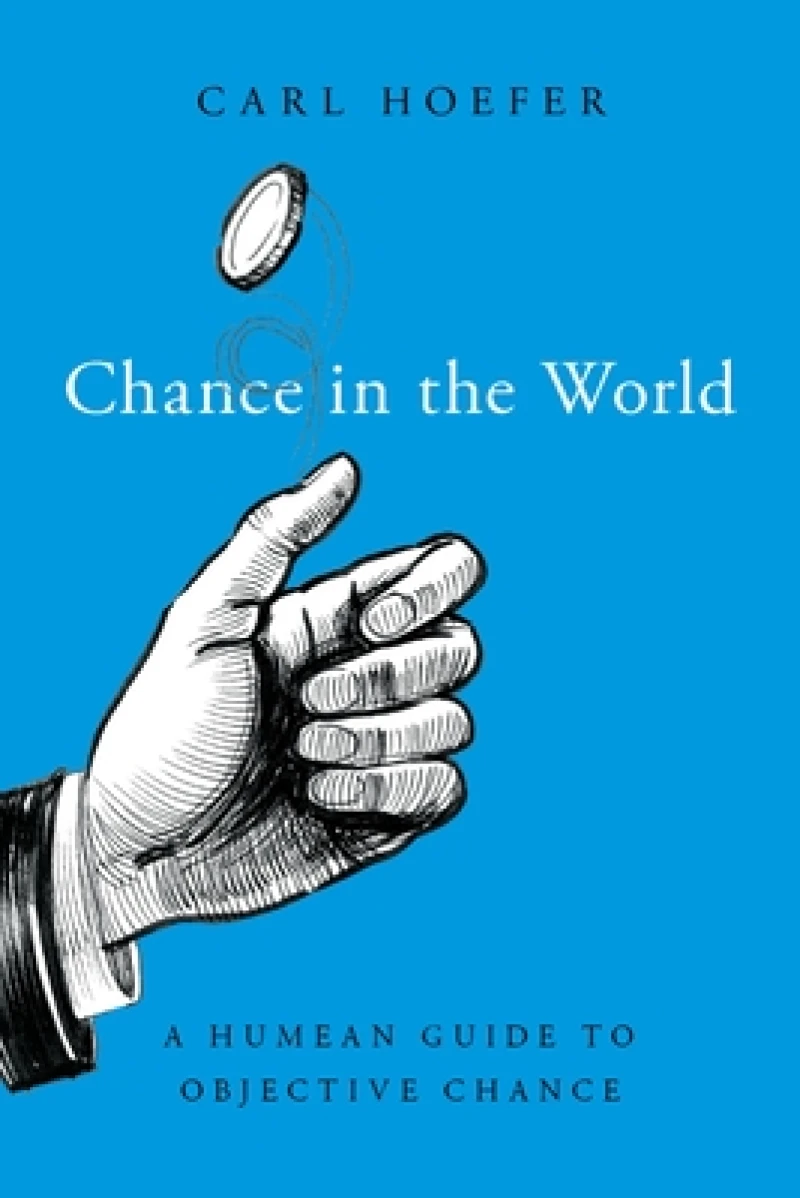
Chance in the World : A Humean Guide to Objective Chance
by
Carl Hoefer
Book Details
Format
Hardback or Cased Book
Book Series
Oxford Studies in Philosophy of Science
ISBN-10
019090741X
ISBN-13
9780190907419
Publisher
Oxford University Press Inc
Imprint
Oxford University Press Inc
Country of Manufacture
US
Country of Publication
GB
Publication Date
Nov 5th, 2019
Print length
288 Pages
Weight
431 grams
Dimensions
14.50 x 21.30 x 2.50 cms
Product Classification:
Probability & statistics
Ksh 14,950.00
Werezi Extended Catalogue
0 in stock
Delivery Location
Delivery fee: Select location
Secure
Quality
Fast
This book explains how we can understand objective chance (or objective probability) in a metaphysically neutral way, as reducible to certain patterns that can be discerned in the actual events of our world.
Probability has fascinated philosophers, scientists, and mathematicians for hundreds of years. Although the mathematics of probability is, for most applications, clear and uncontroversial, the interpretation of probability statements continues to be fraught with controversy and confusion. What does it mean to say that the probability of some event X occurring is 31%? In the 20th century a consensus emerged that there are at least two legitimate kinds of probability, and correspondingly at least two kinds of possible answers to this question of meaning. Subjective probability, also called ''credence'' or ''degree of belief'' is a numerical measure of the confidence of some person or some ideal rational agent. Objective probability, or chance, is a fact about how things are in the world. It is this second type of probability with which Carl Hoefer is concerned in this volume, specifically how we can understand the meaning of statements about objective probability. He aims to settle the question of what objective chances are, once and for all, with an account that can meet the demands of philosophers and scientists alike. For Hoefer, chances are constituted by patterns that can be discerned in the events that happen in our world. These patterns are ideally appropriate guides to what credences limited rational agents, such as ourselves, should have in situations of imperfect knowledge. By showing this, Hoefer bridges the gap between subjective probability and chance. In a field where few scholars have given adequate treatment to interpreting statements of chance, Hoefer develops a philosophically rich theory which draws on the disciplines of metaphysics, ontology, and philosophy of science.
Get Chance in the World by at the best price and quality guaranteed only at Werezi Africa's largest book ecommerce store. The book was published by Oxford University Press Inc and it has pages.

