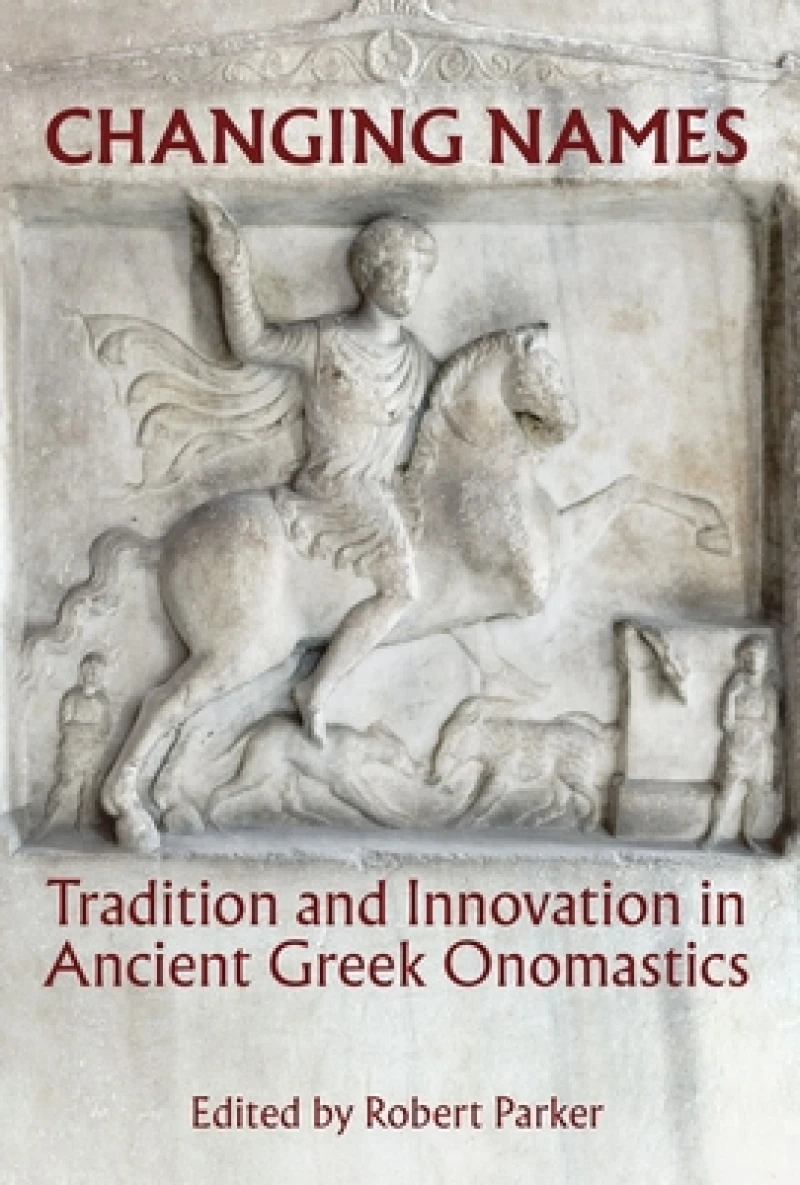
Changing Names : Tradition and Innovation in Ancient Greek Onomastics
Book Details
Format
Hardback or Cased Book
Book Series
Proceedings of the British Academy
ISBN-10
0197266541
ISBN-13
9780197266540
Publisher
Oxford University Press
Imprint
Oxford University Press
Country of Manufacture
GB
Country of Publication
GB
Publication Date
Apr 15th, 2019
Print length
300 Pages
Weight
636 grams
Dimensions
16.50 x 24.10 x 2.80 cms
Ksh 13,050.00
Werezi Extended Catalogue
0 in stock
Delivery Location
Delivery fee: Select location
Secure
Quality
Fast
Changing Names investigates, in relation to the ancient Greek world, the ways in which preferences in personal name-giving change: through shifts in population, cultural contact and imperialism, the popularity of new gods, celebrity status of individuals, increased openness to external influence, and shifts in local fashion.
Changing Names investigates, in relation to the ancient Greek world, the ways in which preferences in personal name-giving change: through shifts in population, cultural contact and imperialism, the popularity of new gods, celebrity status of individuals, increased openness to external influence, and shifts in local fashion. Several major kinds of change due to cultural contact occurred: Greek names spread in regions outside Greece that were subject to Greek cultural influence (and later conquest), while conversely the Roman conquest of the Greek world led to various degrees of adoption of the Roman naming system; late in antiquity, Christianisation led to a profound but rather gradual transformation of the name stock. Individuals in culturally mixed societies sometimes bore two names, one for public or official use, one more domestic; but women of non-Greek origin were more likely to stick with indigenous names. ''Structural'' changes (such as the emergence of the English surname) did not occur, though in late antiquity an indication of profession tended to replace the father''s name as a secondary identifier; in some regions ''second'' names became popular, perhaps in imitation of the longer Roman naming formulae. The volume is arranged partly thematically, partly through regional case studies (from within and beyond old Greece). Individuals who change their names (typically slaves after manumission) are also considered, as is the possibility that a name might change its ''meaning''.
Get Changing Names by at the best price and quality guaranteed only at Werezi Africa's largest book ecommerce store. The book was published by Oxford University Press and it has pages.