
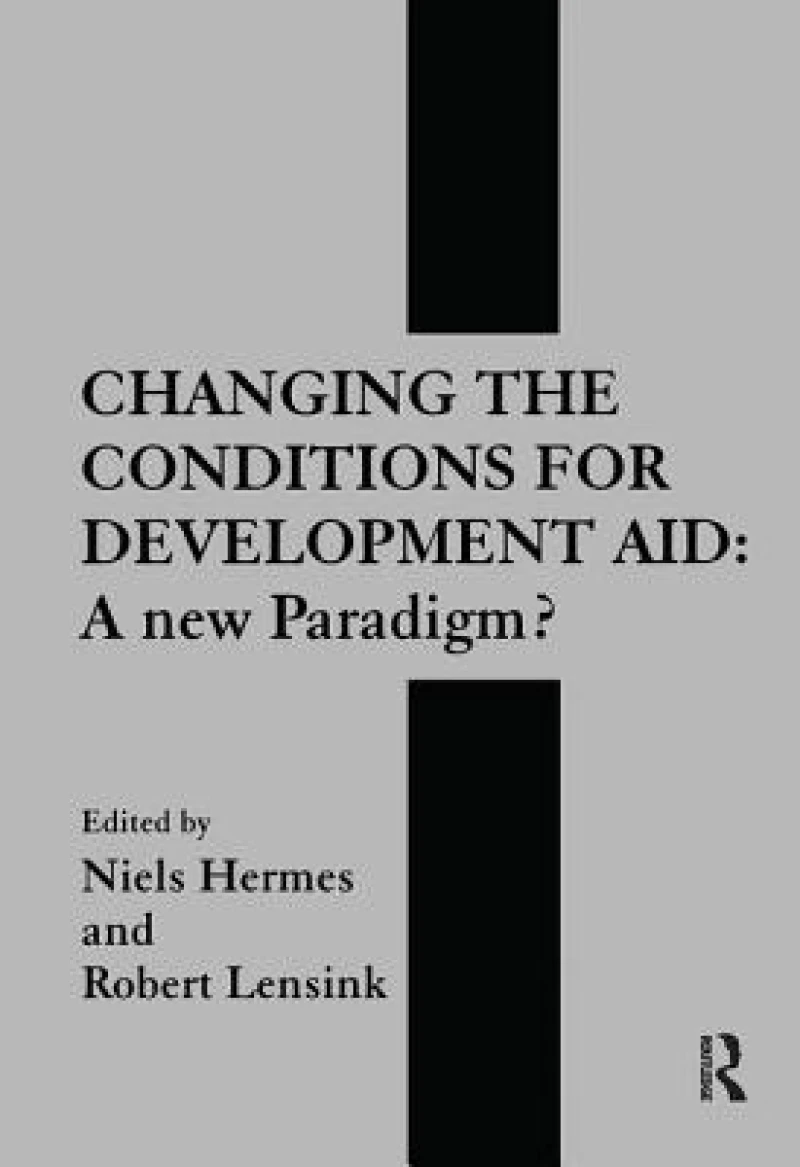
Changing the Conditions for Development Aid : A New Paradigm?
Book Details
Format
Paperback / Softback
ISBN-10
1138867276
ISBN-13
9781138867277
Publisher
Taylor & Francis Ltd
Imprint
Routledge
Country of Manufacture
GB
Country of Publication
GB
Publication Date
Feb 7th, 2019
Print length
158 Pages
Weight
226 grams
Dimensions
14.80 x 21.50 x 1.50 cms
Product Classification:
Development studiesMacroeconomicsDevelopment economics & emerging economies
Ksh 4,700.00
Werezi Extended Catalogue
0 in stock
Delivery Location
Delivery fee: Select location
Secure
Quality
Fast
In this study the authors aim to put the discussion on the future of development aid into perspective and summarise the main findings of the other studies in this collection.
In 1998 the World Bank published a report entitled "Assessing Aid: What Works, What Doesn''t and Why". This report presents the results of an extensive investigation into the effectiveness of development aid. The main message of the text of the report is that development aid helps, but only when there is a good policy environment in the recipient countries, that is when there is sound macroeconomic management and when robust government institutions exist. It stresses that it is a myth to think that good policies can be bought by giving development aid: giving aid conditional on policy reforms does not lead to improved economic policies. The conclusion of the World Bank report is that aid flows should be directed only to countries with sound policies and that it should be focused more on supporting governments in reforming entire sectors, rather than on specific development projects. The "Assessing Aid" report has led to heated debates, both among academics and policy-makers, about development aid and aid policies. Many have questioned the methodology used, the results and the policy conclusions of the report. This book aims to contribute to the ongoing discussion about the future of development aid. In particular, it re-examines a number of issues that are crucial to the analysis and to the conclusions of the World Bank report. In this study the authors aim to put the discussion on the future of development aid into perspective and summarise the main findings of the other studies in this collection. They focus on two issues: the aid effectiveness debate before and after the Assessing Aid report, and the discussion on policy conditionality and good governance. Section II provides a brief survey of past research on aid effectiveness, that is, before publication of the Assessing Aid report and summarises the main findings of the World Bank report on aid effectiveness. In this study the authors aim to put the discussion on the future of development aid into perspective and summarise the main findings of the other studies in this collection. They focus on two issues: the aid effectiveness debate before and after the Assessing Aid report, and the discussion on policy conditionality and good governance. Section II provides a brief survey of past research on aid effectiveness, that is, before publication of the Assessing Aid report and summarises the main findings of the World Bank report on aid effectiveness.
Get Changing the Conditions for Development Aid by at the best price and quality guaranteed only at Werezi Africa's largest book ecommerce store. The book was published by Taylor & Francis Ltd and it has pages.

