
Book Details
Format
Paperback / Softback
ISBN-10
3631584520
ISBN-13
9783631584521
Edition
New
Publisher
Peter Lang AG
Imprint
Peter Lang AG
Country of Manufacture
DE
Country of Publication
GB
Publication Date
Nov 6th, 2009
Print length
230 Pages
Weight
308 grams
Dimensions
21.10 x 14.80 x 1.60 cms
Product Classification:
ChoreographyJudaismSociety & culture: general
Ksh 6,850.00
Manufactured on Demand
0 in stock
Delivery Location
Delivery fee: Select location
Secure
Quality
Fast
Music is of paramount importance in Judaism. On the verse, «Hearken unto the song and the prayer which Your servant prays before You this day» (I Kings 8:28), the Gemarrah states that wherever there is song, there shall be prayer; and indeed, in the Temple, song was an inseparable element of the sacrificial services, thereafter finding its position in the prayers and the Torah reading, with its special melody, in the synagogue.
Chassidism employed music as one of its main avenues for serving G-d. Music served to bring the individual to a state of awakening and joy, nullifying sadness which was seen as an element that could only lead to negativity. Joy allowed one to reach ever higher levels in the service of G-d, leaving one’s sorrows behind, as explained by the founder of the Modzits Chassidic court, Rabbi Yehezkel of Kozmir, when interpreting the verse, «with joy you shall go forth» (Isaiah 55) to mean that through joy, we shall go forth from all our difficulties.
In this book, Shmuel Barzilai takes the reader on a brief and concise tour of the Chassidic courts and their world of music. It explains the wordless melody (Niggun), which is perhaps even more important than songs having words; the importance of dance; the place of honor given to Shabbat songs; and the role of music in Kabbalah. The book provides an overview of the activities of Rabbis who composed and sang at every opportunity, whether in the synagogue or while conducting the traditional Tisch where Chassidic adherents gathered each Shabbat and Festival to hear their Rebbe explain sections of Torah, sing and interpret sayings on music. Barzilai also discusses melodies – niggunim – that became particularly famous, or derived from non-Jewish sources but underwent a process that allowed them to be adopted by the Admoric leaders and integrated into the Chassidic court’s repertoire.
Chassidism employed music as one of its main avenues for serving G-d. Music served to bring the individual to a state of awakening and joy, nullifying sadness which was seen as an element that could only lead to negativity. Joy allowed one to reach ever higher levels in the service of G-d, leaving one’s sorrows behind, as explained by the founder of the Modzits Chassidic court, Rabbi Yehezkel of Kozmir, when interpreting the verse, «with joy you shall go forth» (Isaiah 55) to mean that through joy, we shall go forth from all our difficulties.
In this book, Shmuel Barzilai takes the reader on a brief and concise tour of the Chassidic courts and their world of music. It explains the wordless melody (Niggun), which is perhaps even more important than songs having words; the importance of dance; the place of honor given to Shabbat songs; and the role of music in Kabbalah. The book provides an overview of the activities of Rabbis who composed and sang at every opportunity, whether in the synagogue or while conducting the traditional Tisch where Chassidic adherents gathered each Shabbat and Festival to hear their Rebbe explain sections of Torah, sing and interpret sayings on music. Barzilai also discusses melodies – niggunim – that became particularly famous, or derived from non-Jewish sources but underwent a process that allowed them to be adopted by the Admoric leaders and integrated into the Chassidic court’s repertoire.
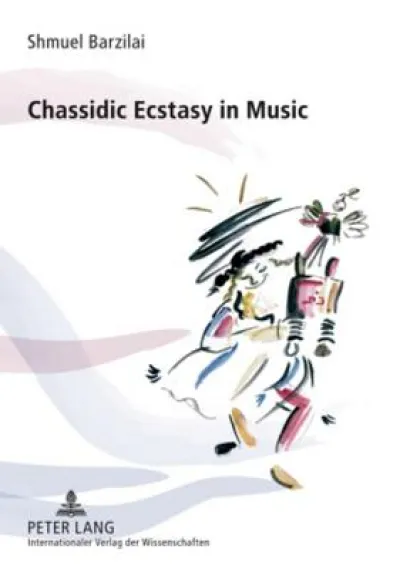
Music is of paramount importance in Judaism. On the verse, «Hearken unto the song and the prayer which Your servant prays before You this day» (I Kings 8:28), the Gemarrah states that wherever there is song, there shall be prayer; and indeed, in the Temple, song was an inseparable element of the sacrificial services, thereafter finding its position in the prayers and the Torah reading, with its special melody, in the synagogue. Chassidism employed music as one of its main avenues for serving G-d. Music served to bring the individual to a state of awakening and joy, nullifying sadness which was seen as an element that could only lead to negativity. Joy allowed one to reach ever higher levels in the service of G-d, leaving one’s sorrows behind, as explained by the founder of the Modzits Chassidic court, Rabbi Yehezkel of Kozmir, when interpreting the verse, «with joy you shall go forth» (Isaiah 55) to mean that through joy, we shall go forth from all our difficulties. In this book, Shmuel Barzilai takes the reader on a brief and concise tour of the Chassidic courts and their world of music. It explains the wordless melody (Niggun), which is perhaps even more important than songs having words; the importance of dance; the place of honor given to Shabbat songs; and the role of music in Kabbalah. The book provides an overview of the activities of Rabbis who composed and sang at every opportunity, whether in the synagogue or while conducting the traditional Tisch where Chassidic adherents gathered each Shabbat and Festival to hear their Rebbe explain sections of Torah, sing and interpret sayings on music. Barzilai also discusses melodies – niggunim – that became particularly famous, or derived from non-Jewish sources but underwent a process that allowed them to be adopted by the Admoric leaders and integrated into the Chassidic court’s repertoire.
Get Chassidic Ecstasy in Music by at the best price and quality guaranteed only at Werezi Africa's largest book ecommerce store. The book was published by Peter Lang AG and it has pages.

