
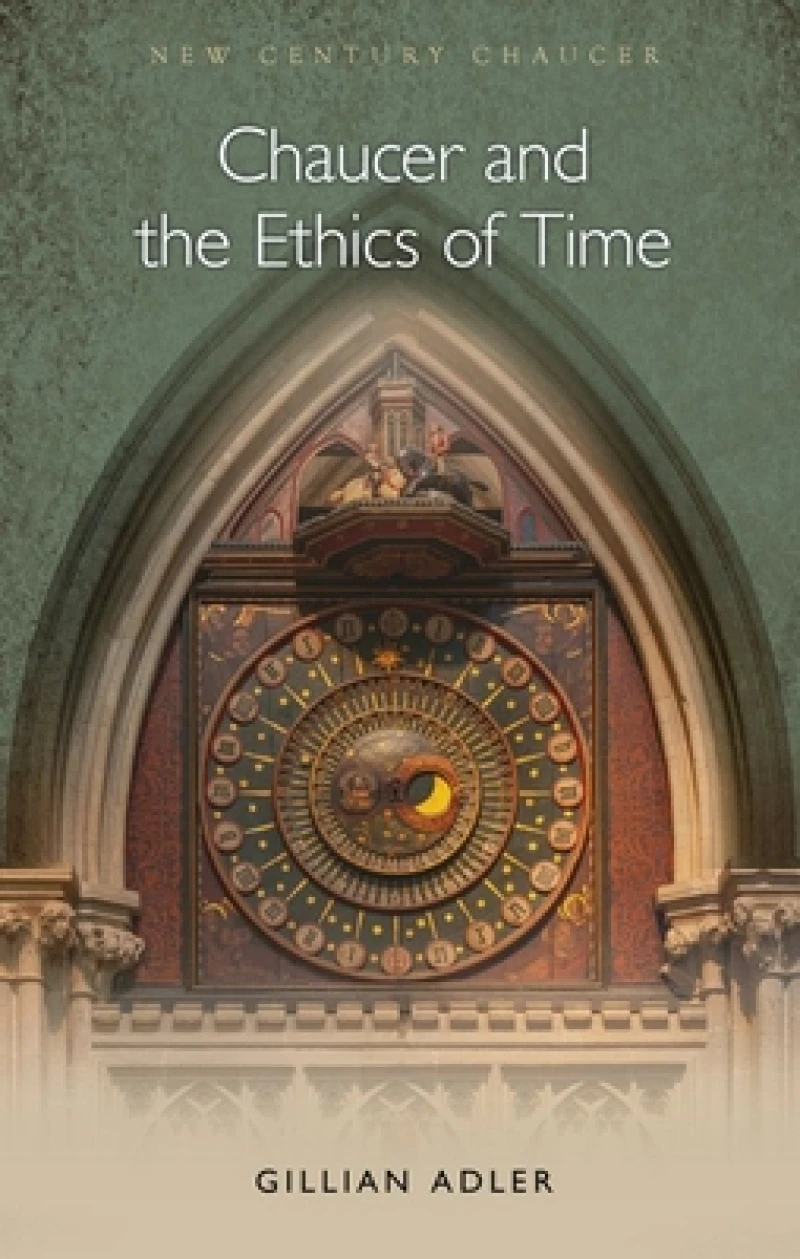
Chaucer and the Ethics of Time
Book Details
Format
Hardback or Cased Book
Book Series
New Century Chaucer
ISBN-10
1786838362
ISBN-13
9781786838360
Publisher
University of Wales Press
Imprint
University of Wales Press
Country of Manufacture
GB
Country of Publication
GB
Publication Date
Feb 15th, 2022
Print length
256 Pages
Weight
416 grams
Dimensions
14.40 x 22.20 x 2.10 cms
Ksh 12,950.00
Werezi Extended Catalogue
0 in stock
Delivery Location
Delivery fee: Select location
Secure
Quality
Fast
Chaucer and the Ethics of Time examines Chaucer's formal and discursive preoccupation with time in his works, highlighting how interactions between the interior phenomenon of time-consciousness and the exterior pressures of time-passage and change complicate ethical scenarios and human experience.
A study of time in Chaucer?s major works.
Geoffrey Chaucer wrote at a turning point in the history of timekeeping, but many of his poems demonstrate a greater interest in the moral dimension of time than in the mechanics of the medieval clock. Chaucer and the Ethics of Time examines Chaucer?s sensitivity to the insecurity of human experience amid the temporal circumstances of change and time-passage, as well as strategies for ethicising historical vision in several of his major works. While wasting time was occasionally viewed as a sin in the late Middle Ages, Chaucer resists conventional moral dichotomies and explores a complex and challenging relationship between the interior sense of time and the external pressures of linearism and cyclicality. Chaucer?s diverse philosophical ideas about time unfold through the reciprocity between form and discourse, thus encouraging a new look at not only the characters? ruminations on time in the tradition of St Augustine and Boethius, but also manifold narrative sequences and structures, including anachronism.
Geoffrey Chaucer wrote at a turning point in the history of timekeeping, but many of his poems demonstrate a greater interest in the moral dimension of time than in the mechanics of the medieval clock. Chaucer and the Ethics of Time examines Chaucer?s sensitivity to the insecurity of human experience amid the temporal circumstances of change and time-passage, as well as strategies for ethicising historical vision in several of his major works. While wasting time was occasionally viewed as a sin in the late Middle Ages, Chaucer resists conventional moral dichotomies and explores a complex and challenging relationship between the interior sense of time and the external pressures of linearism and cyclicality. Chaucer?s diverse philosophical ideas about time unfold through the reciprocity between form and discourse, thus encouraging a new look at not only the characters? ruminations on time in the tradition of St Augustine and Boethius, but also manifold narrative sequences and structures, including anachronism.
Get Chaucer and the Ethics of Time by at the best price and quality guaranteed only at Werezi Africa's largest book ecommerce store. The book was published by University of Wales Press and it has pages.

