
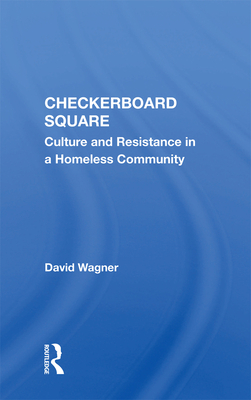
Checkerboard Square : Culture And Resistance In A Homeless Community
by
David Wagner
Book Details
Format
Hardback
ISBN-10
036700478X
ISBN-13
9780367004781
Publisher
Taylor & Francis Ltd
Imprint
Routledge
Country of Manufacture
GB
Country of Publication
GB
Publication Date
Jul 22nd, 2019
Print length
212 Pages
Weight
550 grams
Product Classification:
Sociology
KSh 30,950.00
Currently unavailable
0 in stock
Delivery Location
Delivery fee: Select location
Secure
Quality
Fast
During the past decade, homelessness became a widespread phenomenon in the United States for the first time since the Great Depression. The public frequently blamed the poor for their plight. Journalistic and academic accounts, in contrast, often evoked pathos and pity, regarding the homeless primarily as objects of treatment and rehabilitation. David Wagner challenges both of these dominant images, offering an ethnographic portrait of the poor that reveals their struggle not only to survive but also to create communities on the streets and to develop social movements on their own behalf. Definitely not passive victims, the homeless of Checkerboard Square survive within an alternative street culture, with its own norms and social organization, in a world often hidden from the view of researchers, journalists, and social workers. Checkerboard Square reveals the daily struggle of street people to organize their lives in the face of rejection by employers, government, landlords, and even their own families. Looking beyond the well-documented causes of homelessness such as lack of affordable housing or unemployment, Wagner shows how the poor often become homeless through resistance to the discipline of the workplace, authoritarian families, and the bureaucratic social welfare system. He explains why the crisis of homelessness is not only about the lack of services, housing, and jobs but a result of the very structure of the dominant institutions of work, family, and public social welfare.
Get Checkerboard Square by David Wagner at the best price and quality guaranteed only at Werezi Africa's largest book ecommerce store. The book was published by Taylor & Francis Ltd and it has 212 pages.
Customers Who Bought This Also Bought

Caste
KSh 2,700.00

On Freedom
KSh 2,350.00

Extinction of Experience
KSh 3,950.00

Revenge of the Tipping Point
KSh 2,350.00

Lost Girls
KSh 2,000.00

Right to Sex
KSh 2,000.00

Caste
KSh 4,550.00

Revenge of the Tipping Point
KSh 4,500.00

Revenge of the Tipping Point
KSh 3,050.00

Can Feminism Be African
KSh 2,000.00

Can Feminism Be African
KSh 3,950.00

History of Sexuality: 2
KSh 2,350.00
More by David Wagner

No Longer Homeless
KSh 4,700.00

No Longer Homeless
KSh 6,300.00

Unlikely Fame
KSh 37,800.00

Miracle Worker and the Transcendentalist
KSh 37,800.00

Miracle Worker and the Transcendentalist
KSh 7,550.00

Quest for a Radical Profession
KSh 12,700.00

Ordinary People
KSh 46,800.00
Checkerboard Square
KSh 8,450.00

Unlikely Fame
KSh 7,900.00

Ordinary People
KSh 10,100.00

The New Temperance
KSh 9,200.00

Poorhouse
KSh 6,650.00
