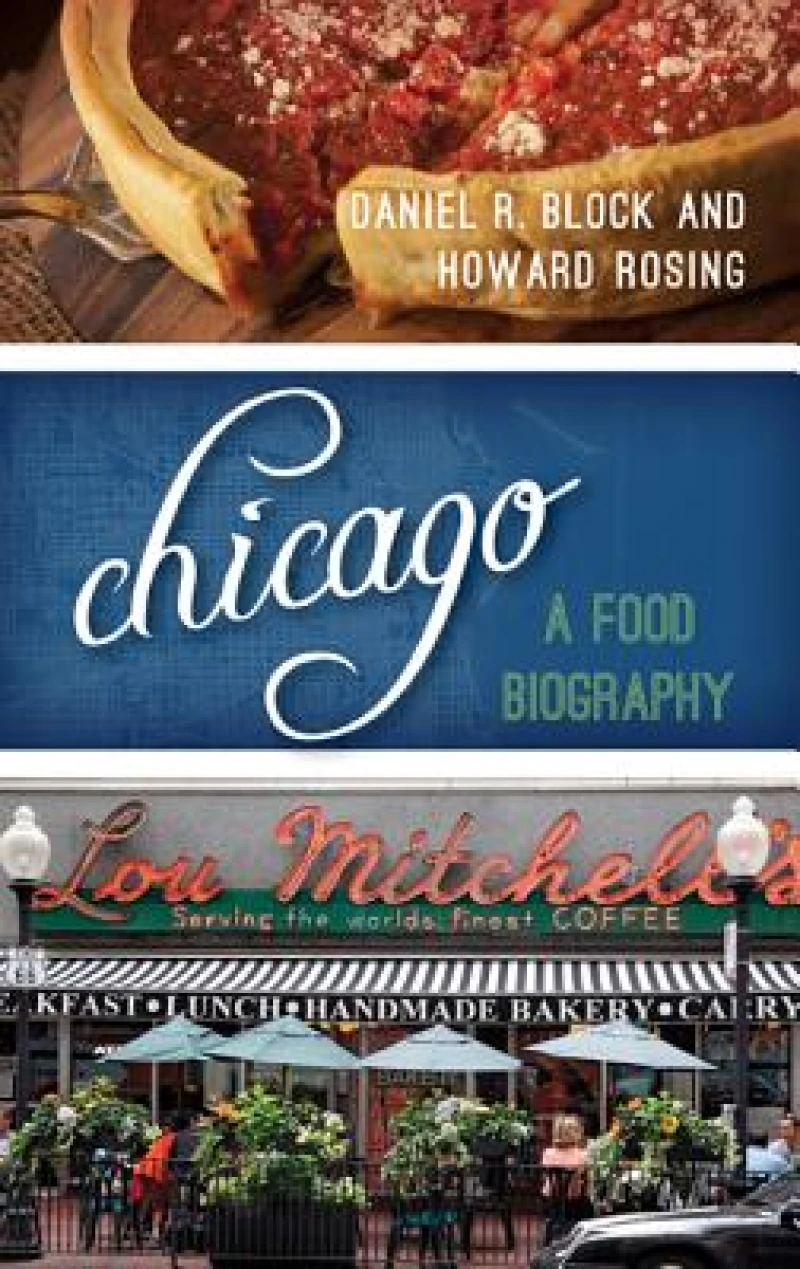
Chicago : A Food Biography
Book Details
Delivery Location
Delivery fee: Select location
Chicago began as a frontier town on the edge of white settlement and as the product of removal of culturally rich and diverse indigenous populations. The town grew into a place of speculation with the planned building of the Illinois and Michigan canal, a boomtown, and finally a mature city of immigrants from both overseas and elsewhere in the US. In this environment, cultures mixed, first at the taverns around Wolf Point, where the forks of the Chicago River join, and later at the jazz and other clubs along the “Stroll” in the black belt, and in the storefront ethnic restaurants of today. Chicago was the place where the transcontinental railroads from the West and the “trunk” roads from the East met. Many downtown restaurants catered specifically to passengers transferring from train to train between one of the five major downtown railroad stations. This also led to “destination” restaurants, where Hollywood stars and their onlookers would dine during overnight layovers between trains. At the same time, Chicago became the candy capital of the US and a leading city for national conventions, catering to the many participants looking for a great steak and atmosphere.
Beyond hosting conventions and commerce, Chicagoans also simply needed to eat—safely and relatively cheaply. Chicago grew amazingly fast, becoming the second largest city in the US in 1890. Chicago itself and its immediate surrounding area was also the site of agriculture, both producing food for the city and for shipment elsewhere. Within the city, industrial food manufacturers prospered, highlighted by the meat processors at the Chicago stockyards, but also including candy makers such as Brach’s and Curtiss, and companies such as Kraft Foods. At the same time, large markets for local consumption emerged. The food biography of Chicago is a story of not just culture, economics, and innovation, but also a history of regulation and regulators, as they protected Chicago’s food supply and built Chicago into a city where people not only come to eat, but where locals rely on the availability of safe food and water. With vivid details and stories of local restaurants and food, Block and Rosing reveal Chicago to be one of the foremost eating destinations in the country.
Get Chicago by at the best price and quality guaranteed only at Werezi Africa's largest book ecommerce store. The book was published by Bloomsbury Publishing Plc and it has pages.